Spokane Wildfires: What Washington’s Emergency Response Reveals
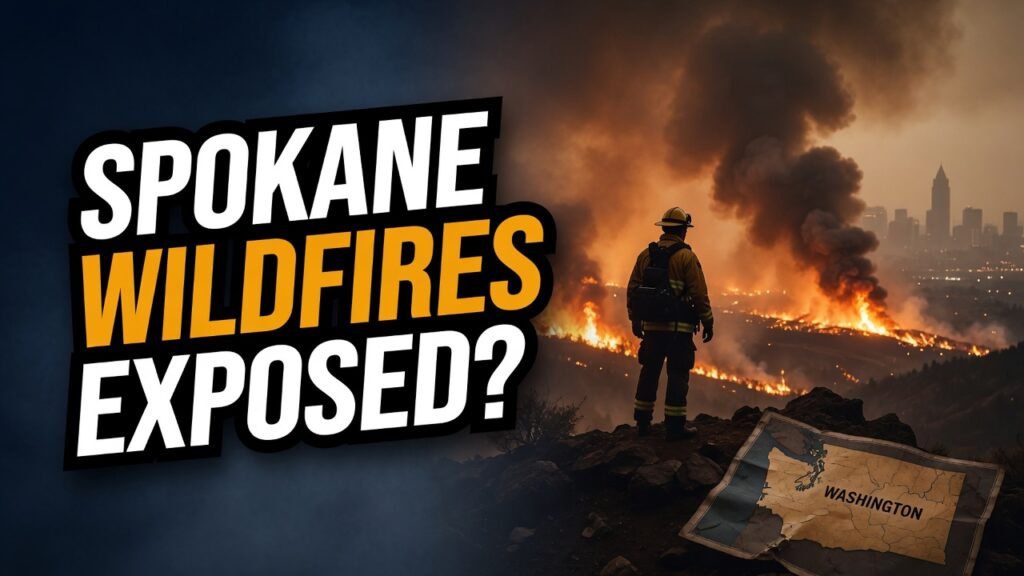
As three wildfires tear through Spokane County, destroying more than 700 structures and displacing tens of thousands, residents are asking a harder question: was this disaster made worse by decisions officials made long before the first spark?
Hundreds of homes are gone. Tens of thousands of people have nowhere to sleep tonight.
The Old Trails, Autumn Lane and Fairview fires ignited within hours of each other on August 1 near Spokane, Washington, and by Monday they had merged into what officials are now calling the Spokane Complex Fire. More than 700 structures have burned, roughly 65,000 residents remain under evacuation orders, and the blazes were still zero percent contained as of this week, according to a federal incident management team coordinating the response. Governor Bob Ferguson has declared a statewide emergency. For a state that has fought this exact battle before, the scale of the destruction is forcing a reckoning over whether enough was done to prevent it.
How Did Three Fires Destroy Hundreds of Homes in Two Days?
The numbers alone tell a brutal story. The three fires burned more than 8,000 acres combined in their first 72 hours, spreading through neighborhoods faster than crews could evacuate them [NBC News reporting]. Spokane County Fire District 3 Fire Chief Cody Rohrbach said the Old Trails Fire alone destroyed 640 structures. Red flag conditions and a “particularly dangerous situation” alert were already in place before the fires broke out, meaning officials knew the risk was extreme hours before the first flames appeared.
That is the uncomfortable part of this story. This was not an unforeseeable act of nature. It was a known, forecasted danger that state and local agencies had hours, not days, to prepare for — and residents are entitled to ask whether that preparation was sufficient.
Support Independent Local Journalism
TheTownHall.News is a non-profit reader-supported journalism. Just $5 helps us hire local reporters, investigate important issues, and hold public officials accountable across Alameda County. If you believe our community deserves strong, independent journalism, please consider donating $5 today to support our work.Who Is Responsible for the Slow Containment?
Crews from across the country have converged on Spokane County, and more than 900 firefighters were working the fires as of Monday [regional fire officials]. Yet containment remained at zero percent for days after ignition, even as favorable weather began to arrive. Winds that fueled the initial spread have since eased, and officials say cooler temperatures should help crews “make significant gains” in the days ahead.
Zero percent containment on a fire that has already destroyed 700 structures is not just a statistic — it’s a question every taxpayer in Washington should be asking their leaders.
The Washington National Guard has been activated, and Major General Gent Welsh has asked residents for patience while officials work to safely reopen evacuated neighborhoods. Patience is easy to ask for. It is harder to deliver when families do not know if their homes still exist.
Was This Fire Preventable? What the Arson Arrest Reveals
Law enforcement has charged a man with arson in connection with the Old Trails Fire, though officials continue investigating the causes of the other two blazes. That arrest matters. It reframes part of this catastrophe from an act of nature into a matter of individual accountability and criminal negligence.
Governor Ferguson issued a statewide burn ban through September 30, a step that acknowledges how easily human activity can turn dry conditions into disaster. Enforcement of burn bans, brush clearance requirements, and building codes in fire-prone areas are all policy choices — and policy choices carry consequences. When one is allegedly ignored, the cost is not paid by the person responsible alone. It’s paid by every family whose home is now ash.

Who Pays When Government Preparedness Falls Short?
Rebuilding after a fire of this scale will not be cheap, and the bill rarely lands only on insurance companies. Federal disaster declarations, state emergency funds, and local infrastructure repair all draw on public money — and history shows that wildfire recovery costs frequently run into the hundreds of millions of dollars for events of this size.
700+. That is the number of structures already confirmed destroyed, with officials warning the total is likely to climb. The question no one has answered yet: what will the final price tag be, and who decides how it’s shared between residents, insurers, and taxpayers statewide?
If your neighborhood burned because of a policy gap someone knew about in advance, would you accept “we’ll do better next time” as an answer?
Beyond the dollars, there is a governance question. Washington has faced major wildfire seasons before. Fifteen major fires have burned more than 250,000 acres across the state this season alone [Washington DNR]. At what point does repeated, foreseeable devastation stop being called a natural disaster and start being called a planning failure?
Are Evacuees Getting the Support They Were Promised?
The Spokane Convention Center has operated as an emergency shelter, with the Red Cross reporting more than 400 people staying there in a single night. The Mann-Grandstaff VA Medical Center was forced to close and evacuate patients to partner hospitals after the fire zone reached its campus — a stark reminder that even facilities meant to protect the most vulnerable were not insulated from the chaos.
Support Independent Local Journalism
TheTownHall.News is a non-profit reader-supported journalism. Just $5 helps us hire local reporters, investigate important issues, and hold public officials accountable across Alameda County. If you believe our community deserves strong, independent journalism, please consider donating $5 today to support our work.Tens of thousands of families were told to leave everything behind. The least they deserve now is a straight answer about when they can go home.
Officials say it could be a week or more before most evacuees are allowed to return, and they still don’t know how many of the destroyed structures were homes versus businesses or schools. That uncertainty is its own kind of failure — residents deserve clear, timely information, not open-ended waiting.
“Zero percent containment. Seven hundred structures gone. And the fires started before most residents even had time to load a car.”
What Do Supporters of Washington’s Emergency Response Actually Believe?
Defenders of the state’s handling of this crisis make a fair point: wildfires under red flag, high-wind conditions can outrun even a well-resourced response, and no fire department can prevent every ignition, especially one allegedly caused by arson. They note that more than 900 firefighters mobilized quickly, that shelters opened within hours, and that no deaths have been confirmed despite the scale of destruction — a genuinely positive outcome given the circumstances.
That argument deserves credit. Coordination among local, state, tribal and federal crews has been real, and the absence of confirmed fatalities so far reflects hard work under dangerous conditions, not luck. But a fast emergency response after ignition does not answer the separate question of whether pre-fire policy — burn ban enforcement, building standards in fire-prone corridors, and staffing levels heading into red flag season — was adequate. Both things can be true: first responders performed admirably, and the systems meant to prevent this scale of loss still came up short.
Key Questions
- Why did containment remain at zero percent for days after officials knew red flag conditions were in place?
- Who will ultimately bear the financial cost of rebuilding — taxpayers, insurers, or residents themselves?
- What changes, if any, will Washington make to burn bans and fire-zone building codes before the next red flag warning?
What Happens If This Keeps Happening Every Summer?
Washington is not alone in facing worsening fire seasons, but repetition changes the political calculus. A single catastrophic fire can be called bad luck. A pattern of them, year after year, starts to look like a policy choice — a decision to accept a certain level of loss rather than fund the prevention infrastructure needed to stop it.
Residents in Spokane County are not asking for miracles. They are asking whether the warnings that preceded this fire were acted on, whether burn bans will actually be enforced, and whether their tax dollars are going toward prevention or only toward cleanup after the fact.
The fire crews battling the Spokane Complex Fire deserve genuine credit for the lives saved and the chaos contained under brutal conditions. But heroism on the ground does not erase the questions building in the background: why containment stalled, why a “particularly dangerous situation” alert did not translate into a stronger pre-positioned response, and why this keeps happening in the same corridors of eastern Washington.
The real question isn’t whether Washington will rebuild Spokane County — it’s whether officials will fix what allowed this to happen before the next red flag warning goes up.
Still have questions about how this disaster was handled? Stay informed — subscribe to The Town Hall News for daily coverage of the response and recovery. Think your neighbors need to see this? Share the article. Want your voice to count? Contact your Washington state legislator or county commissioner and ask directly what changes are being made to wildfire prevention funding and burn ban enforcement before next fire season.