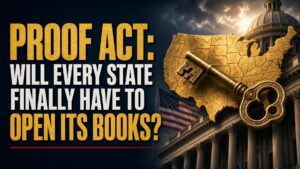

PROOF Act: Will Every State Finally Have to Open Its Books?
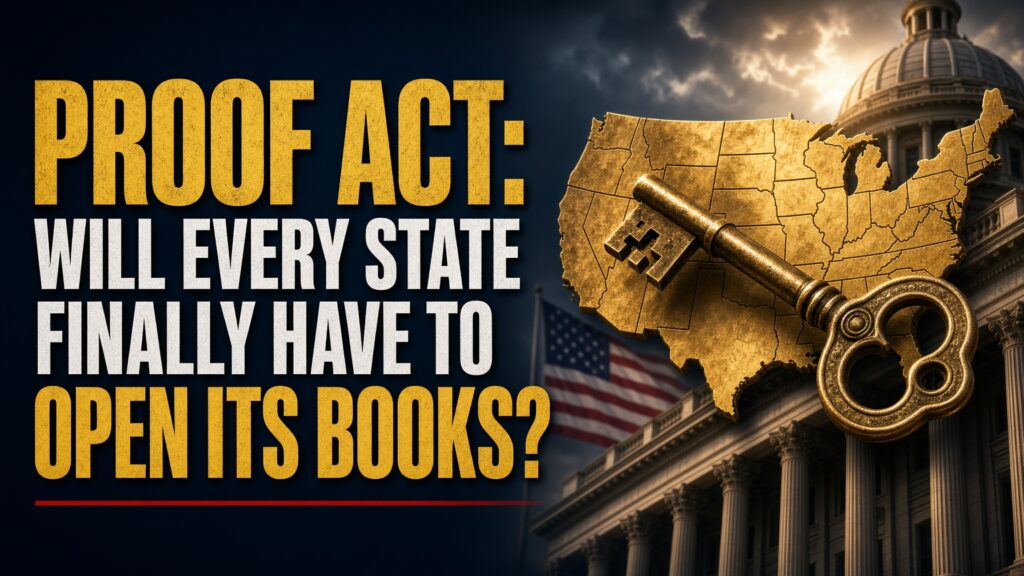
The House voted to make states answer when the Attorney General asks for fraud records, and the bill now sits in the Senate. Who gets to see the data, and who will be held accountable for what it shows?
Who gets to see the records when federal money is spent by the states? That question is now in the Senate’s hands. On September 16, the House passed the PROOF Act, H.R. 10326, which would require states to give the Justice Department information it requests in fraud investigations of programs like Medicaid and SNAP.
Why does this matter right now? Because the bill’s last recorded action is a September 17 referral to the Senate Judiciary Committee [bill-tracking record], and fraud allegations tied to state-run federal programs keep making headlines. The vote itself was far closer than the cheering online suggests.
What Does the PROOF Act Actually Do?
The bill, sponsored by Rep. Jeff Van Drew (R-NJ), is narrower than the viral posts claim. When the Attorney General sends a written request tied to a fraud investigation or prosecution, the state must provide the information needed for that case [bill summary, Quiver Quantitative].
The covered programs include Medicaid, SNAP, TANF, state unemployment compensation, Community Development Block Grants, FEMA assistance and mitigation grants, and State Small Business Credit Initiative funds. The Attorney General could also add other state programs deemed vulnerable to fraud [bill summary]. Other summaries also list COVID-era relief, school emergency grants and broadband funds [civic-education summary, TeenCivics].
Taxpayers fund these programs. If federal investigators ask a state for fraud records, shouldn’t the answer be yes?
Support Independent Local Journalism
TheTownHall.News is a non-profit reader-supported journalism. Just $5 helps us hire local reporters, investigate important issues, and hold public officials accountable across Alameda County. If you believe our community deserves strong, independent journalism, please consider donating $5 today to support our work.The Guardrails Written Into the Bill
Supporters of limited government should read this part carefully. The bill does not give federal agents an open door. It requires the Attorney General to set security procedures so transferred data is encrypted, limited to authorized personnel, and deleted once the related case ends [bill summary].
Agencies could use the information only for fraud-related law enforcement, not for unrelated administrative or commercial purposes [legislative news summary]. The Attorney General must also report to Congress each year on how many requests were sent and which programs they involved [bill summary]. That paper trail is the kind of accountability conservatives routinely demand of Washington.
Why Do Supporters Say Investigators Need This Access?
The argument is simple. Investigators cannot catch fraud they cannot see. Rep. Scott Fitzgerald (R-WI) said the bill closes information gaps that keep the Justice Department from reaching state program data [member press release]. The National Taxpayers Union, a taxpayer advocacy group, urged a yes vote and described the bill as better information sharing between Washington and the states [advocacy group statement].
The Justice Department’s National Fraud Enforcement Division reported roughly $350 million in alleged fraud across several southeastern states in late July [news report, Bizpac Review]. Allegations are not convictions, but supporters say cases like these show why prosecutors want faster access to state records.
The White House strongly backed it on the day of the vote and said the president’s advisors would recommend he sign it [statement of administration policy]. Witnesses at an April House hearing also described states that often fail to share eligibility data across programs or with federal officials, while relying on outdated systems [news report, The Fulcrum].
217 to 207. That was the final House margin on the PROOF Act [House Clerk roll call]. If a bill about investigators seeing program records splits the House almost evenly, what happens in a Senate that usually needs 60 votes to move legislation?
Is This a Fraud Fight or a Fight Over State Power?
Online, the bill is framed as a showdown with Minnesota and California. The text names no state. It applies to all 50. Minnesota’s own legislature, in its end-of-session summary, said federal investigators continued work across child nutrition, Medicaid, autism services and housing stabilization programs [state legislature summary]. Gov. Gavin Newsom has not, in the public record we reviewed, issued a statement on the bill.
The federalism tension is real, though. Twenty-one states and the District of Columbia have already resisted the administration’s efforts to collect personally identifiable information on SNAP recipients [Washington Times, June 2026]. The PROOF Act would give that dispute a statutory footing, and conservatives who prize state authority should want to know exactly where the line falls.
If fraud-fighting needs the states’ records, who decides what “appropriate” means?
What Do Critics of the PROOF Act Actually Believe?
Critics argue that broad Attorney General access to sensitive benefits data invites privacy abuse and could scare eligible families away from the programs. Some propose that independent inspectors general handle fraud probes instead [civic-education summary]. At the April hearing, a witness warned that many immigrants fear information given to states could be used for immigration enforcement [news report, The Fulcrum].
Those concerns deserve a real answer. The bill’s written-request requirement, fraud-only use limits, encryption and deletion rules, and annual reporting are meaningful constraints, and they answer part of the privacy objection. They do not answer all of it. The phrase “other information the Attorney General determines is appropriate” is broad, and so is the power to add programs to the list [bill summary].
The inspector general alternative is fair, but it is not mutually exclusive. Inspectors general can keep investigating while prosecutors get a clear statutory path to state records. The better fix for critics is tighter language in the Senate, not no bill at all.

What Happens Next in the Senate?
The same day it passed the PROOF Act, the House approved the National Fraud Enforcement Division Act, H.R. 9576, 352 to 72, which would write a permanent fraud office at the Justice Department into law [House Clerk roll call]. The appetite for fraud enforcement is clearly there.
But the PROOF Act’s last recorded step is its referral to Senate Judiciary. No hearing or committee vote appears in the public record we reviewed. The House acted in September. The Senate has had the PROOF Act since. How long should taxpayers wait for an answer?
Senators could amend the bill, narrow the “appropriate” language, or let it stall. Each choice has consequences for taxpayers and for the families who depend on these programs.
Key Questions This Story Raises:
- Who decides what “other information the Attorney General determines is appropriate” actually includes?
- Will the Senate Judiciary Committee hold a hearing or vote, and when?
- Can the Senate write privacy protections strong enough to satisfy critics without weakening the fraud-fighting power supporters want?
So Who Is Really Watching the Money?
The PROOF Act is not really about Minnesota, California or any single governor. It is about whether taxpayers can follow federal dollars after they leave Washington, and whether the people following them can be trusted with what they find. Both halves of that question matter.
What do you think: should every state have to answer when federal fraud investigators ask? Share this article and tell us where you stand.
Will the Senate write rules strong enough to catch fraud and tight enough to protect honest families who rely on these programs, or will the bill simply sit?
Still have questions? Stay informed: subscribe for daily coverage of government spending and accountability. Think others need to hear this? Share the article. Want your voice to count? Contact both of your U.S. senators through senate.gov and ask whether they will support a Judiciary Committee hearing on H.R. 10326.