Iran War Cost 2026: How Much Are Taxpayers Really Paying?
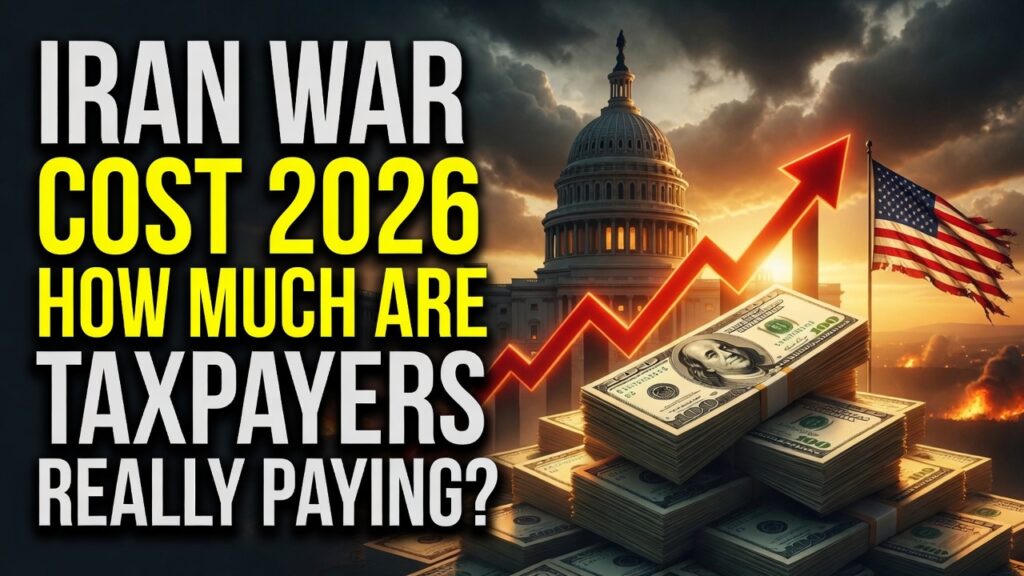
As the U.S. and Israel weigh a new round of strikes on Iran, Congress has already voted twice to end the war — and the bill keeps climbing regardless.
Is Washington still counting the cost of a war it never voted to authorize? Five months in, the bill keeps climbing.
The U.S. and Israel are reportedly finalizing plans for fresh joint strikes on Iranian energy sites, discussed during a Camp David cabinet meeting this week, with bombing that could continue through the weekend. It comes as a fragile pause in U.S. strikes on Iran, in place since July 24, hangs on whether Omani mediators can broker a deal to reopen the Strait of Hormuz. For a war that began on February 28 with the assassination of Iran’s supreme leader, there is still no congressional authorization, no end date, and no full accounting of what it has actually cost.
How Much Has This War Actually Cost?
The Pentagon’s own numbers keep moving. Acting Pentagon Comptroller Jules Hurst III told the House Armed Services Committee in late April that the war, code-named Operation Epic Fury, had cost roughly 25 billion dollars after eight weeks [Pentagon testimony, House Armed Services Committee]. By mid-June, an independent tracker built on the Pentagon’s own briefing figures put the total at 113.3 billion dollars over 108 days [Iran War Cost Tracker, based on Pentagon congressional briefings]. Moody’s Analytics has estimated the broader hit to taxpayers and consumers at 132 billion dollars and rising [Moody’s Analytics]. Reports in March indicated the Pentagon was separately seeking 200 billion dollars more to sustain the campaign [Washington Post, cited by House Appropriations Committee].
113.3 billion dollars. That’s the tracked cost of this war through mid-June alone. The question no one in Washington has fully answered: where is the rest of it going?
Support Independent Local Journalism
TheTownHall.News is a non-profit reader-supported journalism. Just $5 helps us hire local reporters, investigate important issues, and hold public officials accountable across Alameda County. If you believe our community deserves strong, independent journalism, please consider donating $5 today to support our work.Why Did Congress Vote to End This War — Twice?
Lawmakers have already tried to shut this down. In June, the Senate passed a war powers resolution directing Trump to remove U.S. forces from hostilities with Iran unless Congress explicitly authorizes further action — the first time both chambers had passed such a measure since the war began. Four Republican senators, including Rand Paul and Susan Collins, broke with their party to support it. The House passed a similar measure again in July, with Reps. Thomas Massie, Warren Davidson, Brian Fitzpatrick, and Tom Barrett crossing party lines a second time.
Congress voted twice to end a war it never approved in the first place — so why is it still going?
Neither resolution carried the force of law once Trump signaled he would veto any measure reaching his desk, and the administration has continued operations regardless. That is the heart of the accountability problem: the Constitution gives Congress the power to declare war, yet five months of strikes, a naval blockade, and a nine-figure taxpayer bill have proceeded almost entirely on executive authority.
What Happened to the Ceasefire?
There have been at least two. The first, brokered by Pakistan in April, collapsed within hours over a dispute about whether it covered Lebanon. A second framework, a memorandum of understanding signed in mid-June, aimed to end the conflict within 60 days. It broke down in July after Iran struck commercial vessels that bypassed its approved shipping route through the Strait of Hormuz, and Trump declared the ceasefire “over” at the NATO summit on July 8.
What followed was thirteen consecutive nights of American strikes on Iran before a pause took hold on July 24, timed to allow Omani-mediated talks aimed at reopening Hormuz to shipping. As of this week, that pause has held, but a new round of energy-site strikes is reportedly on the table, and the administration has said it is prepared to resume the offensive if talks collapse.
Who Is Paying the Price at Home?
It isn’t just the Treasury. Roughly 327 vessels remain anchored or stalled near the Strait of Hormuz, a chokepoint for a fifth of the world’s oil trade, and shipping analysts expect it will take three to four months to normalize once traffic resumes [industry shipping data]. Oil prices climbed past 100 dollars a barrel as the conflict escalated in July, a cost that shows up directly at American gas pumps and in shipping-dependent goods.
If a war adds dollars to every tank of gas and every grocery bill, isn’t that a tax Congress never voted on either? Families budgeting for back-to-school shopping this month are absorbing that cost whether they support the war or not, and there is still no clear timeline for when energy markets settle.
Is a war Congress never authorized one Americans should be financing indefinitely?
There is a human cost as well. American service members have died in the conflict, and this week the Army disciplined 14 soldiers from the Givati Brigade after a mass desertion at a base in southern Israel, a sign of strain even among allied forces five months into sustained fighting.
Nearly six months in, taxpayers still don’t have a straight answer on what this war has cost or when it ends.
What Do Supporters of This Policy Actually Believe?
Is it fair to call this reckless, or is restraint the greater risk? Backers of the administration’s approach argue that Iran’s nuclear and ballistic missile programs represented a genuine and growing threat, and that half-measures in past decades allowed Tehran to advance those programs largely unchecked. They point to intelligence assessments that the February strikes set Iran’s nuclear timeline back significantly, and argue that walking away now, mid-negotiation over the Strait of Hormuz, would hand Tehran leverage it hasn’t earned.
That argument has real weight. A nuclear-armed Iran, or an unresolved blockade of one of the world’s busiest oil corridors, carries its own long-term costs that are harder to put a dollar figure on. But that case for continued pressure is not the same as a case for continued spending without oversight. Supporting a strong response to a genuine threat and demanding that Congress authorize and audit that response are not mutually exclusive positions — and right now, Washington is being asked to accept one without the other.

Is This the Accountability Moment Taxpayers Have Been Waiting For?
Two bipartisan votes to end the war. A Pentagon that can’t give lawmakers a clean breakdown of 25 billion dollars in spending. A ceasefire declared “over,” then quietly paused, with a new offensive reportedly being planned at Camp David. Whatever one believes about the merits of the campaign against Iran, the process around it — no formal authorization, shifting cost estimates, and a Congress whose votes to stop it carry no legal weight — is the part that should concern anyone who values checks on executive power, regardless of party.
Key Questions This Story Raises
- Who is verifying the Pentagon’s cost figures for this war, and why do independent estimates differ by tens of billions of dollars?
- What happens to congressional war powers when both chambers vote to end a conflict and the executive branch continues it anyway?
- If the Hormuz talks collapse this weekend and strikes resume, will Congress vote a third time — and will it matter any more than the first two?
The real question isn’t whether this war has a cost. It’s whether anyone in Washington is still willing to be held to it.
Still have questions about where your tax dollars are going in this conflict? Subscribe for daily coverage as the Camp David strike plans and Hormuz talks develop. Think others need to see these numbers? Share this article. Want your voice heard? Contact your senator or representative and ask directly how they voted on the Iran war powers resolutions — and whether they intend to vote again.