Trump Mail-In Voting Order: Supreme Court Fight Explained
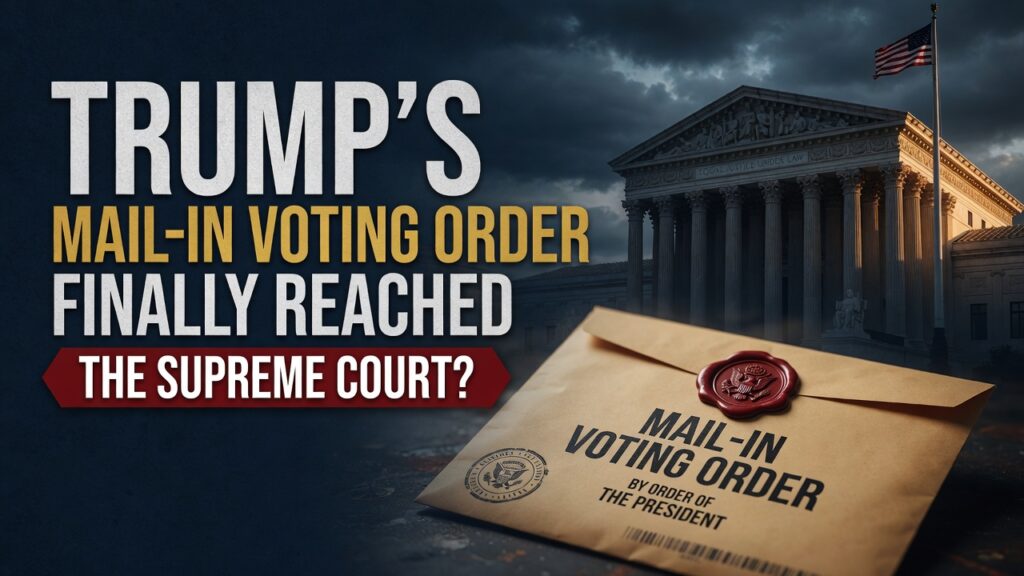
As the fight over mail-in ballots escalates just months before the midterms, Americans are asking a simple question: who gets to set the rules for how we vote — Washington, or the states?
The Supreme Court just got pulled into a fight over how America votes. It happened this week, and it could decide who controls elections for years to come.
On July 27, the Department of Justice asked the justices to let President Trump’s mail-in voting order take effect nationwide while the underlying lawsuit plays out. The request came just two days after a federal appeals court refused to lift an injunction blocking the order in 23 states and Washington, D.C. The Supreme Court has already ordered those states to respond by August 3 — meaning a ruling could land before ballots start going out this fall.
Support Independent Local Journalism
TheTownHall.News is a non-profit reader-supported journalism. Just $5 helps us hire local reporters, investigate important issues, and hold public officials accountable across Alameda County. If you believe our community deserves strong, independent journalism, please consider donating $5 today to support our work.What Does Trump’s Executive Order Actually Do?
The order directs the Department of Homeland Security to compile a list of confirmed U.S. citizens eligible to vote in each state, using citizenship data pulled from federal databases. The stated goal is straightforward: make sure only eligible citizens are casting ballots, and tighten verification standards for mail-in voting specifically.
Supporters see this as basic housekeeping — the kind of accountability voters have demanded for years. Critics call it federal overreach into a process the Constitution leaves largely to the states. That disagreement is now the entire lawsuit.
Should the federal government be allowed to build a citizenship database just to police how you vote?
A federal judge in Boston didn’t wait to find out. Earlier this year, that judge ruled key parts of the order unconstitutional and blocked its enforcement in the two dozen mostly Democratic-led states and D.C. that sued. The First U.S. Circuit Court of Appeals upheld that block on July 25 in a 2-1 decision, rejecting the administration’s request to let enforcement proceed while the case continues.

Why Is This Case Moving So Fast?
Timing is everything here. The midterm elections are in November, and mail-in ballots in several states begin going out within weeks of a Supreme Court decision either way. If the justices side with the administration, DHS-verified voter lists could apply nationwide before a single ballot is mailed. If they don’t, the order stays frozen in those 23 states through Election Day.
That’s not a small technical dispute. It’s a live question about who has final say over an election that will decide control of both the House and Senate.
100 million. That’s roughly how many mail-in and absentee ballots were cast in the last two federal election cycles combined [federal election data]. The question nobody in this fight wants to answer plainly: what happens to that volume of ballots if the rules change mid-cycle?
Who Is Actually Responsible for Election Integrity?
Under the Constitution, states run elections. Article I gives state legislatures — not federal agencies — the primary authority to set the “times, places, and manner” of elections, subject to congressional oversight. That’s the core of the states’ legal argument: a federal directive built on DHS citizenship data oversteps that boundary.
The administration’s counterargument is that federal law already requires accurate voter rolls, and that DHS data can help states meet that obligation rather than replace it. Both sides are, in effect, arguing about where “help” ends and “control” begins.
Support Independent Local Journalism
TheTownHall.News is a non-profit reader-supported journalism. Just $5 helps us hire local reporters, investigate important issues, and hold public officials accountable across Alameda County. If you believe our community deserves strong, independent journalism, please consider donating $5 today to support our work.If Washington can rewrite the rules for how you vote just months before an election, what’s stopping it from doing that every cycle?
Is There a Separate Fight Over Poll-Site Deployments?
Yes — and it’s arguably just as consequential. The Democratic National Committee filed a separate lawsuit in March demanding that the DOJ, DHS, and Department of Defense turn over records on any potential deployment of federal agents or troops to polling places, drop boxes, and election offices this fall. A federal court has since ordered those agencies to speed up document production, after finding their earlier compliance inadequate.
Neither the White House nor DHS has confirmed plans to station federal personnel at polling sites. But the fact that a court had to order faster disclosure — rather than a simple denial — has kept the question alive on both sides of the aisle.
Trump has been direct about his concerns with the current system. In a primetime address on election integrity earlier this year, he described what he called “shocking vulnerabilities” in the country’s election infrastructure and pointed to California’s lengthy mail-ballot counting process as a specific example of dysfunction.
What Do Supporters of This Policy Actually Believe?
Supporters of the order make a fair point worth engaging directly: if federal databases can confirm someone is a citizen, why wouldn’t states want that information before mailing them a ballot? They argue verification isn’t suppression — it’s basic list maintenance that most voters would expect already exists.
That argument has real appeal, especially for readers who prioritize election integrity and limited fraud risk. But it runs into a practical problem: DHS citizenship records are not always current, and errors in federal databases have wrongly flagged citizens before. Civil rights attorneys and several state election officials argue that without ironclad accuracy safeguards, a verification mandate risks removing eligible voters, not just catching ineligible ones. That’s the crux the courts are now being asked to sort out — not whether integrity matters, but whether this specific method protects it without collateral damage.
Is This the Accountability Moment Voters Have Been Waiting For?
For readers who’ve spent years asking why Washington hasn’t tightened election security, this case is the closest thing yet to a real answer. A Supreme Court ruling — expected within days, given the August 3 deadline — will either validate the administration’s approach or send it back to the drawing board.
Either outcome will matter far beyond this one order. A ruling for the administration would expand federal authority over state-run elections in ways that could outlast this presidency. A ruling against it would reaffirm that even popular integrity measures have to clear a high constitutional bar before taking effect nationwide.
“If the federal government can rewrite how millions of Americans vote with the stroke of a pen, whose election is it really?”
Key Questions This Case Raises
- Will the Supreme Court allow DHS citizenship verification to apply nationwide before the midterms?
- Can states meaningfully object to federal election rules without being labeled obstructionist?
- What happens to voters mistakenly flagged by imperfect federal databases?
What Happens Next?
The 23 plaintiff states have until August 3 to respond to the DOJ’s request. From there, the Supreme Court could act within days or take longer to weigh a fuller record. Either way, whatever the justices decide will shape how mail-in ballots are handled in the November midterms — an election that will determine control of Congress for the next two years.
This is playing out in real time, not in some distant future. States are already printing ballot materials. Counties are finalizing mail-ballot schedules. A late-breaking Supreme Court ruling, in either direction, would force rapid changes to systems many counties have already locked in.
So the real question isn’t just legal. It’s practical: are the people running this year’s elections prepared for whichever answer the Court gives them — and will voters trust the result either way?
What do you think — should the federal government have this much say over how states run their elections, or is this exactly the kind of overreach the Constitution was written to prevent? Share this article and let us know.
Still have questions about how this could affect your ballot this fall? Stay informed — subscribe for daily coverage of the cases that will decide how America votes. Think your neighbors need to see this? Share the article. Want your voice heard directly? Contact your state’s Secretary of State office to ask how your state is preparing for either outcome, and check your state’s mail-ballot deadlines now, before the rules potentially change.