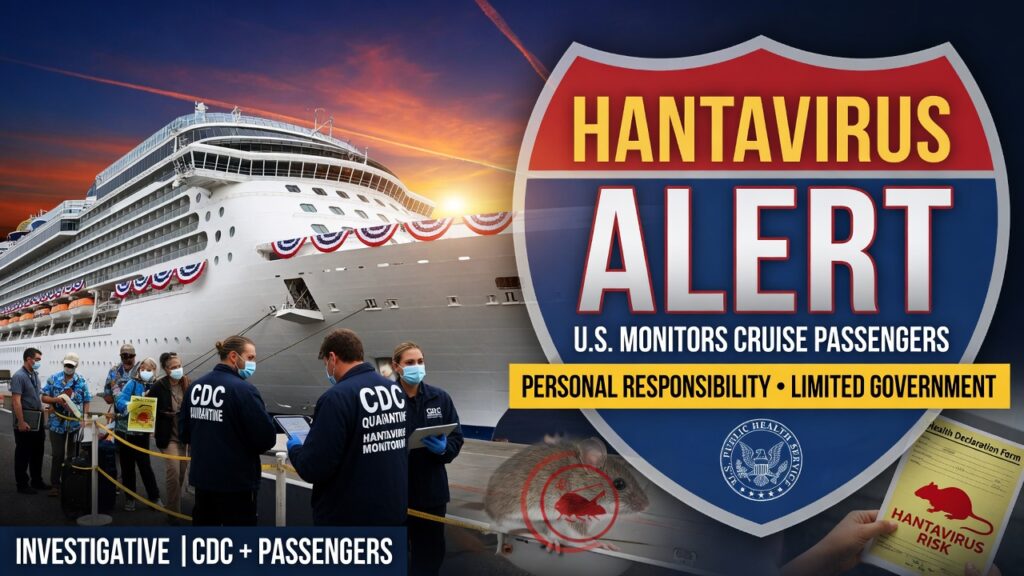
U.S. Monitoring Hantavirus Cruise Passengers: Personal Responsibility and Limited Government in Action
Signature: BEKcbotosJFrGVjULMVDG5hcT1UzLNrpTpQmWKQGZmOELXHtx5RqfAHnNa2o9LQ+BZZhou/btWOXLMvEFCStjW4L/EHhV4PF5c2oevJ5wdTeWKzHupnaG5wMTeMtRWQV2HW9BaUgYA/44JT+hoEA9GTwKhZh6ojkLbBEoyliEuHpk5/1MRo7vXb2IZouX1AROtysFOHDXqkA45watPasf2Fb1ejxFxFFeldXVDaPmCuDEYBUwcvj7OO36HKyUAQDDSWUvFPjhSu34T8kDH8z32K0gJ9MAJI52FtIN/BoRac0xJrqrWOnhv9p+E3osrHJFphUhBrGb81PJrNnARGcLC8LqJE9dR6y04fpEdQDSk5QulPFh3CHIQh5MHUXVFzSd2FyKlhBYk96wMrvR8aoR4ekwQce+aOYDi7Y+BoMLpXQWLz1VOjXLfLBSdhqxlhf/0D0dgL6XTWWy2h6xWF8q0SOYNgSmW6gieXT9+KS7bE2Ieet4o2PFVxIvonnlrUDO46L2Os+mFQR5CmdNU26byeEqcUDyVlq8cM48vDdZd4INMNX28qPX08POrIMRLUClf7v8jmhmnmzY5M/Gxtvl21gKPukOGOGL21MaZV0hvnjAi1pvVCCYJVR+iQVfNNPkf7leqHbfP2kYT0mzs1TreXy6M4jpPNzkfkTUgamRON3eldI6/iuiLzDgwmNL3z7zgBq1XGv2WE2Efuiexu0+Cuzl2d+1OdScucnclXP+u7gsEWem6+7Ej9i9IKy64hVgYps0EJ6XAOm8DprC6JfUykR6nxsGWj1i8Wr10bYUrElWXZn93+S52pOmmCTXT/ViE9RZQgRX739tFV7vFcGD14S/pHdzXeHbj0rDm1Gi3piNuNBA+49gR1Yo0VnAkjn9y9PFOBs7tXi0yqN6VvxtZKraly+CFGcfgPY37vkYhx3Dm/DV+DqqCsXY5Q9RpuejtIw4VqP4+wn0iXzN3y37Vecy+sPjJmWUbji8eSw3i8=
As American travelers from a hantavirus-stricken expedition cruise return home to states including Arizona, California, Georgia, Texas, and Virginia, this rare outbreak underscores the enduring truth that individuals bear primary responsibility for their choices while government’s role should remain targeted, transparent, and fiscally sound.
While health officials track a handful of asymptomatic U.S. passengers who left the MV Hondius before the full scope of the Andes variant outbreak emerged, the incident raises pointed questions about risk assessment in international travel, the boundaries of public health bureaucracy, and the need for clear-eyed accountability rather than reflexive overreach.
Why This Issue Matters Now
The MV Hondius, operated by Oceanwide Expeditions, departed Ushuaia, Argentina, on April 1, 2026, for what was intended as an Antarctic expedition. By early May, three passengers—a Dutch couple and a German man—had died, with five confirmed and several suspected cases of the Andes strain of hantavirus linked to the vessel.
Support Independent Local Journalism
TheTownHall.News is a non-profit reader-supported journalism. Just $5 helps us hire local reporters, investigate important issues, and hold public officials accountable across Alameda County. If you believe our community deserves strong, independent journalism, please consider donating $5 today to support our work.Roughly two dozen passengers disembarked earlier, including at St. Helena on April 24, before authorities fully identified the threat. Among them were Americans now under monitoring in multiple states. None have developed symptoms, and officials consistently describe the risk to the broader public as extremely low.
This situation arrives at a time when Americans are weary of expansive government health mandates and eager for institutions that respect individual liberty while delivering competent, limited intervention. The cruise outbreak offers a case study in how personal vigilance, clear communication, and restrained authority can manage genuine but contained risks without repeating past overreactions.
The Facts of the Outbreak
Hantaviruses are primarily rodent-borne, transmitted through contact with urine, droppings, or saliva. The Andes variant, prevalent in parts of South America, stands out because it is one of the few capable of limited person-to-person transmission under conditions of close, prolonged contact.
Initial infections likely stemmed from rodent exposure during shore activities in Argentina. Some onboard spread appears possible in the confined cruise environment. As of the latest reports, eight illnesses are connected to the ship, with the vessel now heading toward Spain’s Canary Islands carrying over 100 remaining passengers and crew under precautionary measures.

U.S. Passengers Who Disembarked Early
- Georgia: Two residents, reported in good health
- Arizona: One resident, asymptomatic
- Texas: Two residents under monitoring
- Virginia: One resident
- California: An unspecified number, with local health departments assisting
State health departments, working with the CDC, are conducting symptom monitoring for the incubation period—typically weeks. No secondary cases have emerged in the United States.
“Individual travelers must weigh risks before embarking on remote adventures, just as governments must avoid turning every potential exposure into a costly national mobilization.”
Personal Responsibility in an Age of Global Travel
Adventure tourism to remote regions carries inherent risks—rodent exposure in Patagonia being one of them. Responsible adults research destinations, review health advisories, and assess their own tolerance for uncertainty. Cruise operators and travelers share accountability for due diligence before departure.
This outbreak highlights the value of traditional civic virtues: informed consent, self-reliance, and prudent decision-making. Families planning international trips should prioritize:
- Robust travel insurance
- Awareness of local zoonotic threats
- Realistic expectations rather than assuming seamless government rescue
Parents, in particular, have a duty to model and teach these habits to the next generation. Shielding children from every risk stunts resilience; equipping them with knowledge builds it.
The Real Cost of Government Overreach
Public health monitoring of genuinely exposed individuals is a legitimate, limited function of government—protecting the commons without unnecessary intrusion. Yet history shows how quickly such efforts can expand in scope and expense.
Support Independent Local Journalism
TheTownHall.News is a non-profit reader-supported journalism. Just $5 helps us hire local reporters, investigate important issues, and hold public officials accountable across Alameda County. If you believe our community deserves strong, independent journalism, please consider donating $5 today to support our work.Taxpayers rightly expect fiscal accountability. Coordinating across federal agencies, multiple states, and international partners consumes resources. When risks remain low, as officials have repeatedly stated, proportionality matters. Heavy-handed approaches erode public trust and divert funds from genuine threats or core responsibilities like border security and basic law enforcement.
Critics of limited government do not oppose competent response; they oppose mission creep that treats every traveler as a vector requiring blanket surveillance. Clear, fact-based guidance empowers citizens far more effectively than expansive mandates.
What Critics Get Wrong
Some voices may frame this as evidence for tighter international controls or more centralized federal power. Yet the data does not support panic. Transmission of Andes hantavirus remains rare and context-specific, requiring extended close contact. No evidence suggests community spread in the U.S. or elsewhere from these returning passengers.
Opposing overreaction is not denialism—it is realism rooted in evidence. Previous global health episodes demonstrated the damage wrought by fear-driven policies disconnected from proportionate risk. Targeted monitoring, transparent updates, and reliance on individual compliance align better with American values of liberty and accountability.
How This Affects Families and Communities
For families in the affected states, the primary impact is vigilance, not alarm. Asymptomatic passengers following health guidance demonstrate personal responsibility in action. Communities benefit when neighbors exercise caution without demanding society-wide disruption.
This episode also reinforces parental rights and family autonomy. Decisions about travel, health precautions, and risk belong first to individuals and households, supported—not supplanted—by expert advice.
Broader civic values shine through in the international cooperation underway, yet success ultimately hinges on clear communication and voluntary adherence rather than coercion.
Key Takeaway
Rare events like the MV Hondius hantavirus cluster test our commitment to balanced governance. Personal responsibility, paired with limited, effective government action, offers the surest path to safety and liberty.
Conclusion
The monitoring of U.S. passengers from the hantavirus-affected MV Hondius serves as a reminder that threats exist in our interconnected world, but they need not upend core principles. Individuals must own their choices. Governments should respond competently within constitutional bounds, mindful of costs and freedoms. Communities thrive when guided by evidence, accountability, and traditional values of self-reliance.
This is not a call to isolationism but to intelligent engagement—with eyes open to risks and commitment to proportionate solutions.
Stay informed through primary sources, share this article with your network, and support independent journalism that prioritizes facts over fear. Engage in your local civic life by holding officials accountable for transparent, fiscally responsible governance. In an era of uncertainty, vigilance and principle remain our strongest defenses.