Government VPN Crackdowns Threaten Digital Privacy — Here’s What’s Really at Stake
Lawmakers in the UK and the United States are moving to restrict the tools millions use to protect their privacy online. A new decentralized VPN built on the Nostr protocol may be the most important countermove no one is covering.
Governments don’t announce surveillance states. They build them quietly, one reasonable-sounding restriction at a time.
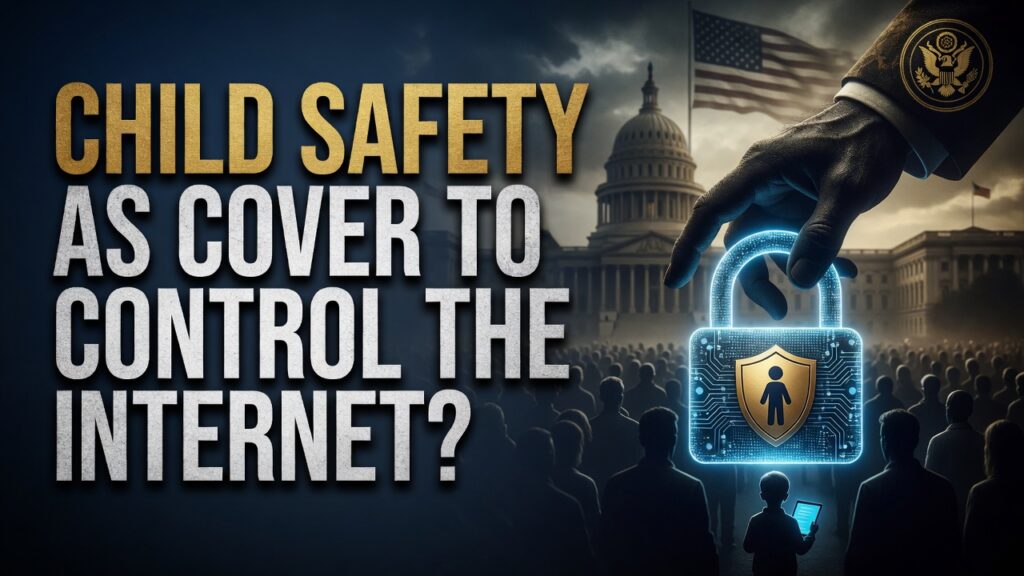
In 2025 and 2026, that quiet construction has accelerated on both sides of the Atlantic — wrapped in the language of child protection and online safety. The target isn’t just harmful content. It’s the tools ordinary citizens use to keep their internet activity private. VPNs — virtual private networks that encrypt traffic and shield users’ identities — are now squarely in the crosshairs of legislators who have discovered a convenient truth: you cannot enforce internet censorship if people can route around it.
Support Independent Local Journalism
TheTownHall.News is a non-profit reader-supported journalism. Just $5 helps us hire local reporters, investigate important issues, and hold public officials accountable across Alameda County. If you believe our community deserves strong, independent journalism, please consider donating $5 today to support our work.What Are Governments Actually Proposing?
The pressure is real and accelerating. On January 21, 2026, the UK House of Lords voted 207 to 159 to ban VPN services for anyone under 18. In the same session, the Lords also backed mandatory device-scanning software on phones and tablets, and a social media ban for under-16s. The child-safety framing was front and center — but the implications reached far beyond minors. Stateofsurveillance
Prime Minister Keir Starmer said the government is “closing the loopholes that put children at risk,” while announcing a new consultation to “confront the full range of risks children face online,” explicitly including options to “age restrict or limit children’s VPN use.” tomsguide
One co-founder of Planet VPN told GB News: “Banning access to VPNs for young users undermines the core principles of privacy and anonymity that these tools provide. Proposed restrictions would force VPN providers to collect sensitive data and perform identity checks, posing privacy risks for many users and potentially exposing vulnerable groups, including human rights activists, to risks of surveillance.” GB News
The Commons pushed back — on March 9, 2026, the House of Commons voted 321 to 106 to reject the specific Lords amendment on child VPN prohibition. But the underlying powers remain. The final Children’s Wellbeing and Schools Act 2026 created a broader power allowing ministers to make future regulations that prevent or restrict children’s access to specified internet services. As of mid-June 2026, the government’s consultation has closed and no VPN-restriction regulations are yet in force — but the authority to enact them now exists. FindCheapVPNsFindCheapVPNs

Is America Far Behind?
If you think this is only a British problem, think again. The United States is already moving down the same road.
Utah became the first U.S. state to directly target VPN users, with Senate Bill 73 — the Online Age Verification Amendments — signed by Governor Spencer Cox on March 19, 2026. The law holds websites liable for users’ access even when those users mask their location through a VPN. TechRadar
The Electronic Frontier Foundation warned that the mandate “threatens to significantly undermine digital privacy rights” and that requiring platforms to share truthful information about a lawful privacy tool raises “massive constitutional concerns regarding free speech.” Legal challenges have temporarily halted enforcement, but the precedent stands. Electronic Frontier Foundation
At the federal level, the picture grows darker still. In March 2026, a group of Democratic senators including Ron Wyden, Alex Padilla, Ed Markey, and Elizabeth Warren sent a letter to Director of National Intelligence Tulsi Gabbard asking her to clarify whether Americans who route their traffic through overseas VPN servers are effectively being treated as foreigners under U.S. surveillance rules — potentially losing constitutional protections against warrantless monitoring. Nextgov.com
The question legislators are dancing around: could using a VPN to protect your privacy actually strip you of your Fourth Amendment rights?
Support Independent Local Journalism
TheTownHall.News is a non-profit reader-supported journalism. Just $5 helps us hire local reporters, investigate important issues, and hold public officials accountable across Alameda County. If you believe our community deserves strong, independent journalism, please consider donating $5 today to support our work.“Governments don’t announce surveillance states. They build them quietly — one reasonable-sounding restriction at a time.”
What Do Supporters of These Policies Actually Believe?
Defenders of VPN restrictions are not wrong that bad actors exploit privacy tools. Children do use VPNs to bypass age-verification systems. Criminals do use encrypted networks to evade detection. These are real problems that deserve real solutions.
The UK’s Online Safety Act, which took effect in July 2025, requires photo ID, facial scans, or credit card verification to access adult content — and VPN use surged in response, with some outlets reporting a 6,430% spike in UK VPN downloads as citizens sought to avoid submitting biometric data to private brokers. Secretsofprivacy
That surge is precisely what alarmed legislators. If the safety architecture can be bypassed by anyone willing to download a free app, the argument goes, the law has no teeth.
But this reasoning contains a fatal flaw: the infrastructure built to enforce age restrictions doesn’t stay limited to age restrictions. The UK’s Online Safety Act is far-reaching and touches many websites and online services — from major social networks to small personal blogs. The same legal mechanisms designed to keep children off adult sites can be extended — and historically have been extended — to suppress political speech, journalism, and dissent. Once a government has the authority to decide what citizens may access and which tools they may use to access it, the category of “harmful content” tends to expand. ISPreview UK
The Response the Mainstream Press Is Ignoring
6,430%. The surge in UK VPN downloads after the Online Safety Act took effect — and the number that explains why governments are suddenly very interested in shutting the door.
Enter Nostr VPN, an open-source project released in May 2026 by Martti Malmi — one of Bitcoin’s earliest developers, who worked directly alongside Satoshi Nakamoto from 2009 to 2011. The new version includes a multiplatform interface for managing VPN settings across devices, as well as Nostr-based multihop routing that acts as a fallback system when direct peer-to-peer connections fail. The project uses Nostr cryptographic keys instead of email logins or third-party accounts, reducing reliance on centralized services. Crypto News
The architecture eliminates the central server that defines commercial VPNs like NordVPN or ProtonVPN. Devices connect directly through a peer-to-peer mesh network, with Nostr relays handling discovery and signaling. Each user identity is a cryptographic key pair — the same primitive that secures Bitcoin transactions. Yellow
Why Does a Decentralized VPN Matter?
The answer is straightforward: you cannot ban what you cannot find.
Traditional VPN providers, however privacy-focused, are corporations with servers, employees, and legal addresses. They can be pressured, subpoenaed, and regulated. Nostr VPN reassigns the trusted-operator role to the user. A home server, a rented VPS, or any controlled machine can serve as the exit node, meaning no third party holds the logs that could otherwise be subpoenaed. Yellow
Bitcoin advocate Swiss Hodler described decentralized VPNs as “freedom technology” that makes online censorship more difficult because it removes infrastructure from centralized control. That framing resonates with a principle older than the internet: the most durable freedoms are the ones that don’t depend on a gatekeeper’s goodwill. Bitget
The architects of the surveillance state understand this too — which is why the timing of these regulatory pushes, arriving precisely as decentralized alternatives mature, is worth noting.
The Principle Behind the Technology
The philosophical parallel to Bitcoin is not accidental. Bitcoin was designed to enable financial transactions without requiring trust in a bank or government. Nostr VPN applies that same logic to internet access: route your traffic, verify your identity, and connect with other people — without asking permission from a corporate intermediary who can be coerced.
This matters because every centralized privacy tool carries a hidden liability. When a government compels a VPN provider to hand over user logs, every subscriber who trusted that provider is exposed. The Nostr VPN model reduces the possibility of coercion over infrastructure operators and expands individual control over data. There is no central log to subpoena because there is no central operator to compel. Webitcoin
If your privacy depends on a company’s promise not to share your data, it was never really your privacy.
Key Questions This Story Raises
- If governments can mandate age verification for VPN use, what stops them from extending that mandate to political content, religious material, or journalism they find inconvenient?
- Do Americans who use commercial VPN services risk losing Fourth Amendment protections against warrantless surveillance — and does the government owe them a straight answer?
- As decentralized tools like Nostr VPN mature, will regulators shift from restricting VPN providers to targeting the underlying protocols themselves?
The pattern here is not complicated. Governments identify a legitimate problem — in this case, children accessing harmful content — and respond with a solution engineered to give them something they have always wanted: visibility into what their citizens are doing online. The child-safety rationale is politically unassailable. The surveillance infrastructure it builds is not.
The real question isn’t whether Nostr VPN will become a household name. It’s whether citizens will recognize what is being constructed around them before the architecture is complete — and whether they will demand that their representatives draw clear, enforceable lines between protecting children and controlling adults.
Technology moves faster than legislation. For now, that’s the only thing standing between your browsing history and a government subpoena.
What do you think — is “child safety” becoming a blank check for government surveillance? Share this article and make your voice heard.
Still have questions about how these laws could affect you? Subscribe to The Town Hall for daily coverage of the policies shaping your digital rights. Think your representative needs to hear about this? Contact them directly at house.gov or senate.gov.