California Dad Who Assaulted Daughter Before Her Suicide Gets 1 Year — Judge Was Newsom Appointee
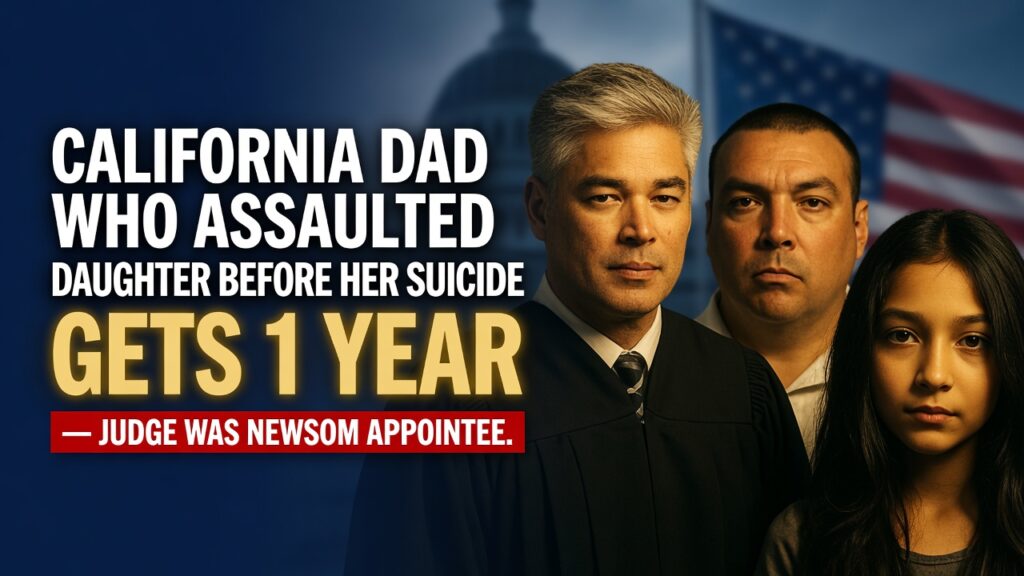
Makayla Settles had a plan. College. A new city. A fresh start. What she got instead was a betrayal so profound it ended her life — and a California justice system that responded with 365 days in county jail.
Makayla Rene Settles was 18 years old when she packed her bags in Raleigh, North Carolina, and flew to California. She was going to live with her biological father, Stephen Vincent Chavez, in Moorpark. She was going to attend college. She was going to build something.
She had been in his home for two days.
Support Independent Local Journalism
TheTownHall.News is a non-profit reader-supported journalism. Just $5 helps us hire local reporters, investigate important issues, and hold public officials accountable across Alameda County. If you believe our community deserves strong, independent journalism, please consider donating $5 today to support our work.According to the Ventura County District Attorney’s Office, Chavez took his daughter to a family gathering, where both of them were drinking. When they got home, he purchased more alcohol. That night, he sexually assaulted her.
Makayla was hospitalized. A rape kit confirmed his DNA. She called home terrified.
Five months later, in December 2025, she was dead by suicide.
This week, Stephen Vincent Chavez walked into a Ventura County courtroom, pleaded guilty to felony incest and misdemeanor providing alcohol to a minor — and walked out with a sentence of one year in county jail and three years of felony probation.

One year. For destroying his own daughter’s life two days after she trusted him with it.
Why Wasn’t He Charged With Rape?
This is the question that lit up the internet the moment the case went public — and the answer reveals something deeply broken about California law.
Despite the DNA evidence. Despite the hospitalization. Despite the fact that Chavez himself admitted he exploited a position of trust with a particularly vulnerable victim — rape was legally off the table.
Ventura County DA Erik Nasarenko didn’t reach that conclusion lightly. He assembled a team of ten prosecutors, brought in outside legal experts from another county, ordered new interviews, forensic testing, medical evaluations, and analysis of electronic evidence. After an exhaustive review, every single expert reached the same conclusion: under California law, as it currently exists, incest was the only felony charge the facts and admissible evidence could support.
Makayla’s mother, Carolina Sandoval, put it plainly: “He got her daughter intoxicated and took advantage of her physically and mentally. So if that’s not rape, I really don’t know what is.”
Support Independent Local Journalism
TheTownHall.News is a non-profit reader-supported journalism. Just $5 helps us hire local reporters, investigate important issues, and hold public officials accountable across Alameda County. If you believe our community deserves strong, independent journalism, please consider donating $5 today to support our work.She’s right. And the law, as written, doesn’t care.
The Judge Who Could Have Done More — And Didn’t
Here’s where this case transforms from a tragedy into an accountability story.
California law sets the maximum penalty for felony incest at three years in state prison. Prosecutors fought for every day of it. Deputy DA Tessa McCarty argued that Chavez had “exploited his position as a father, violated his daughter’s trust, supplied her with alcohol, and engaged in criminal conduct that forever altered the course of her life.” The DA’s office called prison “the only appropriate sentence.”
Ventura County Superior Court Judge R. Paul “Dusty” Kawai — appointed by Governor Gavin Newsom — gave Chavez one year. In county jail. Not state prison. County jail.
His stated reason? Chavez had no prior criminal record.
That’s it. That’s the explanation for why a man who sexually assaulted his own daughter, who admitted to exploiting a position of trust, who admitted his victim was particularly vulnerable, who watched that daughter die five months later — gets to be home before next summer.
The DA’s office didn’t hide its frustration. “While we respect the court’s decision, we continue to believe a state prison sentence was warranted under the facts of this case,” McCarty said in a statement that was about as close to a public rebuke of a sitting judge as prosecutors can legally issue.
And this wasn’t the first time Kawai drew that kind of criticism. The same judge recently slashed two years off the recommended sentence for an Oxnard driver who killed two people — again over prosecutors’ objections.
What Makayla’s Family Faced in That Courtroom
Before the sentence was read, several of Makayla’s family members stood at the podium and delivered victim impact statements. They described the lasting trauma. They described the loss. They described what it means to lose someone who was just starting to live.
Her mother had already told the world what she thought of the maximum possible sentence, before she even knew how far below it the judge would land: “It just feels like my daughter’s life is only worth three years.”
She ended up getting less than that.
The One Detail That Almost Got Lost
In the flood of outrage over the sentence, one fact was reported quietly and deserves to be said clearly: Chavez was also ordered to register as a sex offender for life.
That matters. It doesn’t balance the scales. It doesn’t bring Makayla back. But it is a consequence that will follow him permanently — and it’s worth noting that prosecutors secured it.
What it doesn’t change is this: a man who committed one of the most profound betrayals imaginable, whose actions contributed directly to his daughter’s death, will be out of custody within a year. He’ll serve his probation in the community. The specific conditions of that probation — what he can and cannot do, where he must report — have not yet been made public.
The System Failed Makayla at Every Level
California’s incest statute caps punishment at three years. A judge with a documented pattern of below-recommended sentences took it down to one. A law that should have allowed a rape charge — given DNA evidence, a rape kit, and a guilty admission of exploiting a vulnerable victim — didn’t.
None of these failures are independent of each other. They are a stack.
Makayla Settles moved across the country for a better life. She had a dream of becoming an architect. She was an entrepreneur. She was 18 years old. She made it two days before the person who was supposed to protect her became the reason she couldn’t stay.
California gave him 365 days.
If you or someone you know is struggling, call or text 988 to reach the Suicide and Crisis Lifeline, available 24/7.