Did the Media Lie About Why Norway Brought Its Own Food to the World Cup?
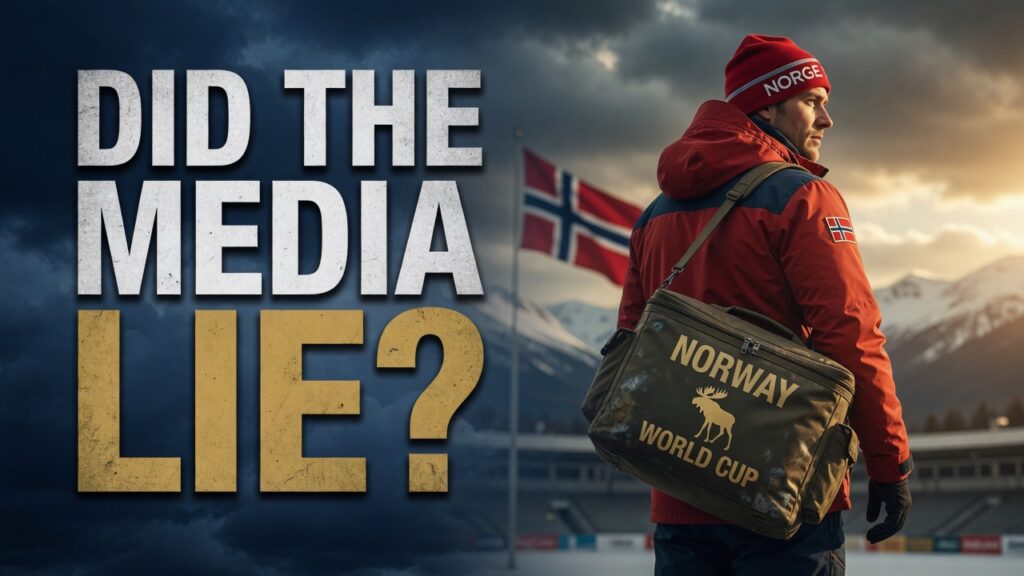
The viral claim that Norway fled “toxic American food” is a media fabrication. The real story — sports science, elite nutrition, and a 35-year veteran chef — is far more interesting than the outrage bait.
The story spread like wildfire across social media in June 2026: Norway’s national football team was so disgusted by America’s “toxic and poisonous” food supply that they shipped over 1,000 pounds of their own groceries to the World Cup. Influencers called it a “passive-aggressive boycott.” Commentators declared it proof that American food is unfit for human consumption. The clicks rolled in.
There’s just one problem. The Norwegian team, their chef, and their federation never said anything of the sort.
Support Independent Local Journalism
TheTownHall.News is a non-profit reader-supported journalism. Just $5 helps us hire local reporters, investigate important issues, and hold public officials accountable across Alameda County. If you believe our community deserves strong, independent journalism, please consider donating $5 today to support our work.What Norway Actually Did — and Why
The facts are not in dispute. Norway’s football federation did ship a substantial quantity of traditional food to their World Cup training base at the University of North Carolina Greensboro. The cargo included roughly 300 kilograms of Atlantic salmon, trout, Arctic char, halibut, king crab, snow crab, and langoustines; 116 kilograms of brunost — Norway’s iconic caramelized brown cheese; and 6,000 oranges. Three chefs, led by 35-year national team veteran Aron Espeland, flew over with industrial juicers and customized kitchen equipment to prepare four structured meals daily for a squad of more than 60 people.
That is elite sports nutrition logistics. It is not a food safety protest.
Espeland, speaking directly to reporters, was unambiguous about the purpose: “Proper nutrition is very important when they are performing at the highest level, so the players need to get enough vitamins and minerals every single day. It is our responsibility to put together menus that are varied, inviting, nutritious and healthy.”
The team’s stated reason for the seafood-heavy cargo? Omega-3 fatty acids. Published research cited by the Norwegian Seafood Council notes that a high proportion of professional athletes fall below the omega-3 levels required for recovery from high-endurance sport. Espeland’s menu was designed to fight post-match inflammation, accelerate muscle fiber repair, and support cognitive function — including reaction time and decision-making — during a tournament where the margins are razor-thin.

The menu was also deliberately calibrated for the heat and humidity of North Carolina’s summer, helping players adapt their digestion and hydration to conditions far removed from a Scandinavian climate.
Where the “Toxic Food” Narrative Came From
Snopes, which investigated the viral claim, found no evidence that the Norwegian team brought food from home specifically to avoid eating American food. The fact-checking outlet noted a detail that most viral posts conveniently omitted: Norway sourced some of its ingredients locally in the United States, including the 6,000 oranges used for fresh juice. Teams that are genuinely afraid of a country’s food supply do not order local produce on arrival.
The “toxic American food” framing was grafted onto the story by social media accounts tapping into an existing TikTok and Instagram trend comparing European and American food ingredient labels. That trend has genuine merit — the European Union does apply a stricter precautionary principle on food additives than the United States — but weaponizing Norway’s routine sports logistics to advance that argument is not journalism. It is narrative fabrication.
Media outlets that ran the “toxic food” angle did not quote Norway’s chef. They did not contact the Norwegian Football Federation. They reverse-engineered a political message from a grocery manifest.
This Is Standard World Cup Practice — Nobody Said That Either
Another fact buried by the viral coverage: Norway is not unusual. Argentina and Uruguay regularly ship tons of native beef to major tournaments to preserve player routines. Other nations at the 2026 World Cup brought their own kitchen staff and specialized ingredients. Australia’s chef made headlines separately for using Vegemite levels as a player satisfaction metric. England’s team chef was detained at a Florida airport for carrying professional cooking knives.
Support Independent Local Journalism
TheTownHall.News is a non-profit reader-supported journalism. Just $5 helps us hire local reporters, investigate important issues, and hold public officials accountable across Alameda County. If you believe our community deserves strong, independent journalism, please consider donating $5 today to support our work.Elite tournament football has a kitchen logistics industry. Norway did not invent it.
What Norway did do differently was make it public — partly through the Norwegian Seafood Council, which has a promotional partnership with the team and a direct financial interest in publicizing how much salmon Erling Haaland eats. That context also went unmentioned in the “America’s food is poison” coverage.
The Actual Accountability Question Nobody Is Asking
Here is what the viral coverage missed entirely: the debate about American food standards is legitimate and deserves serious treatment.
The United States does permit a range of food additives, artificial dyes, and chemical washes that are banned or restricted in the European Union. The FDA operates on a “generally recognized as safe” framework that has historically allowed substances into the food supply unless they are affirmatively proven harmful — a structurally different standard from the EU’s precautionary approach. That policy gap is a real and ongoing regulatory accountability story.
But that story is not told by misquoting a Norwegian chef. It is told by examining what the FDA approves, who funds the safety research, and what happens when the science catches up to the chemicals already in circulation. That story requires sources, documents, and accountability reporting — not a viral clip of a fish delivery truck.
Norway brought salmon to North Carolina because their athletes perform better on omega-3-rich diets they have eaten their entire lives. The media told you it was because America is poisoning its people.
One of those is a verifiable sports science decision. The other is content.
Key Questions
- What specific food additives permitted in the United States are currently restricted or banned in the EU, and what is the FDA’s review status on each?
- Did any outlet that ran the “toxic American food” angle contact the Norwegian Football Federation for comment before publication?
- Which other World Cup nations brought their own food and kitchen staff to the 2026 tournament — and why did only Norway’s shipment trigger the viral narrative?
- Does the Norwegian Seafood Council’s promotional partnership with the national team create a conflict of interest in how the food story was initially framed and distributed?