Trump Treason Threats Against Media Over Iran War Coverage
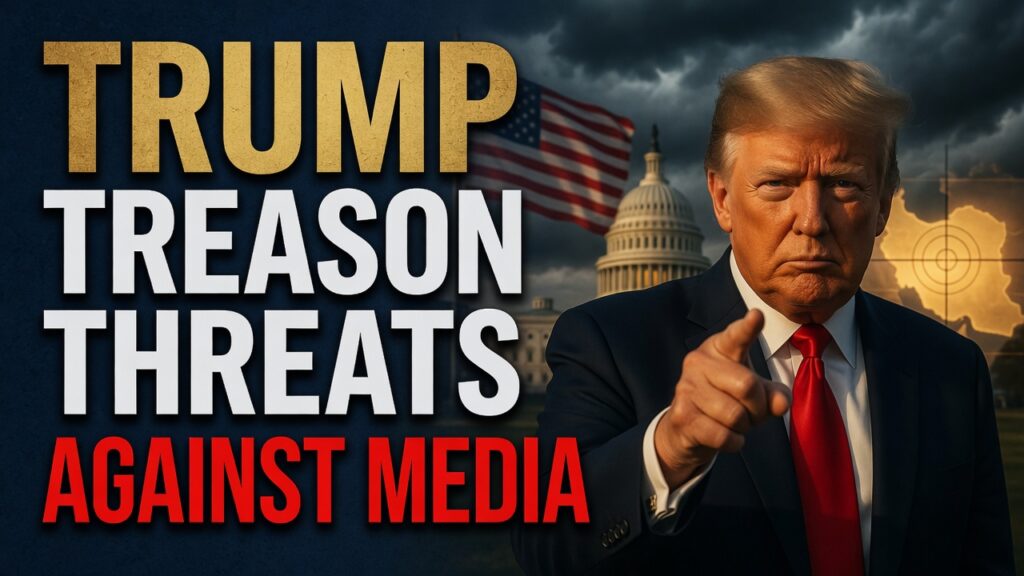
Как President Trump escalates threats against news organizations covering the Iran war, Americans are asking a blunt question: does the government get to decide what counts as real reporting?
Treason carries a death penalty in America.
That’s the charge President Trump floated against major news outlets this spring, and it resurfaced in late June when he branded a New York Times war-coverage story “TREASONOUS” and folded it into an ongoing lawsuit against the paper. The fight isn’t new, isn’t isolated, and isn’t slowing down as the Iran war grinds through its fifth month.
What Did Trump Actually Say About the Press?
In mid-March, Trump posted a lengthy Truth Social message accusing the Wall Street Journal of “false reporting” after the paper cited two US officials describing Iranian missile damage to refueling planes at a Saudi air base. He also pointed to an AI-generated fake video that falsely showed the USS Abraham Lincoln on fire. Outlets responsible for spreading it, he wrote, should be “brought up on Charges for TREASON for the dissemination of false information.” Under federal law, that is not a figure of speech — treason is punishable by death or a minimum five-year prison term. A sitting president floated a capital charge against a newsroom for reporting sourced to named U.S. officials — is that where accountability ends and intimidation begins?
Support Independent Local Journalism
TheTownHall.News is a non-profit reader-supported journalism. Just $5 helps us hire local reporters, investigate important issues, and hold public officials accountable across Alameda County. If you believe our community deserves strong, independent journalism, please consider donating $5 today to support our work.Why Is the FCC Threatening Broadcast Licenses?
The pressure didn’t stop with Trump’s own account. FCC Chair Brendan Carr warned broadcasters that stations airing what he called “distortions” about the war risked their licenses, saying outlets “have a chance now to correct course before their license renewals come up.” Carr has a track record here — he previously pressured ABC over Jimmy Kimmel’s commentary, and the network briefly pulled the show. A federal regulator tying license renewal to favorable war coverage is not a marketplace dispute. It’s a government agency using its licensing power as leverage over editorial content, and that distinction matters regardless of which party holds the White House.
Who in Washington Is Pushing Back?
The response crossed party lines in spirit, if not in headcount. Sen. Ed Markey called the FCC’s posture “a blatant attempt to muzzle the free press.” Sen. Chris Murphy went further, framing it as a direct trade: favorable coverage for license security. Sen. Brian Schatz called it worse than the earlier Kimmel episode. None of these lawmakers dispute that wartime misinformation is a real problem. Their objection is narrower and more precise: using treason threats and licensing power to police coverage is not the same as correcting bad reporting.
“We are in the middle of it.”
Death. That’s the maximum penalty under federal law for treason. The question no one in Washington has answered: was a Truth Social post about war coverage ever really about treason — or about control?
Is There a Legitimate Security Concern Buried in Here?
Yes, and it deserves honest treatment. Iran has used AI-generated footage as a propaganda tool during this war, and the fake USS Abraham Lincoln video is a real example of adversarial disinformation muddying public understanding of an active conflict. If a foreign adversary can manufacture fake battle footage and get it circulated by American outlets, is “treason” really the wrong word — or just a wildly disproportionate one? That’s a fair question. It’s also where the administration’s case runs into trouble: the Wall Street Journal story Trump attacked wasn’t AI-generated disinformation. It was sourced reporting attributed to named U.S. officials describing real damage. Conflating a legitimate scoop with a fake video, then applying the same “treason” label to both, is where the argument collapses.

What Do Supporters of This Policy Actually Believe?
Supporters of a harder line argue that wartime coverage carries higher stakes than peacetime reporting — troop morale, operational security, and public resolve can all be shaped by what gets published, true or false. They point to real cases of AI-manufactured propaganda and argue that outlets have a responsibility to verify before publishing, especially when Iran has an active interest in eroding American confidence in the war effort. That’s a defensible starting position. Where it breaks down is scope: the treason threats and license warnings have been aimed at established outlets publishing officially sourced reporting, not at confirmed disinformation. A policy meant to fight fake AI videos shouldn’t function as a blanket threat against any story the administration dislikes.
Key Questions
- Can a president threaten treason charges against a newsroom without triggering a First Amendment challenge?
- Does tying broadcast licenses to war coverage tone cross the line from oversight into censorship?
- If this precedent holds, what stops it from being used against the next administration’s critics too?
Why Does This Matter Beyond the Newsroom?
This isn’t just a media-industry dispute. Limited government means limited government — including limits on using regulatory leverage or capital-crime rhetoric to shape what citizens are allowed to read about a war their tax dollars are funding. Congress, not a presidential social media account, defines treason under Article III of the Constitution. When license renewals become a bargaining chip for favorable coverage, the accountability structure that’s supposed to run in the other direction — press scrutinizing government — gets inverted. Would you trust a government that decides for itself which of its own actions count as fake news?
Are Our Institutions Built to Withstand This?
The Committee to Protect Journalists has already flagged the case of an American journalist who went quiet for weeks after posting footage of a U.S. fighter jet crash in Kuwait — a reminder that press-freedom concerns in this war extend beyond social media posts. Whether or not any formal treason charge is ever filed, the chilling effect doesn’t require a conviction to work. Editors weighing whether to run a sourced story now have to weigh a government threat alongside the usual editorial calculus. That’s a cost paid by the public, not just the press.
What Do Supporters and Critics Agree On?
Both sides agree disinformation during wartime is dangerous. Both sides agree AI-generated fake footage is a growing problem with no easy fix. The disagreement is about remedy — whether the answer is better verification standards and public correction, or treason threats and license leverage aimed at outlets that got the facts right. That distinction is the whole debate.
So which is it: a government protecting the public from wartime disinformation, or a government protecting itself from wartime scrutiny? The answer will shape how the next war gets covered too — and whether anyone still trusts what they’re told about it.
Support Independent Local Journalism
TheTownHall.News is a non-profit reader-supported journalism. Just $5 helps us hire local reporters, investigate important issues, and hold public officials accountable across Alameda County. If you believe our community deserves strong, independent journalism, please consider donating $5 today to support our work.What do you think — has this crossed a line, or is it fair game in wartime? Share this and let us know.
Still have questions about where this goes next? Subscribe for daily coverage as this story develops. Think others need to see this? Share the article. Want your voice heard? Contact your senator’s office and ask where they stand on the FCC’s license threats — it takes five minutes and a phone call.