California SNAP Fraud Investigation: What the LA Skid Row Raid Reveals
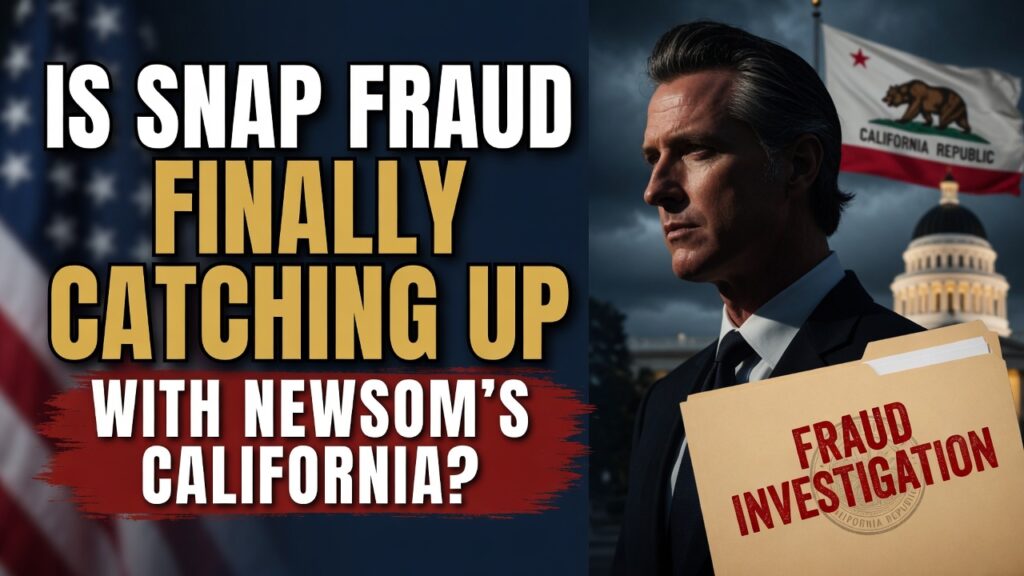
As federal agents crack down on food-stamp fraud across Los Angeles, Californians are left asking a simple question: who was watching the money, and why did it take Washington to find it?
A Skid Row party supply store just became the face of California’s welfare fraud problem. Last Thursday, federal agents and Los Angeles police swarmed Escamex Party Supplies on Towne Avenue, arresting a 30-year-old cashier accused of turning food assistance into cash. The timing matters: it comes as Governor Gavin Newsom and Attorney General Rob Bonta spend months in court fighting the Trump administration over federal funding, while their own state’s benefit programs rack up violations by the dozen.
Who Got Caught in the Skid Row Raid?
Jesse Cervantes-Gomez, a cashier at Escamex, is accused of running what investigators called a kickbacks-for-welfare scheme. According to federal reporting, he is alleged to have processed fake SNAP purchases and handed cash back to what he believed were fraud-hungry customers — customers who were, in fact, undercover federal agents. He has been arrested; the charges against him are allegations at this stage, not a conviction.
Support Independent Local Journalism
TheTownHall.News is a non-profit reader-supported journalism. Just $5 helps us hire local reporters, investigate important issues, and hold public officials accountable across Alameda County. If you believe our community deserves strong, independent journalism, please consider donating $5 today to support our work.The store itself drew scrutiny because of its numbers. Investigators say Escamex processed more than $730,000 in SNAP purchases over a single year — nearly double what comparable nearby stores brought in, despite being described as a low-volume operation. That kind of volume mismatch is exactly the pattern fraud investigators are trained to flag.
How Did Investigators Build the Case?
This wasn’t a walk-in bust. Federal agents from the USDA’s Office of Inspector General and Homeland Security Investigations spent months building the case before ever showing up in person. If a government program can be quietly drained for a year before anyone notices, who’s actually minding the store?
The pattern, as alleged, was methodical. In May, an undercover agent asked for cash back on SNAP benefits; Cervantes-Gomez allegedly had a clerk ring up $2,900 in fake purchases and handed over $1,450 in cash — roughly half. The agent returned in June for a second transaction, allegedly netting $1,740 in cash off $3,240 in phony sales. On July 2, agents arrived instead of a third buyer, and the arrest followed.
What Do the Numbers Actually Tell Us?
$730,000 in one year, from a single Skid Row storefront. The question no one in Sacramento has answered yet: how many more stores like this one are still operating?

This wasn’t an isolated case. The Skid Row arrest was one piece of a coordinated sweep. The USDA issued violation notices to 33 SNAP-authorized retailers across Los Angeles that same day — six accused of exchanging benefits directly for cash, and 27 accused of trading benefits for prohibited items like alcohol, tobacco, and vapes. That’s not one bad actor. That’s a pattern spread across dozens of storefronts in a single city, uncovered in a single sweep.
Is This Just One Bad Actor, or a Bigger Pattern?
California runs the largest SNAP program in the country — $12.5 billion a year, serving roughly 5.5 million residents. Every dollar diverted through fraud is a dollar taken from a family that actually needs it. State fiscal analysts have found that roughly 11 percent of payments go out in error, largely due to false or incomplete applications and administrative mistakes [California Legislative Analyst’s Office estimate cited in reporting].
It’s worth noting a separate but related case making headlines the same week: federal prosecutors announced that two brothers living in the U.S. illegally pleaded guilty to a $760,000 multistate SNAP fraud scheme unconnected to the Los Angeles raid. The two cases are different in every particular — different defendants, different states, different fraud method — but together they underscore a broader federal enforcement push against benefit fraud that California’s own systems have struggled to catch on their own.
Who Is Really Responsible — Sacramento or Washington?
Bill Essayli, the top federal prosecutor for the Central District of California, didn’t mince words about where the blame belongs.
“These programs are administered by the state, and the state have not done a good enough job to weed out the fraudsters.”
That’s a direct challenge to Sacramento, and it lands at an awkward moment. The same state government currently suing the federal government over funding disputes also oversaw an Employment Development Department that has acknowledged $31 billion in unemployment benefits may have been stolen during COVID-era claims, and separately saw a guilty plea in a nearly $270 million fraudulent Medi-Cal billing scheme. Newsom’s office was asked for comment on the Skid Row case and had not responded as of this reporting.
Support Independent Local Journalism
TheTownHall.News is a non-profit reader-supported journalism. Just $5 helps us hire local reporters, investigate important issues, and hold public officials accountable across Alameda County. If you believe our community deserves strong, independent journalism, please consider donating $5 today to support our work.What Do Supporters of Newsom’s Approach Actually Believe?
Fairness requires acknowledging the other side of this. Defenders of California’s current system argue that a program serving 5.5 million people at this scale will always carry some error rate, and that an 11 percent improper-payment figure reflects paperwork mistakes and administrative complexity far more than deliberate fraud. They point out that SNAP eligibility verification is a joint federal-state responsibility, meaning Washington shares accountability for the systems that missed this activity for a year. They also note that identifying and prosecuting 33 retailers in one sweep is itself evidence the enforcement system works, not that it’s broken.
That argument has some merit — administrative error and outright fraud are not the same thing, and conflating them risks overstating the problem. But it doesn’t fully answer why a single Skid Row store could process nearly a million dollars in suspicious transactions for a year before federal, not state, investigators caught it. Error rates explain mistakes. They don’t explain kickback schemes documented on tape by undercover agents.
Key Questions This Story Raises
- How many other retailers are running similar schemes right now, undetected?
- Why did it take a federal task force, rather than state oversight, to catch this pattern?
- What accountability measures will California put in place to prevent a repeat — and will taxpayers ever see a full accounting of the losses?
Is This the Accountability Moment Californians Have Been Waiting For?
One arrest, 33 violations, and a public statement from a federal prosecutor putting responsibility on the state — this is a moment where the accountability question can’t be dodged much longer. The real question isn’t whether more fraud exists in California’s welfare system. It’s whether anyone in Sacramento will act before the next federal raid finds it first.
What do you think — is California doing enough to protect these programs, or is the state relying on Washington to do its job? Share this article and let us know.
Still have questions about how your tax dollars are being spent? Stay informed — subscribe for daily coverage of accountability stories like this one.
Think your neighbors need to see this? Share the article.
Want your voice to count? Contact your California State Assembly representative and ask what oversight measures are being added to SNAP retailer monitoring.