Dayton Evidence Dump: Crime Lab Files Found Near Great Miami River
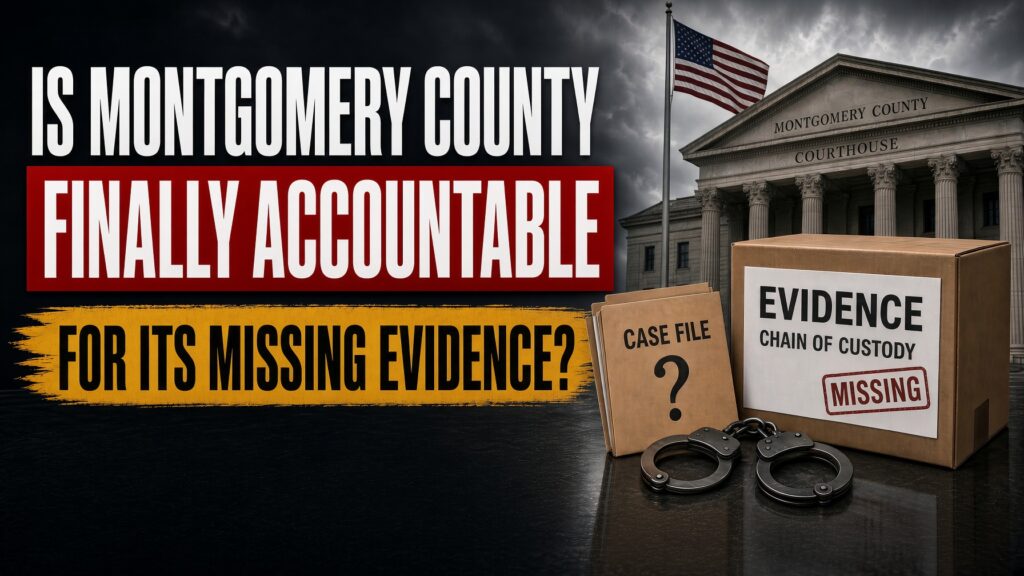
A viral video showing blood swabs and shell casings tossed near a public river has more than a million views — and a county sheriff’s office still hasn’t explained how active case evidence ended up outside a locked dumpster.
A box of blood swabs. Found by a river. Not by police.
That single image, captured on a Sunday walk in Dayton, Ohio, is why a Montgomery County Sheriff’s Office is now facing hard questions about how it handles evidence from real criminal cases. The video went viral within days. The sheriff’s office is still investigating exactly how it happened.
Support Independent Local Journalism
TheTownHall.News is a non-profit reader-supported journalism. Just $5 helps us hire local reporters, investigate important issues, and hold public officials accountable across Alameda County. If you believe our community deserves strong, independent journalism, please consider donating $5 today to support our work.What Did the Video Actually Show?
Dayton resident Jenna Lynn was walking along the Great Miami River on September 21, 2026, when she and her boyfriend spotted what looked like ordinary mail scattered near the riverbank [local news report, Fox19/WXIX]. It wasn’t mail. It was evidence folders stamped with the Miami Valley Regional Crime Lab, containing blood swabs collected from an apartment in 2024 and what Lynn described as bullets and casings tied to a firearm case [local news report, Fox19/WXIX].
Lynn posted the video to Facebook, where it has since drawn more than a million views [local news report, Fox19/WXIX]. A million people have now seen evidence from a real criminal case scattered by a public river — and the sheriff’s office still can’t say exactly how it got there. That’s not a hypothetical failure. It’s a documented one, sitting in a viral video with a timestamp.
How Did Evidence End Up Outside a Locked Dumpster?
The Montgomery County Sheriff’s Office confirmed the material had been disposed of in a dumpster at its own headquarters building, and that the dumpster is normally secured with a lock [local news report, Fox19/WXIX]. Investigators believe someone entered the dumpster and removed the material before it ended up along the riverbank [local news report, Fox19/WXIX].
That raises an immediate question a lock alone should have answered. If evidence tied to real cases is being discarded on-site rather than destroyed through a documented chain-of-custody process, a broken lock isn’t a minor maintenance issue — it’s a public safety gap. The sheriff’s office told reporters that removing already-discarded material isn’t itself illegal, but said it is investigating how the items ended up near the river [local news report, Fox19/WXIX].

Is Throwing Away Evidence Even Standard Procedure?
This is where the story stops being about one broken lock and starts being about policy. Law enforcement agencies are generally expected to retain evidence for as long as a case remains open, and often well beyond a conviction, in case of appeal. What Montgomery County has not yet answered publicly is when, why, and under what authority this particular batch of material was cleared for disposal in the first place.
Local reporters confirmed they were still waiting on the sheriff’s office for a response about its policy on discarding evidence and how long material is retained once a case closes [local news report, Fox19/WXIX]. If a county government can’t say how long it keeps evidence from violent crime cases, how confident should residents be in anything else it says it’s tracking? That is a fair question, not an accusation — and it deserves a direct answer, not a press release.
Why Should Taxpayers Outside Dayton Care About This?
It’s tempting to file this under local curiosity and move on. That would be a mistake. Every county sheriff’s office in the country operates on the same basic promise: taxpayer-funded evidence handling that protects both the accused and the public through a documented, auditable process. When that process fails visibly enough to go viral, it invites a legitimate question about how many quieter failures never get filmed.
2,000,000. That’s roughly double the view count already logged on a single Facebook video showing government evidence outside a secured facility. The question no one in Montgomery County has answered yet: how many other batches never got found by a passerby with a phone.
Regardless of what the underlying case was about, the evidence tied to it ended up outside a locked government dumpster, near a public walking path.
Who Is Actually Responsible for Chain of Custody Here?
Chain of custody exists precisely so evidence can’t be tampered with, misplaced, or disputed in court. A break anywhere in that chain — including at the disposal stage — can theoretically be raised by defense attorneys in unrelated future proceedings even when, as here, the specific case tied to this material appears otherwise closed [local news report, Fox19/WXIX]. That’s not a technicality invented by critics of law enforcement. It’s the same standard prosecutors rely on to secure convictions in the first place.
Support Independent Local Journalism
TheTownHall.News is a non-profit reader-supported journalism. Just $5 helps us hire local reporters, investigate important issues, and hold public officials accountable across Alameda County. If you believe our community deserves strong, independent journalism, please consider donating $5 today to support our work.The sheriff’s office deserves credit for one thing: it responded quickly once Lynn’s video spread, and evidence was reportedly recovered from the scene shortly after she posted it [local news report, Fox19/WXIX]. Quick cleanup after public exposure is not the same as a system working as designed. It’s a system getting caught.
What Do Defenders of the Sheriff’s Office Actually Believe?
Fairness requires taking the other side seriously. Supporters of the department’s initial response point out that the sheriff’s office did not deny the material was theirs, moved fast to recover it, and was transparent with local reporters about what is known so far — including the detail that the dumpster should have been locked. They argue that a single incident, even an alarming one, isn’t proof of a broader pattern of negligence, and that judging an entire agency’s evidence-handling process off one viral video risks getting ahead of the facts.
That’s a reasonable caution, and it deserves a real answer rather than a dismissal. Responding well to a crisis after the fact is not the same as having a secure process before the fact — and the sheriff’s office itself has not yet explained why case-relevant material was in a disposal dumpster on-site at all, rather than destroyed through a documented, verifiable procedure. Transparency after getting caught is a start. It isn’t accountability.
Key Questions This Story Raises:
- What is Montgomery County’s actual written policy for retaining and disposing of evidence once a case is closed?
- How did someone get past a lock the sheriff’s office says is normally secured, and has that lock been fixed?
- Is this the only instance of evidence disposal going wrong, or the only one caught on video?
Where Does This Leave Dayton — and Every County Like It?
Jenna Lynn didn’t set out to expose a government process failure. She was on a walk. Nobody elected Jenna Lynn to be Montgomery County’s evidence-handling watchdog — but her phone did the job the system was supposed to do on its own. That is the uncomfortable truth sitting underneath a viral video: the safeguard that worked here wasn’t a lock, a policy, or an audit. It was luck.
The sheriff’s office says it’s investigating. That’s the right first step, but it isn’t the last one. Residents deserve a public accounting of the retention policy, the disposal procedure, and whatever fix follows the broken lock — not just a story that fades once the video stops trending.
So is this the moment Montgomery County finally tightens how it handles the evidence tied to real crimes against real victims, or just another viral clip that gets forgotten once the news cycle moves on? The real question isn’t whether the lock gets fixed. It’s whether anyone checks that it stays fixed once the cameras look away.
Still have questions about how your local government handles evidence in criminal cases? Stay informed — subscribe for daily coverage of government accountability. Think your neighbors need to see this? Share this article. Want your voice to count? Contact the Montgomery County Sheriff’s Office or your own county commissioners and ask them to publish their written evidence retention and disposal policy.