Is California’s Election System Finally Being Held Accountable in Shasta County?
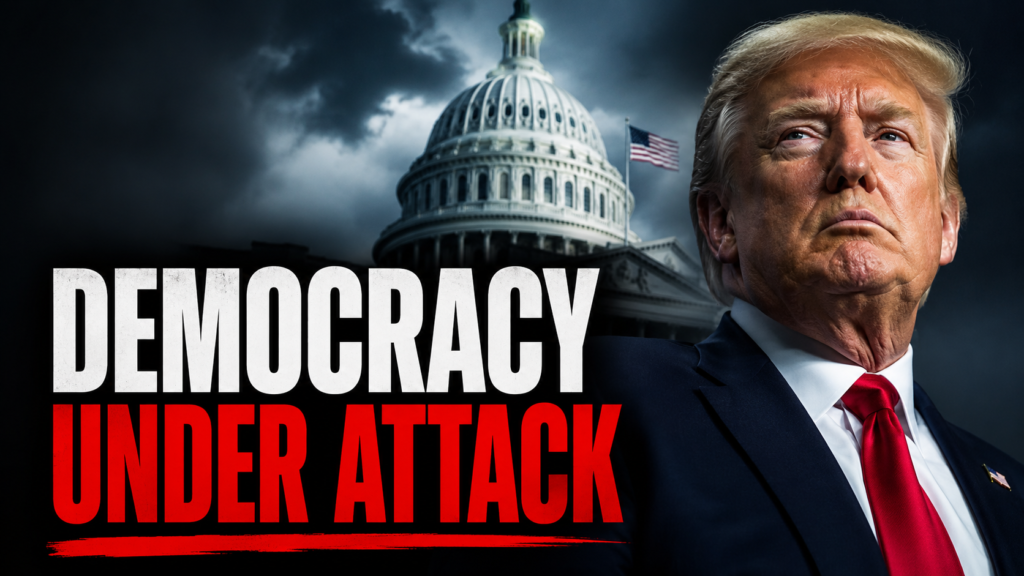
A ballot discrepancy, a locked cabinet, sensitive voter data — and a state that withheld details from the public. Shasta County’s June 2026 primary is raising urgent questions about who is watching the watchers.
Something is wrong inside the Shasta County Elections Department. Officials confirmed this week that a post-election audit uncovered ballot discrepancies — and that an employee accessed locked documents without authorization and handed copies to the county’s top elections official. The incident, reported to the California Secretary of State, is now under active investigation. For voters who believe election transparency should be non-negotiable, this story demands attention.
The June 2 California primary is barely a week old, and already the state’s own officials are reviewing what happened inside one of its most closely watched elections offices. The discrepancies are described as involving a “small number” of ballots — but the process that was supposed to safeguard the public’s trust appears to have broken down in multiple ways at once. In a democracy, small numbers matter.
Support Independent Local Journalism
TheTownHall.News is a non-profit reader-supported journalism. Just $5 helps us hire local reporters, investigate important issues, and hold public officials accountable across Alameda County. If you believe our community deserves strong, independent journalism, please consider donating $5 today to support our work.What Actually Happened Inside the Elections Office?
The facts, as confirmed by Shasta County officials and reported by local ABC affiliate KRCR, are these: during a routine post-election reconciliation of early voting records, workers discovered that a small number of extra ballots may have been distributed to voters before Election Day by a single employee. Separately, officials acknowledged that some election reports run through California’s Election Information Management System may not have been properly balanced before they were generated.
Then came the locked cabinet. While employees paused their review and secured the relevant documents, a different employee accessed those materials, made copies, and delivered them directly to Registrar of Voters Clint Curtis — before the copies were placed in a separate locked office. County officials stated that no original ballots or election materials left the building at any point.
The incident was reported to the California Secretary of State. But here is what should trouble every voter: officials publicly acknowledged that “additional details were provided to the state” — and then specifically withheld those details from the public summary, citing the ongoing investigation.

Who Is Really Paying the Price When Transparency Disappears?
Taxpayers fund elections. Voters cast the ballots. Citizens live with the results. Yet when discrepancies surface and investigations are opened, the public is told to wait — to trust the same system that produced the discrepancy in the first place.
When government officials decide what you’re allowed to know about your own election, the system is no longer accountable to you — it’s accountable only to itself.
The sensitive nature of the copied records compounds the concern. County officials confirmed that the documents involved may have contained voters’ names, addresses, dates of birth, phone numbers, signatures, and explanations submitted by voters who requested replacement ballots. That is some of the most personal data a citizen submits to their government. Its unauthorized handling — whatever the intent — is a serious matter.
“When discrepancies are found, a cabinet is opened without authorization, sensitive voter data changes hands, and officials withhold key details from the public — every voter in California has standing to ask: what exactly are we not being told?”
Support Independent Local Journalism
TheTownHall.News is a non-profit reader-supported journalism. Just $5 helps us hire local reporters, investigate important issues, and hold public officials accountable across Alameda County. If you believe our community deserves strong, independent journalism, please consider donating $5 today to support our work.What Do the Numbers Actually Tell Us?
A “small number” of potentially unauthorized ballots distributed before Election Day. Reports that may not have been properly balanced before they were run. Copied documents containing sensitive data on an unknown number of voters. An investigation whose full scope has been deliberately kept from the public.
These are not the hallmarks of a routine audit finding a minor clerical error. They are, taken together, a picture of an elections office under serious internal stress — one where the chain of custody for sensitive materials failed, and where multiple procedural breakdowns occurred in a single election cycle.
Every ballot that is mishandled erases one legitimate vote. The question no one in Sacramento wants to answer: how many is “a small number”?
The county’s Board of Supervisors convened a special meeting on June 6 — a Saturday evening, notably — to discuss the situation in closed session under the heading “initiation of litigation.” That language suggests the county’s own attorneys are already engaged. Voters deserve to know why.
Is This the Accountability Moment Shasta County Has Been Waiting For?
The broader context here matters enormously — and it cuts in more than one direction. Shasta County has been a flashpoint in the national debate over election integrity for years. Its voters approved Measure B on June 2, a ballot initiative that would require voter ID, hand-counting of ballots, and stricter voting procedures — though the measure faces significant legal challenges because several of its provisions conflict with California state law.
The county’s Registrar of Voters, Clint Curtis — who was the recipient of the copied documents in this incident — was simultaneously running for re-election on June 2, and preliminary results suggest he lost that race. Curtis, appointed in 2025 with no prior elections administration experience, has been a polarizing figure: an advocate for reforms his supporters call long overdue, and a source of concern for others who point to multiple county-ordered investigations into his conduct. He denies wrongdoing.
Meanwhile, Laura Hobbs, the employee who has publicly identified herself as a whistleblower in this matter, submitted a signed declaration under penalty of perjury to county supervisors on June 7, alleging she was threatened with arrest and subjected to harassment while attempting to carry out her official duties. Her account describes a workplace in which the pressure to uncover irregularities was met not with support but with obstruction.
If a whistleblower signing a declaration under penalty of perjury faces threats rather than protection, what does that tell us about the culture inside this elections office?**
What Do Supporters of the Current System Actually Believe?
Defenders of California’s election administration would rightly point out several things: no original ballots left the building; the discrepancy was discovered through normal audit procedures that were working as designed; and the incident was reported to the Secretary of State promptly. These are not trivial points. They suggest the system has self-correcting mechanisms.
They would also note that Shasta County’s election skeptics have a long history of litigation that courts have repeatedly rejected. The county’s Grand Jury conducted two separate investigations into the Elections Department in recent years and found no fault in how elections were being conducted. Laura Hobbs herself has filed multiple lawsuits over election results she disputed, and courts have ruled against her claims each time.
These are legitimate points that deserve weight. A functional audit process found this discrepancy. That is, arguably, the system working.
But “the system found it” is not the same as “the public knows about it.” Voters are being asked to accept that the details withheld from them are being handled properly by the same institution that generated the problem. That is a significant ask — and it is precisely the kind of opacity that erodes public trust regardless of which party benefits.
What Happens If No One Demands Answers?
The California Secretary of State now holds the thread of this investigation. What they do with it — whether a full accounting is made public, whether the individual responsible for the ballot discrepancy is identified, whether the chain-of-custody failure that allowed documents to be copied and hand-delivered is corrected with enforceable policy — will determine whether this becomes a genuine accountability moment or another entry in a growing list of concerns that quietly disappear.
Parental rights advocates, fiscal conservatives, and free-speech champions all ultimately depend on elections that produce legitimate outcomes. An election system that cannot account for every ballot it distributes, that permits unauthorized access to locked documents containing sensitive voter data, and that withholds material details from the citizens it serves is not a system that anyone across the political spectrum should accept.
The real question is not whether this discrepancy affected the outcome of any race. It may well not have. The real question is whether California’s election oversight institutions are willing to produce a full, public accounting — or whether voters will once again be told to trust a process they are not permitted to fully see.
That question deserves an answer before the next ballot is cast.
—
Key Questions This Story Raises
1. How many voters received ballots from the employee identified in the discrepancy, and were any of those ballots cast and counted?
2. What specific details did Shasta County officials provide to the California Secretary of State that they withheld from the public — and under what legal authority?
3. What accountability measures will be put in place to prevent unauthorized access to secured election documents in future elections?
—
*Think this story matters? Share it and tell us: should the Secretary of State be required to release its full findings to the public? Still have questions? Subscribe for daily election integrity coverage. Want to make your voice count? Contact your California State Assembly representative and ask them to support mandatory public disclosure in all county-level election investigations.*