Federal Guard Pleads Guilty to Abusing Detainee — And the Private Prison Industry Has Questions to Answer
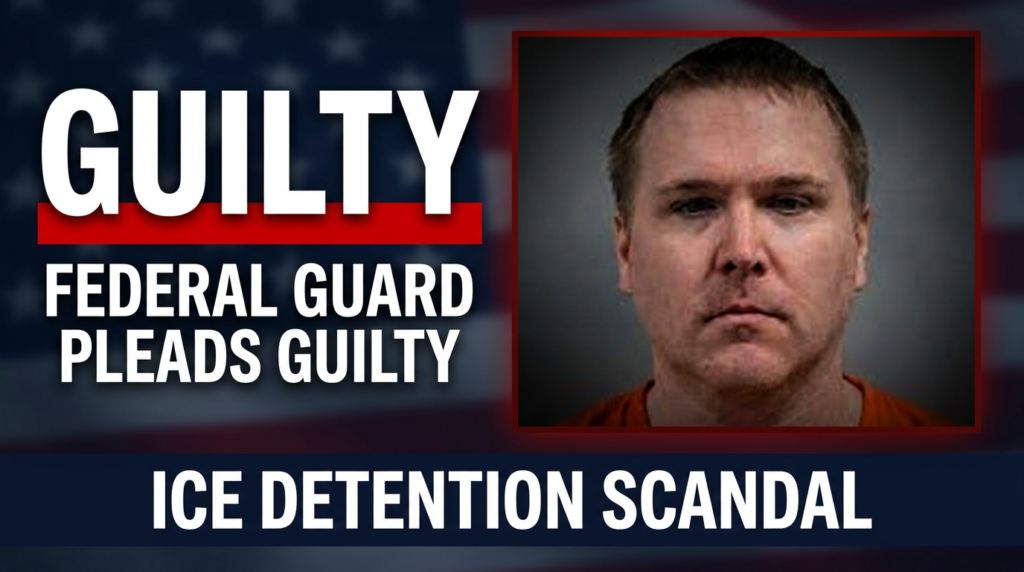
A contract officer’s guilty plea at a Louisiana ICE facility exposes the uncomfortable truth about who is really watching the watchmen — and who is footing the bill.
When David Courvelle walked into federal court in Lafayette, Louisiana, on December 29, 2025, and entered a guilty plea to sexually abusing a woman in his custody, he didn’t just confess to a crime. He cracked open a system that has been shielded from accountability for far too long.
Courvelle, 56, was a contract detention officer at the South Louisiana ICE Processing Center in Basile — a facility operated not by the federal government directly, but by GEO Group Inc., one of the largest private prison contractors in the United States. His guilty plea to one count of sexual abuse of a ward or individual in federal custody carries a maximum sentence of 15 years in prison and a $250,000 fine. Sentencing was scheduled for April 10, 2026. He was released on a $10,000 bond — a figure that, by any measure, seems remarkably low for a federal sex crime.
Support Independent Local Journalism
TheTownHall.News is a non-profit reader-supported journalism. Just $5 helps us hire local reporters, investigate important issues, and hold public officials accountable across Alameda County. If you believe our community deserves strong, independent journalism, please consider donating $5 today to support our work.This case is not just about one bad actor. It is about a broken system of oversight — and the American taxpayer is financing every dollar of it.
How a Federal Detention Officer Abused His Position for Months
Court documents tell a damning story of sustained, calculated predation. Between January and July 2025, Courvelle used his position of authority at the Basile facility to cultivate what prosecutors describe as a “personal and romantic relationship” with a female Nicaraguan detainee. By May, the relationship had become sexual.
This was not a single lapse in judgment. Courvelle allegedly recruited other detainees to serve as lookouts while he engaged in sexual contact with the victim. He smuggled contraband into the facility — food, jewelry, letters, even personal family photographs — to maintain the relationship. The pair communicated about their encounters over the phone.
He was caught on July 16, 2025, when a staff member spotted him exiting a janitorial closet with the woman. He resigned two weeks later. He confessed to federal investigators in September.

This went on for months. In a federally contracted facility. With other detainees complicit in concealing it. The question every taxpaying American should be asking is simple: where was the oversight?
The GEO Group Problem: Private Profit, Public Liability
GEO Group is a publicly traded corporation. In 2024, it reported revenues exceeding $2.4 billion, the vast majority of which flows from government contracts — meaning from you, the taxpayer. ICE pays GEO Group to house, manage, and maintain the safety of individuals in federal custody. That is not a charity arrangement. It is a legal and moral obligation backed by public funds.
When a GEO Group employee sexually abuses a detainee for six months without detection, that is not merely a human resources failure. It is a contractual breach of the public trust.
Supporters of private prison contracting often argue that competition and profit incentives drive efficiency. But efficiency in what, exactly? The Courvelle case suggests that when the bottom line is prioritized, the most vulnerable people in the system — those with no political voice, no legal recourse, and in many cases no family nearby — are the ones who pay the price.
Fiscal conservatism demands accountability for every dollar spent. A contractor that cannot prevent a guard from abusing a detainee for half a year should not be rewarded with renewed federal contracts.
Support Independent Local Journalism
TheTownHall.News is a non-profit reader-supported journalism. Just $5 helps us hire local reporters, investigate important issues, and hold public officials accountable across Alameda County. If you believe our community deserves strong, independent journalism, please consider donating $5 today to support our work.Why Law and Order Demands More Than a Guilty Plea
True law and order is not selective. It applies to the powerful and the powerless alike. It applies inside government buildings and inside privately operated facilities that receive government money. It applies to citizens and to individuals in federal custody.
The rule of law means nothing if those entrusted to enforce it are themselves predators.
Courvelle’s $10,000 bond — set after pleading guilty to a federal sex crime — raises legitimate questions about whether the justice system is treating this case with the gravity it deserves. A man who abused a woman in federal custody, who recruited accomplices, who smuggled contraband, and who confessed to investigators walked out of court for the price of a used car.
Justice is not justice if it is administered at a discount.
The Troubling Post-Plea Maneuver
The case took a disturbing turn on February 3, 2026, when Courvelle’s attorney filed a motion asking the court to allow him to contact the victim by telephone. The filing claimed the two were in a “romantic relationship” and attached an email allegedly written by the woman expressing love for Courvelle and asserting his innocence.
Federal prosecutors moved swiftly to oppose the request. Assistant U.S. Attorney Thomas Johnson argued that telephone contact would give Courvelle the opportunity to influence the woman’s victim impact statement ahead of sentencing — a serious and well-founded concern.
More critically, prosecutors noted that when investigators first interviewed the victim in August 2025, during the initial rape investigation, she stated that the sexual contact was forced and painful. That account stands in direct contradiction to the later email submitted by the defense.
The victim has since been deported to Nicaragua. She is thousands of miles away, separated from the legal process, with limited ability to advocate for herself. The attempt to reach her — by a man who pleaded guilty to abusing her — is precisely the kind of witness interference that prosecutors are right to fight.
What Critics Get Wrong About This Story
Some commentators have attempted to frame this case as an indictment of immigration enforcement itself, using Courvelle’s actions to argue against detention facilities broadly. That argument conflates the crime with the policy.
The issue here is not whether the United States enforces its immigration laws — it should, and it must. The issue is how that enforcement is carried out, and by whom, and under what standard of accountability. A nation that believes in the rule of law cannot simultaneously tolerate a system where contractors face minimal oversight, where abuse goes undetected for months, and where a guilty party can seek contact with a deported victim before sentencing.
Demanding accountability from private contractors is not a left-wing or right-wing position. It is a taxpayer position. It is a law-and-order position. And it is the only intellectually honest position available.
Key Takeaway
The Courvelle case is a test of whether American institutions — federal courts, ICE, and Congress — are serious about accountability or merely performative about it. A guilty plea is a start. But real accountability means examining every contract GEO Group holds, every oversight protocol that failed, and every policy that allowed this abuse to continue undetected for six months.
The woman at the center of this case has been deported. She cannot easily speak for herself. The justice system must speak for her instead.
The System Must Be Held to the Same Standard It Demands of Others
Personal responsibility is a cornerstone of a functioning society. We demand it of individuals, of families, and of communities. It is long past time we demanded it — without exception — of the corporations and agencies that operate in the name of federal law.
David Courvelle will face sentencing. That is appropriate. But the accountability cannot stop with one man. GEO Group must answer for its oversight failures. ICE must answer for its contract management. And Congress must answer for the regulatory gaps that allowed a private contractor to operate a federal detention facility with insufficient checks on the people it employs.
The guilty plea is not the end of this story. It is the beginning of the accountability that should have existed all along.
Stay informed. Share this article. Support independent journalism that holds institutions — public and private — to the standard the American people deserve.