Has Dementia Research Finally Turned a Corner — Or Are We Still Being Misled?
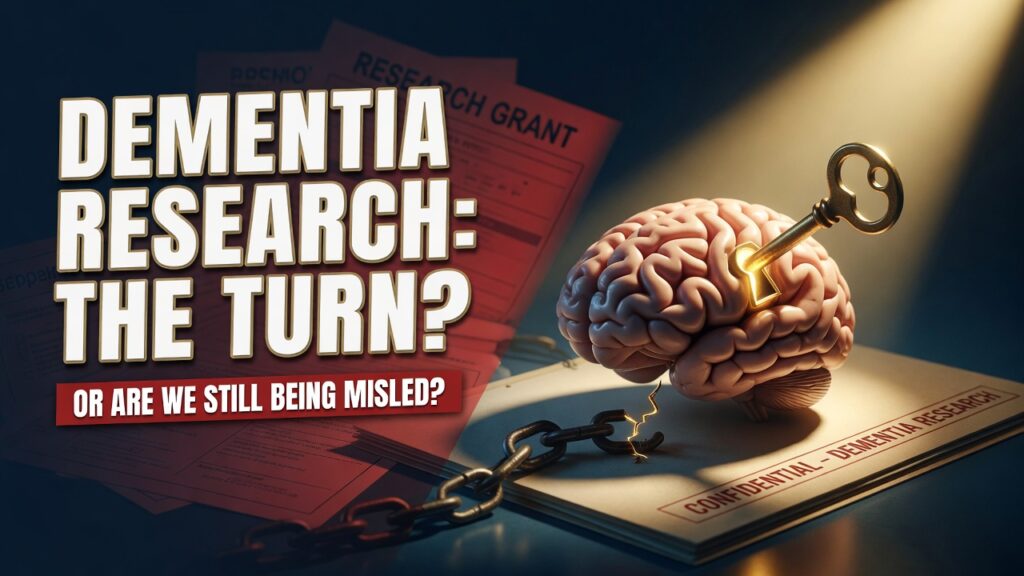
New science is challenging decades of failed pharmaceutical dogma. Millions of American families deserve the full picture — and they’re not getting it.
Something is breaking open in the world of brain science. And the people who should be shouting it from the rooftops — federal health agencies, mainstream medical organizations, and billion-dollar research institutions — are doing something far too familiar: moving slowly, hedging carefully, and protecting institutional turf while 7.2 million Americans live with Alzheimer’s dementia today. [Alzheimer’s Association, 2025 Facts & Figures]
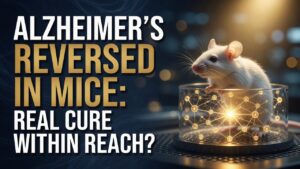
The scientific literature has never been more promising. A landmark 2025 study from Case Western Reserve University demonstrated, for the first time, that advanced Alzheimer’s disease was fully reversed in animal models — not merely slowed, not managed, but reversed, restoring complete neurological function. Meanwhile, a first-of-its-kind clinical trial using a precision medicine lifestyle protocol showed statistically significant cognitive improvements in human patients. Yet the national conversation remains dominated by expensive pharmaceutical drugs that, at best, slow cognitive decline by 25–35% and carry serious risks including brain bleeding. Something doesn’t add up — and American patients and their families deserve to know why.
Support Independent Local Journalism
TheTownHall.News is a non-profit reader-supported journalism. Just $5 helps us hire local reporters, investigate important issues, and hold public officials accountable across Alameda County. If you believe our community deserves strong, independent journalism, please consider donating $5 today to support our work.$781 Billion. The question every taxpaying American should be demanding an answer to: where are the results?
The United States currently spends an estimated $781 billion annually on dementia-related care — a figure that will balloon to $409 billion in direct health and long-term care costs alone by 2026, according to the Alzheimer’s Association. [Alzheimer’s Association, 2026 projection] The federal government has poured billions into pharmaceutical research pathways focused almost exclusively on clearing amyloid plaques from the brain. The result? Two newly approved drugs — lecanemab (Leqembi) and donanemab (Kisunla) — that require intravenous infusions, cost tens of thousands of dollars per year per patient, and modestly slow early-stage decline rather than restore function.
We have spent decades and hundreds of billions chasing a single theory of Alzheimer’s — and the return on investment, for patients, has been painfully modest. This is not an argument against science. It is an argument for honest science — and for the kind of transparent accountability that American patients, families, and taxpayers have every right to demand.
What Is the New Research Actually Saying?
The science emerging in 2025 and 2026 is genuinely exciting — but it requires honest interpretation, not viral oversimplification.
At Case Western Reserve University, researchers published a study in Cell Reports Medicine demonstrating that a compound called P7C3-A20 fully reversed advanced Alzheimer’s-like disease in multiple mouse models by restoring NAD+ metabolic balance — essentially repairing the brain’s energy system. Mice bred to develop Alzheimer’s showed a 30% reduction in NAD+ homeostasis six months into their disease progression; restoring that balance reversed cognitive decline and normalized biomarkers. This is remarkable preclinical science. It is also, critically, still in the animal model stage — a caveat that must be stated plainly, even as we recognize its enormous promise.

Separately, a December 2025 preprint — the first randomized controlled trial of Dr. Dale Bredesen’s precision medicine protocol — showed that participants following a comprehensive lifestyle and metabolic intervention achieved statistically significant improvements in memory, executive function, and processing speed compared to standard care. The trial’s authors themselves called for a larger, double-blind, placebo-controlled study before drawing definitive conclusions. It has not yet completed peer review. But the treatment effect size reportedly exceeded previous lifestyle trials by a factor of two to three.
“We are at the edge of a paradigm shift in how medicine understands and treats dementia — but the institutions with the most to lose from that shift are also the ones controlling the megaphone.”
Is the Lifestyle Revolution Being Suppressed — Or Simply Ignored?
In 2024, the prestigious Lancet Commission on Dementia Prevention, Intervention, and Care published a landmark update concluding that up to 45% of all dementia cases could be potentially delayed or prevented by addressing 14 modifiable risk factors — including poor diet, physical inactivity, chronic untreated hypertension, social isolation, excessive alcohol use, air pollution exposure, and vision and hearing loss. [The Lancet, 2024] This represents a monumental finding. Nearly half of all dementia cases are not inevitable. They are the product of modifiable choices and environmental exposures — many of which individuals and families can begin addressing today, without a prescription and without a $30,000 annual drug bill.
The principle at stake here is deeply aligned with personal responsibility and limited government: the most powerful tools against dementia may already be within each person’s reach. Sleep. Exercise. Diet. Social connection. Metabolic health. These aren’t fringe ideas; they’re now validated by the world’s most cited medical journal. Yet the national public health messaging apparatus — the same bureaucracies that spent decades slow-walking dietary science and muddying the research on statins — has not made this the centerpiece of a national campaign. Why not?
If nearly half of all dementia cases are preventable through lifestyle choices, why isn’t that message on every doctor’s wall, every school health curriculum, and every federal health advisory?
The Infectious Disease Hypothesis: A Scientific Frontier Too Long Dismissed
One of the most intriguing — and consistently underreported — threads in dementia research is the possible role of infectious pathogens. A 2025 review published in PubMed Central outlined growing evidence linking herpes simplex virus type 1 (HSV-1) to Alzheimer’s disease through chronic neuroinflammation, amyloid-beta accumulation, and tau pathology. Research from the University of Washington, supported by findings in BMJ Open, adds to a body of evidence suggesting that HSV-1 infection meaningfully increases Alzheimer’s risk. The Cleveland Clinic has separately proposed a mechanism by which herpesviruses activate transposable elements in aging brains, potentially triggering disease progression.
Support Independent Local Journalism
TheTownHall.News is a non-profit reader-supported journalism. Just $5 helps us hire local reporters, investigate important issues, and hold public officials accountable across Alameda County. If you believe our community deserves strong, independent journalism, please consider donating $5 today to support our work.This is not fringe medicine. Nature published a 2025 review explicitly asking, “Do infections have a role in Alzheimer’s disease?” — and concluded the evidence, while not yet definitive, is compelling enough to demand serious, well-funded investigation. The University of New South Wales launched an AI-driven initiative in 2025 specifically to evaluate the infectious disease theory at scale.
The question Americans should be asking: why has a hypothesis with this much growing evidence received a fraction of the funding directed at amyloid-targeting pharmaceuticals? If a common, manageable viral exposure turns out to be a significant driver of the most expensive disease in America, the implications for prevention — and for personal health sovereignty — are enormous.
What Do Supporters of the Pharmaceutical-First Approach Actually Believe?
This is a fair question — and the pharmaceutical approach has legitimate defenders with genuine scientific arguments. Proponents of lecanemab and donanemab correctly note that these drugs represent the first treatments in history to demonstrably alter Alzheimer’s disease progression in human clinical trials, not just animal models. They argue that the amyloid hypothesis, while imperfect, remains the most rigorously tested biological framework for the disease. They also note that lifestyle interventions, while promising for prevention, have not yet been proven in gold-standard trials to reverse established cognitive decline in humans — and that the Bredesen RCT, while encouraging, remains a preprint.
These are honest points. Scientific caution is not the same as institutional corruption. Demanding rigorous peer-reviewed evidence before declaring a disease “reversible” is not suppression — it is responsible medicine.
But the counterargument is equally honest: when the dominant funding structure rewards patentable pharmaceutical solutions over lifestyle and prevention research, the science that gets done reflects those financial incentives — not necessarily the full landscape of what might help patients most. The Lancet’s 45% prevention finding deserves the same research infrastructure investment as the amyloid pathway. It hasn’t received it. That is a policy failure worth naming.
Why Are Millions of Families Starting to Ask Different Questions?
The social media landscape is now flooded with content — like the viral video that prompted this report — claiming dementia is “proven to be reversible.” That framing is not accurate. It overstates what the current science supports. But the viral frustration driving those clicks is entirely legitimate: American families watching loved ones disappear into cognitive decline are rightfully demanding more than incremental pharmaceutical progress and cautious institutional hedging.
The 182 clinical trials currently underway as of 2025 represent the largest Alzheimer’s drug pipeline in history. [Cromos Pharma, 2025] That is genuinely good news. But science without transparency, and research without a genuine commitment to patient-centered prevention, isn’t serving the 7.2 million Americans — and their families — who cannot wait another decade for a drug that may cost more than their mortgage.
Personal responsibility, access to honest information, and the freedom to make informed health choices are not partisan values — they are foundational ones. And they are exactly what’s at stake when institutions control the narrative around a disease this consequential.
Key Questions This Article Raises:
- Why has the 45% preventability finding from the Lancet Commission not become the centerpiece of America’s national dementia strategy?
- Who determines which Alzheimer’s research hypotheses receive federal funding — and do those decisions reflect patient interests or pharmaceutical economics?
- At what point do promising animal studies and unreviewed clinical trial preprints qualify as sufficient evidence to demand a fundamental restructuring of how dementia is approached in American medicine?
The question this story leaves on the table isn’t whether dementia research has finally turned a corner — the science suggests it has, in genuinely exciting ways. The real question is who gets to steer that corner. Will it be patients, families, and independent scientists pursuing every credible avenue of prevention and recovery? Or will it be the same institutional machinery that spent twenty years and billions of dollars on a pharmaceutical approach that has delivered, at best, modest and enormously expensive incremental results?
The real question isn’t whether this disease will affect you or someone you love — it’s whether you’ll demand better answers before it does.
Still have questions? Stay informed — subscribe for daily coverage of the health and science stories that matter most. Think others need to hear this? Share the article and tell us: do you believe Americans are getting the full picture on dementia — or is something being left out? Want to make your voice count? Contact your congressional representative and ask them what percentage of NIH dementia funding is directed toward lifestyle and prevention research versus pharmaceutical trials.