
Dostarlimab Rectal Cancer: FDA Approval and What the Data Show
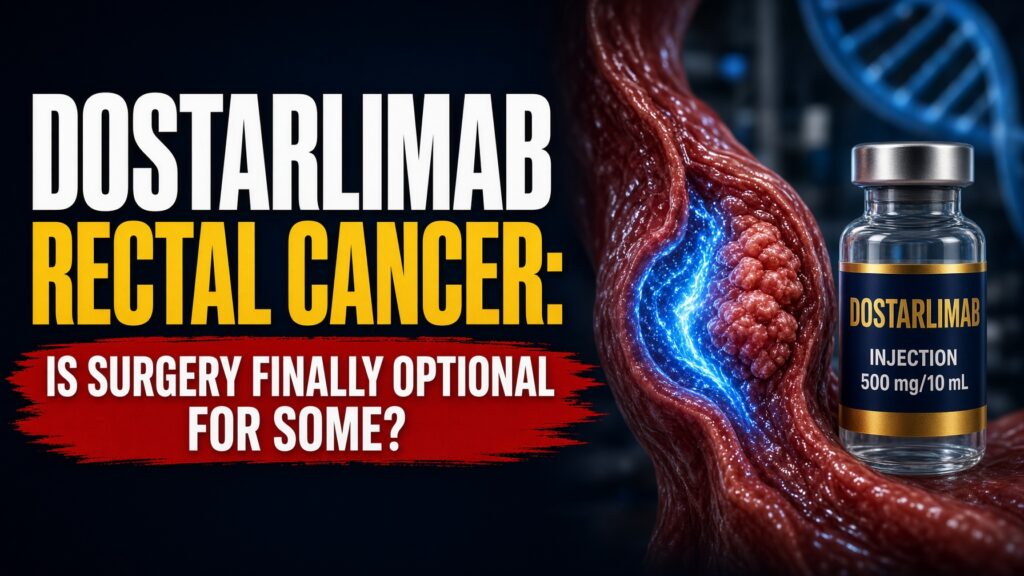
The viral “12 for 12” remission claim was real, but a larger trial, an FDA approval, and some hard caveats now tell the fuller story.
Twelve patients. Twelve complete responses.
That 2022 pilot result is no longer a lone headline. On October 19, 2026, the FDA granted accelerated approval to dostarlimab (Jemperli) for adults with stage II or III locally advanced rectal cancer that is mismatch repair deficient (dMMR) or microsatellite instability-high (MSI-H) [FDA approval notice]. It is the first immunotherapy approved for that use, and for some patients it may mean avoiding chemotherapy, radiation, and surgery.
Support Independent Local Journalism
TheTownHall.News is a non-profit reader-supported journalism. Just $5 helps us hire local reporters, investigate important issues, and hold public officials accountable across Alameda County. If you believe our community deserves strong, independent journalism, please consider donating $5 today to support our work.What Did the Original “12 for 12” Study Actually Show?
Something remarkable, and narrow. In the 2022 Memorial Sloan Kettering pilot led by Dr. Andrea Cercek, 12 patients with dMMR rectal cancer completed six months of dostarlimab, and every one had a clinical complete response [NEJM, peer-reviewed]. Conference coverage at the time reported no grade 3 or higher side effects [ASCO 2022 coverage].
The pilot kept growing. Updated findings reported this year show all 42 patients who completed treatment achieved a clinical complete response, with 24 reaching a sustained response at 12 months, at a median follow-up of 26.3 months [OncLive, June 2026]. That is the real source of the “100%” figure: a striking result from a small, carefully selected group.
It also explains why the drug works where chemotherapy often does not. Dostarlimab is an immunotherapy that activates the patient’s own immune system rather than attacking the tumor directly [Colorectal Cancer Alliance], and dMMR tumors are exceptionally responsive to that kind of PD-1 blockade [Annals of Oncology, peer-reviewed].
Why Does the Larger AZUR-1 Trial Matter More Than the Headline?
Because small trials can flatter a drug. AZUR-1 enrolled 154 patients with previously untreated disease and was presented at the ESMO Congress in October 2026. By investigator assessment, 110 patients (71%) achieved a clinical complete response on dostarlimab alone [AZUR-1 interim data, ESMO 2026]. Adding patients with no residual cancer found at surgery lifted the figure to 76%.

The viral “12 for 12” result was real. The bigger, tougher number is 71%, and for a cancer this stubborn, that may be the more impressive one.
71%. The question patients should ask next: what happened to the other three in ten? Other responses included near complete (9 patients), partial (15), stable disease (10), and progression (8), while 10 patients were not evaluable [AZUR-1 interim data, ESMO 2026]. Of 15 patients who had surgery after imaging suggested an incomplete response, 12 turned out to have no cancer left [FDA summary].
Is a 71% Result Still a Breakthrough?
Yes, in context. After standard chemoradiation-based therapy, clinical complete response rates run between 21% and 41% [Annals of Oncology, peer-reviewed]. Standard treatment also carries lasting costs, including bowel, urinary, and sexual dysfunction, secondary cancers, and infertility [GSK, company disclosure]. Removing the rectum surgically often means a permanent colostomy [JHOP, ASCO 2022 highlights], which is why interest in organ-sparing treatment has kept growing.
If a drug can spare patients those costs, shouldn’t every eligible patient at least be told it exists?
The regimen is 500 mg by IV every three weeks for up to nine cycles, roughly six months [FDA approval notice]. Patients who reach a complete response are then monitored closely for recurrence. Nonoperative is not the same as no follow-up, and keeping those appointments is a responsibility shared between patient and care team.
Who Does This Actually Help?
A minority. Only 5% to 10% of rectal cancers are dMMR/MSI-H [GSK, company disclosure]. With roughly 20,000 Americans diagnosed with locally advanced rectal cancer each year, according to Dr. Cercek [FDA advisory committee reporting], that implies roughly 1,000 to 2,000 patients annually [editor’s calculation, not an official count]. The approval applies to tumors identified by an FDA-authorized test, so a patient whose tumor lacks the marker is not covered. That makes the approval a precision tool for a defined group, not a universal cure.
Support Independent Local Journalism
TheTownHall.News is a non-profit reader-supported journalism. Just $5 helps us hire local reporters, investigate important issues, and hold public officials accountable across Alameda County. If you believe our community deserves strong, independent journalism, please consider donating $5 today to support our work.If you or someone you love faced this diagnosis, wouldn’t you want to know whether the tumor carries the marker? Asking for that test is the first step in owning your care.
What Do Skeptics of the Hype Actually Believe?
Their case deserves a straight answer. AZUR-1 is a single-arm, non-randomized trial with no concurrent control group [BioPharm International], so no one can say exactly how these patients would have fared otherwise. The approval is accelerated, meaning it rests on early evidence rather than long-term outcomes. The label carries warnings for immune-mediated and infusion-related reactions [Healio, citing FDA label]. And a 12-month response is not a decade-long cure.
Those points hold up. But randomized trials are hard to run in a rare subtype, as an oncologist commenting on the 2022 results acknowledged [JHOP, ASCO 2022 highlights]. Historical complete response rates are far lower, the pilot shows responses lasting a median of more than two years, and surgery remains available as a backstop when a tumor does not fully respond. Skeptics are right that “cure” is premature. They are wrong to wave away the data.
How Did Private Innovation Get Here, and Who Pays?
The path ran through a private drugmaker, GSK, and a nonprofit cancer center, not a government program. Accelerated approval typically requires follow-up evidence confirming the benefit, so the accountability test is still ahead. Dostarlimab earned FDA breakthrough therapy and fast track designations along the way [TargetedOnc]. About four years separate the 2022 pilot from approval, much of it spent running the trials regulators require.
The harder question now is cost. Pricing and insurance coverage were not detailed in the approval materials reviewed for this article, and testing for the marker is a prerequisite. Patients deserve plain answers from manufacturers and insurers before the bills arrive, not after.
Key Questions This Story Raises:
- Will complete responses hold at three, five, and ten years outside carefully run trials?
- Who pays for biomarker testing and treatment, and will insurers cover both without delay?
- Can immunotherapy reach the large majority of rectal cancers that do not carry this marker?
What Should Patients and Families Do Now?
Talk to an oncologist about mismatch repair testing before treatment begins. Ask how response is monitored without surgery and what the plan is if the response is only partial. This article is reporting, not medical advice, and every case is different.
Seven in ten trial patients cleared their tumor with a drug alone. Not a miracle, but a major shift, and one worth getting right.
Good news in medicine earns trust when the caveats come attached. Isn’t that what patients deserve?
So is surgery finally optional for some rectal cancer patients? For the right patients, the evidence says possibly yes, and the 12-for-12 headline was only the beginning. That is a real advance, and an honest one only if its limits travel with it.
Still have questions? Stay informed: subscribe for daily coverage. Think others need to hear this? Share the article. Want your voice to count? Contact your member of Congress or your state insurance commissioner and ask how biomarker testing and new cancer immunotherapies will be covered in your state. What do you think: does this change how rectal cancer is treated? Share this and let us know.
The real question isn’t whether the drug works. It’s whether anyone will keep checking that it keeps working.