Syria and Israel War: What the Latest Escalation Actually Means
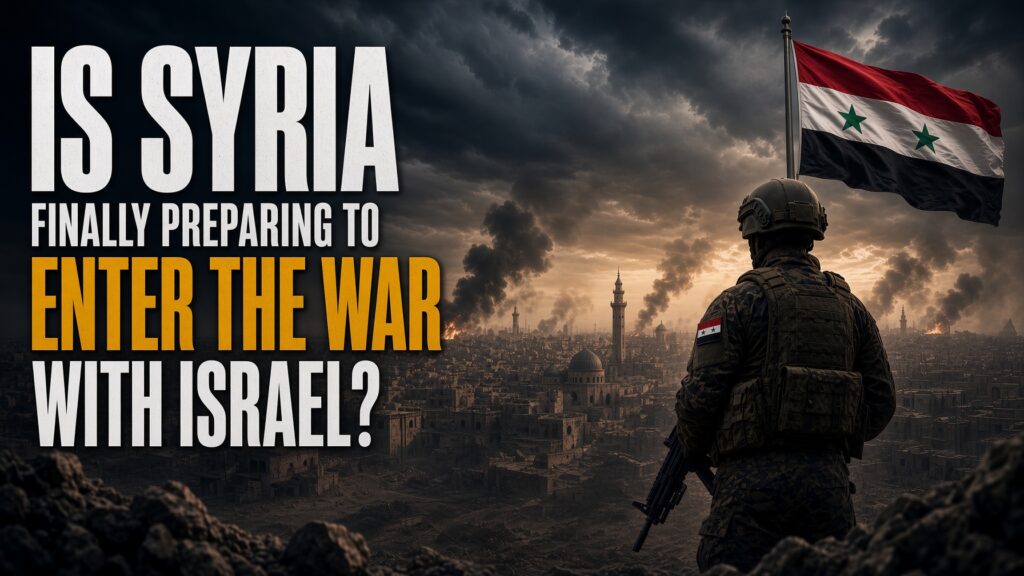
As chants against Israel spread online from Syrian troops, and Israeli jets strike inside Syrian territory, millions are asking: is this the start of a new front — or a distraction from the fight that’s actually happening?
Soldiers chant. Governments decide. Those are two different things, and confusing them has consequences.
A viral video is not a mobilization order.
That distinction matters right now because the footage comes at a genuinely volatile moment. In mid-August 2026, video surfaced of Syrian Arab Army soldiers at the Damascus Citadel chanting threats against Israel, tied explicitly to anger over Gaza. Days later, Israel struck a Syrian air base in Idlib, and tensions between Israel, Turkey, and Syria’s new government spiked sharply. The chant is real. Whether it signals a coming war is a separate question, and it deserves a serious answer rather than a viral one.
What Do We Actually Know About the Chanting Video?
The footage shows Syrian Arab Army soldiers at the historic Damascus Citadel chanting slogans against Israel, including language about violence against Jews. Arabic-language media reported the demonstration was tied to anger over Gaza, coming shortly after Israel rejected a 15-point peace framework requiring Hamas to disarm first. This is not the first such incident. Similar chants surfaced from Syrian military units in December 2025, and public threats from Syrian officials have recurred since Ahmed al-Sharaa’s government took power in Damascus in December 2024. Analysts note Syria’s post-Assad security forces absorbed members of radical Islamist factions, which helps explain the rhetoric.
Is This Really About Syria and Israel — Or Something Else Entirely?
Here is what the chanting video obscures: the most consequential military action in the region right now is not a Syrian threat against Israel. It is an Israeli airstrike inside Syria, driven by a dispute with Turkey. On August 18, Israeli jets struck the Abu Duhur air base in Idlib province, roughly 70 kilometers from the Turkish border, hitting the runway and storage facilities in eight strikes. Israel’s government said the strike was meant to stop Turkish forces from deploying there, calling it a breach of an understood security status quo with Damascus. Syria denied any such agreement existed and called the strike a violation of its sovereignty. If Israel is now striking inside Syria to warn off Turkey, who exactly is escalating this conflict?
Who Is Actually Driving the Tension on the Ground?
Away from the airstrikes, Israel maintains an active military presence inside Syrian territory that predates this month’s headlines. Israeli forces seized a roughly 155-square-mile buffer zone in southern Syria after Assad’s fall and have continued patrols, checkpoints, and raids inside Syrian towns since. Residents in Quneitra province have described home searches and detentions by Israeli troops operating outside any formally recognized security zone. Syria’s foreign ministry has repeatedly called for an Israeli withdrawal, arguing the continued occupation is itself a source of instability. None of this excuses inflammatory chants. But readers deserve the full picture, not just the clip designed to go viral.
A single video of soldiers chanting is not the same thing as a government preparing for war — but pretending otherwise serves no one’s interest in the truth.
What Does Syria’s Government Actually Say It Wants?
This is the part frequently left out of viral coverage. Syrian President Ahmed al-Sharaa has publicly stated Damascus is working toward a security agreement with Israel, brokered with U.S. and regional involvement, and has said Syria has “no interest” in confrontation. That is notable for a government still consolidating power domestically and rebuilding a military with limited conventional capability. Syria’s air force reportedly operates around 104 aircraft, with only about 21 fighter jets considered operationally ready — a force in no position to open a second front against a far more capable Israeli military.
What Do the Numbers Actually Tell Us?
21. That is the estimated number of Syria’s operational fighter jets, according to a 2026 assessment of its military inventory [defense assessment, cited via FDD analysis]. The question no chant can answer: what conventional war-fighting capacity does that actually represent against one of the most sophisticated air forces in the Middle East?
“A military chant doesn’t mean Syria is about to declare war on Israel. Soldiers chanting aggressive rhetoric and actually receiving orders to conduct offensive operations are two very different things.”
Why Is Washington Caught in the Middle of This?
The Trump administration’s own envoy for Syria and Turkey, Thomas Barrack, publicly called Israel’s August 18 strike an “unnecessary escalation” that does not serve regional stability, and stated Damascus has not adopted a hostile posture or maintained proxy forces against Israel. That is a striking statement from a U.S. official actively trying to broker a Syria-Israel security arrangement. It also puts Washington in an uncomfortable position, caught between an Israeli government it strongly backs and a Turkish government the president has cultivated close ties with. Are American taxpayers and troops being positioned to absorb the fallout of a fight that isn’t ours to referee?
What Do Supporters of a Harder Line on Syria Actually Believe?
It is worth engaging honestly with the strongest version of the opposing view. Israeli officials and their supporters argue that Syria’s post-Assad government, despite its diplomatic messaging, has not fully controlled the Islamist elements within its own military and security services — the same elements producing chants like the one at the Damascus Citadel. They point out that a government’s stated intentions mean little if it cannot or will not rein in armed factions operating under its own flag. On that logic, Israeli strikes and buffer-zone operations are preemptive, not provocative, aimed at degrading threats before they can organize into something more dangerous. This argument has real force. Governments are judged by what their forces do, not only by what their diplomats say. But it does not fully answer why Israel’s most recent and most significant strike this month was not aimed at radical elements at all — it was aimed at a runway, in a dispute over Turkey. If deterrence against Islamist radicalization inside Syria’s military is the actual goal, that strike does not obviously advance it.
Key Questions This Story Still Needs to Answer
Is the Syrian government capable of controlling the radical elements producing these chants, or is Damascus simply unwilling to try? Why did Israel’s most significant strike inside Syria this month target a runway meant for Turkish forces rather than the units filming anti-Israel threats? If a genuine Syria-Israel security agreement is within reach, as Damascus claims, what does further Israeli military action inside Syrian territory actually accomplish?
What Happens Next — And Why Should You Be Watching?
Analysts tracking this situation are right about one thing: rhetoric is not the indicator that matters. Troop movements, air-defense repositioning, missile-unit dispersal, and activity along the Israeli-Syrian frontier would be the real signals of preparation for offensive action. None of those indicators have been reported as of this writing. What has been reported is an Israeli strike driven by tension with Turkey, continued Israeli ground operations inside Syrian territory, and a Syrian government publicly pursuing — not rejecting — a security arrangement with Israel. That is a meaningfully different story than “Syria is preparing to enter the war,” even though the two narratives can circulate side by side online.
Is This the Accountability Moment Regional Diplomacy Actually Needs?
Every party in this story has an incentive to control the narrative. Israel has an incentive to justify strikes as defensive. Syria has an incentive to project restraint while it consolidates power. Turkey has an incentive to expand its footprint without appearing aggressive. And virally circulated military chants have an incentive of their own: engagement. None of that changes the facts on the ground, but it should change how skeptically readers treat any single video presented as proof of an imminent war. Accountability journalism means asking who benefits from a narrative before accepting it.
The real question isn’t whether Syrian soldiers are angry enough to chant on camera — it’s whether anyone with actual authority in Damascus, Jerusalem, Ankara, or Washington is preparing to act on that anger, and whether the public will know the difference before it’s too late.
Still have questions about how this story develops? Stay informed — subscribe for daily coverage of the region as it unfolds. Think your neighbors need the full picture instead of the viral clip? Share this article. Want your voice to count on U.S. policy toward this conflict? Contact your congressional representative and ask where they stand on continued American mediation between Israel, Turkey, and Syria.