Flock Camera Lookup Guide: How to Legally Find Cameras Near You
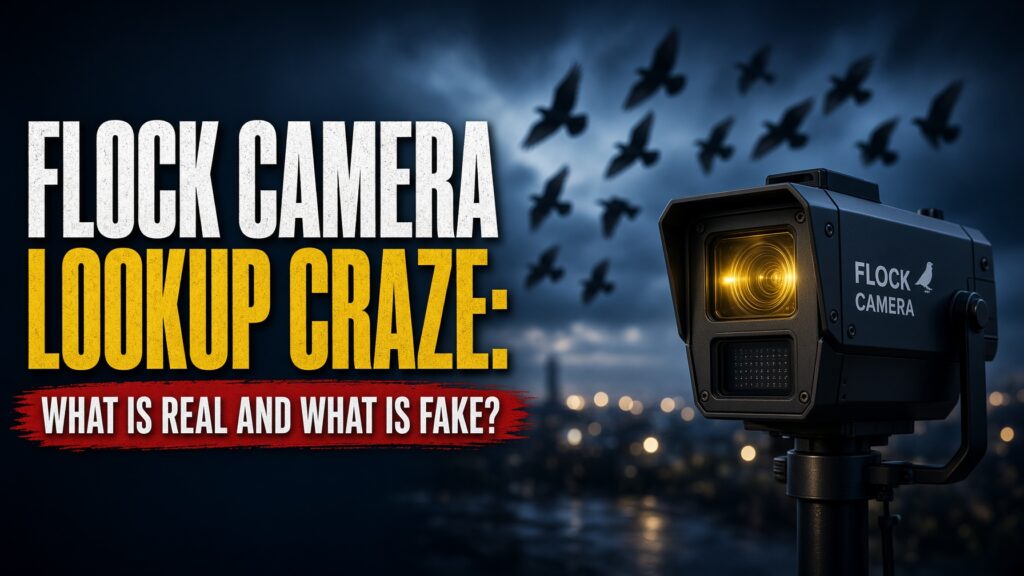
As a viral clip pushes an unfamiliar “Flock camera lookup” website, millions are asking a fair question — who’s actually watching them? — and a less obvious one: who’s watching the watchdogs?
A viral clip is urging people to visit a website that claims to reveal who owns the license plate camera on their street. Before you type in that URL, here’s what a basic records check turned up — and why it matters right now.
A wave of privacy-themed social media posts is pushing viewers toward unfamiliar websites promising to unmask the owners of Flock Safety license plate readers, the automated license plate recognition (ALPR) cameras now installed in thousands of American communities, including Oakland. One widely shared clip names a specific site and tells viewers to “check it out.” A basic search turns up no news coverage, no registration history, and no public record of that domain existing at all. [source category: independent web/domain search]
That gap matters. Millions of Americans have legitimate, well-founded questions about who operates the cameras watching their daily commute, who can access the footage, and whether that access is being audited. Those are fair questions rooted in a conservative principle as old as the republic itself: government power, and the private companies that supply it with tools, should answer to the people they serve.
Support Independent Local Journalism
TheTownHall.News is a non-profit reader-supported journalism. Just $5 helps us hire local reporters, investigate important issues, and hold public officials accountable across Alameda County. If you believe our community deserves strong, independent journalism, please consider donating $5 today to support our work.Why Are So Many Americans Starting to Ask Questions?
Flock Safety has grown into the largest ALPR provider in the country in less than a decade, and its footprint keeps expanding. According to reporting drawing on the crowdsourced tracking project DeFlock, roughly 119,000 automated license plate readers are now mapped across the United States, and Flock-branded units account for the large majority of that total. [source: DeFlock-sourced reporting]
Oakland’s own city council approved a two-year, $2.25 million Flock contract after extensive public debate, a decision this outlet covered as a defensible public-safety investment. Supporting law enforcement tools that solve real crimes is not in tension with demanding real oversight of how those tools are used. Both principles can be true at once.
What Is the Viral Video Actually Telling People to Do?
The clip in question, stitched together with a claim about a “no data center, no water, fully anonymous” AI chatbot, directs viewers to a website with an inflammatory name that does not appear in any searchable news archive, domain registry summary, or app directory. Reputable transparency projects exist — DeFlock’s public camera map, the audit-log search tool Have I Been Flocked, and Flock’s own company transparency portal all let residents look up documented camera locations and, in some cases, request the underlying search logs. None of them match the name being promoted in the clip. Nobody should have to guess whether a “transparency” website is legitimate before typing in their address.
That distinction is the whole story. Real accountability tools are built by researchers, journalists, and civil-liberties groups who publish their methodology and submit to scrutiny. A site that appears nowhere in public records asks for trust with none of that track record.
Who Is Really Profiting From Public Distrust?
Surveillance skepticism is not a fringe position — it spans the political spectrum, from privacy-minded conservatives wary of unchecked government data-gathering to civil-liberties groups on the left. That broad, bipartisan unease creates an opening. Bad actors know a headline like “find out who’s watching you” gets clicks, and an anonymous website is an easy vehicle for harvesting visitor data, serving malware, or simply generating ad revenue off a trending fear.
If a site claiming to protect your privacy won’t say who runs it, ask yourself: who’s really being watched here?
Who’s holding the “accountability” tool accountable?
That question deserves a direct answer, and right now, for at least one viral site making the rounds, there isn’t one.
What Do the Numbers Actually Tell Us?
119,000. That’s the estimated number of ALPR cameras now mapped across the country, according to DeFlock-sourced reporting cited by multiple outlets. The question Washington and state legislatures still haven’t answered: who audits that network, and how often?
Congress has not passed comprehensive federal legislation governing ALPR data retention or interagency sharing. Oversight, where it exists, is happening at the city-council level — exactly where fiscally accountable, limited-government advocates have long argued oversight belongs. Denver, Richmond, and Norfolk have all seen contentious public hearings over Flock contracts in the past year, with residents pressing for audit logs and retention limits rather than outright bans. [source category: local news reporting]
Is There a Legitimate Way to Check Who’s Watching You?
Yes — and it doesn’t require visiting an unverified website. Flock’s own transparency portal publishes participating agencies by jurisdiction. DeFlock’s crowdsourced map lets anyone see documented camera locations nationwide. Have I Been Flocked allows residents to search public audit logs in participating jurisdictions. None of these require downloading anything, creating an account with a stranger, or trusting a site with no public footprint.
For California residents specifically, city council meeting minutes and agenda packets — public record by law — typically disclose Flock contract terms, camera counts, and data-sharing policies before a single unit goes up. That’s the paper trail worth checking first.
What Do Supporters of This Policy Actually Believe?
Do defenders of ALPR technology have a real answer for these transparency concerns, or are they simply dismissing them? The strongest supporters of Flock and similar systems argue the technology has demonstrably solved cases — recovered stolen vehicles, located missing persons, and closed violent-crime investigations faster than traditional methods allowed. They point out that Flock logs every search and that customers, not the company, control who sees the data.
That argument has real merit, and this outlet has previously credited Oakland’s council for weighing it seriously. But a fair hearing for the technology’s benefits does not excuse residents from asking pointed questions about retention periods, interagency sharing, and who’s accountable when access is misused. Trusting a tool does not mean trusting it blindly, and it certainly doesn’t mean trusting anonymous copycat websites that trade on the same anxiety.
What Happens If No One Speaks Up?
If residents stop asking who operates the cameras on their street — and stop distinguishing legitimate oversight tools from opportunistic ones — two things happen simultaneously. Genuine accountability efforts lose credibility, lumped in with scams. And bad actors get a wider lane to exploit a real public concern for profit or worse.
The real threat to your privacy right now might not be the camera on the pole — it might be the website promising to protect you from it.
Key Questions This Story Raises
- Who actually operates the specific Flock camera in your neighborhood, and can you verify it through a documented source?
- Why does a viral “watchdog” website promoting itself as a privacy tool have no public track record at all?
- What would real, standardized federal oversight of ALPR data retention and sharing look like — and why hasn’t Congress passed it?
The Question That Lingers
Here’s the question worth sitting with: are Americans genuinely getting safer answers about who’s watching them, or just louder ones? Demanding accountability from surveillance technology is a legitimate, worthwhile fight. But that fight only works if the tools used to wage it are as transparent as the systems they’re scrutinizing. The real question isn’t whether you have a right to know who’s watching you — it’s whether you’re getting your answers from a source that’s earned your trust.
Still have questions about surveillance in your community? Stay informed — subscribe for daily coverage from The Town Hall News. Think your neighbors need to see this before they visit an unverified website? Share this article. Want your voice to count? Attend your next city council meeting when a Flock or ALPR contract is on the agenda — public comment periods are where these decisions actually get made.
What do you think — is more oversight the answer, or are Americans one viral clip away from trusting the wrong source entirely? Share this and let us know.