Mexicali Cartel Threat: What Triggered the U.S. Shutdown There
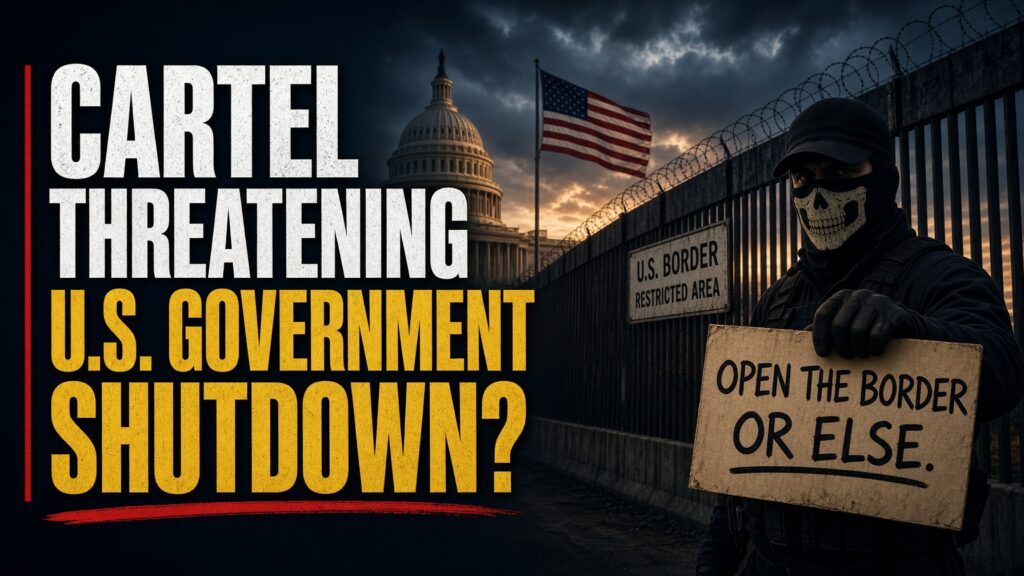
As U.S. officials suspend government activity in a Mexican border city, Americans are left asking a basic question: what exactly is the threat, and why won’t either government say?
A drug bust triggered a threat. The threat triggered a shutdown. And the U.S. government still won’t say exactly what the danger is.
On August 25, 2026, the U.S. Consulate in Tijuana suspended all government travel and activity in Mexicali, Mexico, citing an unspecified security threat. The trigger, according to Mexican and U.S. reporting, traces back five days earlier to a major fentanyl seizure that Mexican and American authorities carried out together.
Support Independent Local Journalism
TheTownHall.News is a non-profit reader-supported journalism. Just $5 helps us hire local reporters, investigate important issues, and hold public officials accountable across Alameda County. If you believe our community deserves strong, independent journalism, please consider donating $5 today to support our work.What Actually Happened in Mexicali?
On August 20, 2026, Mexican federal forces raided a safe house in Mexicali tied to a criminal cell known as “Los Rusos.” The operation, coordinated among Mexico’s federal prosecutor’s office (FGR), the army (Sedena), the navy (Semar), and federal security forces, with intelligence support from the U.S. Drug Enforcement Administration, netted roughly 120 kilograms of fentanyl pills [Mexican security cabinet statement, reported via Newsweek]. That is enough fentanyl for an estimated 4 million lethal or street-level doses.
That is not a routine patrol stop. It was described in Mexican reporting as a coordinated, intelligence-driven strike against a cell tied to the Sinaloa Cartel’s “Los Mayos” faction, allegedly now led by Ismael Zambada Sicairos, “El Mayito Flaco.” 120 kilograms of fentanyl is enough for roughly 4 million doses — the question is how many more shipments like it are still moving.
Why Did the U.S. Suspend Government Travel Days Later?
Five days after the seizure, on the night of August 24 into August 25, the U.S. Consulate General in Tijuana issued a security alert suspending all U.S. government activity and travel to Mexicali. The consulate’s public statement did not specify the nature of the threat, only urging American citizens to stay alert, avoid government buildings, and follow instructions from Mexican authorities.
That silence did not last long in the reporting. Journalist Luis Chaparro, citing DEA sources in San Diego, reported that American intelligence had intercepted a call in which alleged members of Los Rusos discussed attacking Mexican Municipal Police and Fiscalía General de la República (FGR) facilities in Mexicali. Mexican outlets including El Financiero and Infobae corroborated the substance of that reporting, though Mexican authorities have not officially confirmed the specific plot.

Is This Confirmed as an Explosives Plot?
No — and that distinction matters for accuracy. Widely circulated claims have described the threat as a planned bombing campaign against fiscal general offices nationwide. That is not what current reporting supports. What multiple Mexican outlets and the intercepted-call reporting describe is an alleged plan to attack law enforcement and prosecutorial buildings in Mexicali specifically, not a confirmed explosives threat against every FGR office in the country.
Should American citizens have to rely on foreign journalists and leaked DEA sourcing to learn why their own consulate shut down operations? That is a fair question regardless of which side of the border you sit on. A government transparent enough to issue a public alert should be transparent enough to say, in general terms, what the alert is actually about.
How Did Mexican Authorities Respond?
Baja California Governor Marina del Pilar Ávila publicly confirmed reinforced security operations in Mexicali, coordinating with Sedena, Semar, the National Guard, and the Secretariat of Security and Citizen Protection. She urged residents to report emergencies to 911 or the anonymous tip line. Mexican reporting also documented a heavy security presence at the FGR building in Tijuana starting the morning of August 25, though no confirmed reports describe street closures there.
President Claudia Sheinbaum addressed the alert directly at her morning press conference, confirming that a criminal group was believed responsible but stating Mexico could not independently verify the specifics, since the alert originated from U.S. intelligence channels. That is a notable admission: Mexico’s federal government is, by its own account, reacting to a threat assessment it did not generate and cannot fully confirm.
Should any government issue a public shutdown order over a threat it admits it cannot verify?
Who Are “Los Rusos,” and Why Does This Cell Matter?
Los Rusos operate primarily in the Mexicali Valley and are described in Mexican security assessments as the armed wing of the Sinaloa Cartel’s Los Mayos faction — the branch once run by Ismael “El Mayo” Zambada before his 2024 arrest in the United States. The group has been targeted repeatedly by joint Mexican-American operations in recent months, and this alleged threat, if accurate, would fit a familiar pattern: a cartel cell retaliating against the exact law enforcement and prosecutorial institutions that disrupted its operations days earlier.
Support Independent Local Journalism
TheTownHall.News is a non-profit reader-supported journalism. Just $5 helps us hire local reporters, investigate important issues, and hold public officials accountable across Alameda County. If you believe our community deserves strong, independent journalism, please consider donating $5 today to support our work.That pattern is precisely why fentanyl interdiction on the Mexican side of the border matters to American communities. Every kilogram seized in Mexicali is a kilogram that does not reach Calexico, San Diego, or any city further inland. Four million doses of fentanyl came within one raid of reaching American streets — and the cartel’s alleged response was to threaten the officials who stopped it.
What Do Skeptics of the Alert Actually Believe?
Some observers, including Mexican commentators and outlets, have raised a fair counterpoint: the U.S. alert offered no public evidence, named no specific attack method, and arrived without corroboration from Mexican security officials at the time it was issued. President Sheinbaum’s own acknowledgment that Mexico could not independently confirm the threat reinforces that caution. Skeptics argue that vague alerts, however well-intentioned, can fuel unverified rumors — including the explosives claims that spread online without support in the underlying reporting.
That skepticism deserves a fair hearing rather than dismissal. Diplomatic security alerts are, by design, conservative and precautionary; consulates routinely act on classified intelligence they cannot make public without compromising sources or ongoing investigations. The absence of a detailed public explanation is frustrating for transparency, but it is not, by itself, evidence the threat was fabricated. Both things can be true: the alert may be a legitimate, intelligence-driven precaution, and the public deserves more clarity than “unspecified threat” once the underlying investigation allows for it.
Key Questions This Story Raises:
- What specific threat did U.S. intelligence intercept, and why has neither government confirmed the details on the record?
- How many similar fentanyl shipments have moved through Mexicali undetected while this one made headlines?
- If cartel factions are willing to threaten government buildings after a single seizure, what does that say about the balance of power along this stretch of the border?
Why Should Americans Away From the Border Care?
It is tempting to file this under “Mexico’s problem.” It is not. Fentanyl seized in a Mexicali safe house was, by definition, headed toward American buyers — most fentanyl entering the United States crosses from Mexico through ports of entry and between them, according to longstanding federal drug enforcement assessments. A cartel cell willing to threaten Mexican law enforcement over a single seizure is a cartel cell still actively working to move product north.
This is also a test of the joint enforcement model both governments have leaned on. DEA intelligence sharing helped Mexican forces find the safe house in the first place. If that cooperation now draws retaliatory threats against the officials who acted on it, the incentive structure for future joint operations becomes a genuine policy question, not an abstract one.
So is this cartel threat a genuine escalation against binational law enforcement cooperation, or a single, contained incident already being managed by reinforced security on both sides of the line? The honest answer, based on what is publicly confirmed so far, is that it is serious enough to shut down a consulate’s operations but not yet serious enough for either government to say precisely what happened. The real question isn’t whether the fentanyl seizure mattered — it clearly did. It’s whether either government will tell the public what came next before the next headline forces their hand.
Still have questions about what’s happening at the border? Stay informed — subscribe for daily coverage of border security and accountability. Think your neighbors need to see this? Share the article. Want your voice to count? Contact your member of Congress and ask what oversight exists over joint DEA-Mexican interdiction operations and the safety protocols protecting the officials who carry them out.