Nasire Best White House Shooter: A Known Threat, a System That Failed, and a Secret Service That Held the Line
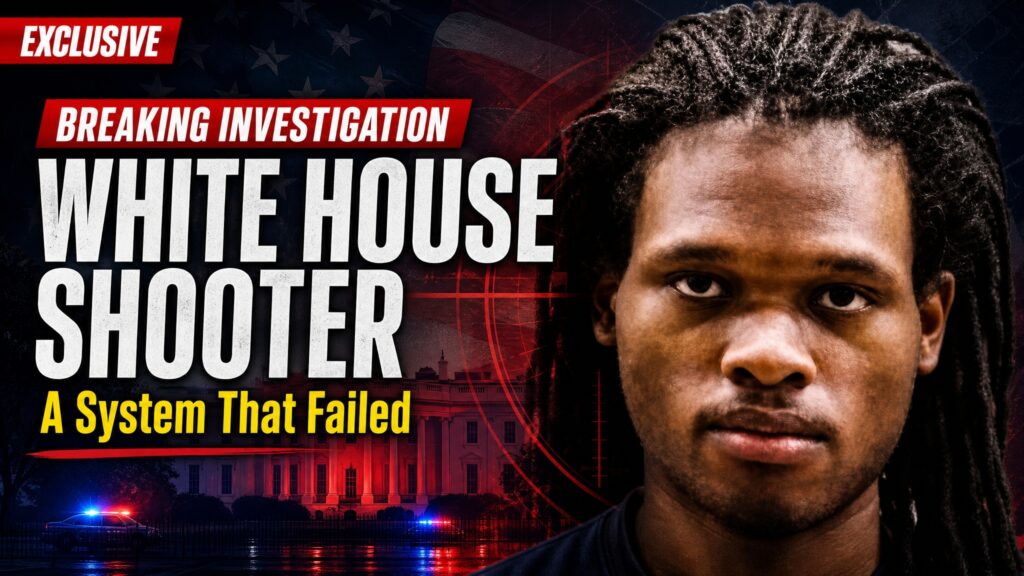
When a mentally disturbed, repeat offender with documented threats against the president walks up to a White House checkpoint and opens fire, Americans deserve more than thoughts and prayers — they deserve accountability.
On the evening of Saturday, May 23, 2026, 21-year-old Nasire Best approached a Secret Service checkpoint at the intersection of 17th Street and Pennsylvania Avenue in Washington, D.C., pulled a handgun from his bag, and opened fire on federal officers. Within seconds, the Secret Service returned fire. Best was transported to a hospital where he was pronounced dead. One civilian bystander was wounded in the exchange. No agents were harmed.
It could have been far worse. What makes this story more than a crime report — what makes it a story about systemic failure, institutional accountability, and the courage of law enforcement — is what happened before Best ever reached that checkpoint. The warning signs were not subtle. They were written in court records, psychiatric reports, and social media posts for anyone willing to read them.
Support Independent Local Journalism
TheTownHall.News is a non-profit reader-supported journalism. Just $5 helps us hire local reporters, investigate important issues, and hold public officials accountable across Alameda County. If you believe our community deserves strong, independent journalism, please consider donating $5 today to support our work.A Man the System Already Knew
This was not a random act of violence by an unknown threat. Nasire Best was, by every documented measure, a known danger. According to court records reviewed by CNN and other major outlets, Best had been on the Secret Service’s radar for well over a year prior to the shooting.
In June 2025, Best physically obstructed a vehicle entry lane to the White House complex. He was involuntarily committed to the Psychiatric Institute of Washington. Less than three weeks later, in July 2025, he violated a court-ordered stay-away order, walked directly into a restricted area outside the White House, and told arresting officers that he was Jesus Christ and wanted to be arrested. He was sent to a psychiatric ward for the second time in a single month.
Social media accounts linked to Best included a post in which he wrote, “I’m actually the son of God,” alongside at least one post that appeared to constitute a direct threat against President Trump. He had reportedly been living in Washington, D.C., for approximately 18 months — circling the White House like a man rehearsing for something.
The question that demands an answer is not who Nasire Best was. We know who he was. The question is: why was he still free to approach a federal checkpoint with a loaded weapon?

Law Enforcement Did Its Job — Did the Courts Do Theirs?
Let’s be precise about what happened at that checkpoint on May 23rd. The Secret Service performed exactly as it should. Officers identified a threat, responded professionally, and neutralized it without losing a single agent’s life. President Trump, who was inside the White House at the time, was never in danger. That outcome is a testament to the training and discipline of America’s federal protective services.
But law enforcement is not a substitute for a functional legal and mental health system. Officers arrested Best twice. He was committed to psychiatric facilities twice. A stay-away order was issued. And yet none of those interventions created a legal mechanism that permanently prevented Best — a man with documented delusional beliefs and apparent violent ideation directed at the sitting president — from legally or physically returning to the area.
This is the tension at the heart of American civil liberties law, and it is one that conservatives and civil libertarians have long debated honestly: at what point does the state have not just the right but the obligation to intervene decisively when an individual poses a clear and documented threat to public safety?
The Broader Pattern Washington Cannot Ignore
This shooting did not occur in a vacuum. It comes approximately one month after the April 25, 2026 White House Correspondents’ Dinner shooting, in which a separate gunman, Cole Tomas Allen, opened fire near the security screening area at the Washington Hilton and was subsequently charged with the attempted assassination of President Trump. That incident alone should have prompted urgent, comprehensive review of presidential security protocols in the nation’s capital.
Instead, Washington’s response has been largely reactive. Trump himself acknowledged this pattern in a post on Truth Social following the May 23rd shooting, writing: “This event is one month removed from the White House Correspondents’ Dinner shooting, and goes to show how important it is, for all future Presidents, to get, what will be, the most safe and secure space of its kind ever built in Washington, D.C.”
Support Independent Local Journalism
TheTownHall.News is a non-profit reader-supported journalism. Just $5 helps us hire local reporters, investigate important issues, and hold public officials accountable across Alameda County. If you believe our community deserves strong, independent journalism, please consider donating $5 today to support our work.Add to this the 2024 Butler, Pennsylvania rally shooting — in which Thomas Crooks grazed Trump’s ear with a bullet fired from a nearby rooftop — and the September 2024 golf course stalking incident involving Ryan Wesley Routh, who was later convicted and sentenced to life in prison, and a pattern emerges that cannot be dismissed as coincidence or bad luck.
When threats against a sitting president cluster this rapidly and this brazenly, it is not a security anomaly. It is a security crisis.
What Critics Get Wrong About “Mental Health” as an Excuse
Some voices will inevitably frame this story as primarily a mental health story — and that framing, while not entirely wrong, is dangerously incomplete. Yes, Nasire Best exhibited signs of severe mental illness. Yes, the system’s failure to adequately address his condition likely contributed to this outcome.
But framing this exclusively as a mental health story allows two critical failures to escape scrutiny. First, it obscures the failure of judicial and administrative systems to enforce and strengthen the legal instruments — stay-away orders, involuntary commitment standards, firearm restriction protocols for adjudicated mentally ill individuals — that exist precisely to prevent situations like this. Second, it sidesteps the broader cultural and institutional question of whether Washington’s bureaucratic culture is more invested in protecting individuals from institutional overreach than in protecting the public from demonstrable threats.
Law and order is not a slogan. It is a covenant between citizens and their government — one that obligates the state to act decisively when the evidence is overwhelming and the risk is clear. That covenant was not upheld in the months between Best’s first arrest and the moment he pulled a weapon at a federal checkpoint.
Acknowledging the Civil Liberties Argument
To be fair, critics of a more interventionist approach will argue — with legitimate constitutional grounding — that involuntary, indefinite detention based on prior behavior and expressed beliefs risks opening a door to government abuse. They will point out that mental illness does not automatically equal violence, and that the bar for stripping an individual of liberty must remain high in a free society.
These are not frivolous concerns. A government empowered to detain anyone who posts erratically on social media is a government that can abuse that power. The answer, however, is not to do nothing. It is to build smarter, faster, more accountable legal pathways — ones that allow courts to act decisively on documented, escalating threat patterns without creating a sweeping surveillance state. The tools largely already exist. What is missing is the institutional will to use them consistently.
The Takeaway America Needs to Hear
Here is the bottom line: Nasire Best did not appear from nowhere on May 23, 2026. He walked up to that checkpoint carrying a history — arrests, psychiatric holds, a violated court order, and online threats against the president — that the system had already documented and, ultimately, failed to act on decisively enough.
The Secret Service agents who ended the threat that evening deserve recognition and gratitude. The institutions that allowed a twice-committed, court-ordered-to-stay-away individual to return to the vicinity of the White House with a weapon deserve scrutiny.
America’s commitment to law and order means holding both truths simultaneously: honoring those who enforce the law, and demanding accountability from the systems designed to support them.
Key Takeaway: The Secret Service did its job on May 23rd. The broader question — why a known, court-documented threat was able to return to the White House perimeter armed — is one that demands urgent answers from law enforcement leadership, the judiciary, and Congress.
Stay Informed. Stay Engaged.
This story is still developing, and the full investigation into Nasire Best’s motive, his access to a firearm, and the precise breakdown in the system’s response to his prior threats is ongoing. Accountability requires an informed citizenry — one that follows these stories beyond the initial headlines.
Share this article with someone who cares about law enforcement, presidential security, and honest government accountability. Subscribe for continued coverage of the stories that matter. And if you believe independent, fact-driven journalism is worth protecting, support the outlets doing the work.
Democracy functions best when citizens stay engaged. Don’t look away.