MRI-Guided Cryoablation: Australia’s Minimally Invasive Cancer Treatment Explained
A Sydney hospital is destroying cancer without a single incision — and the results are turning heads across the medical world. So why aren’t more patients hearing about it?
A 64-year-old woman walked into Liverpool Hospital in Sydney with a tumor eating into her spine. She walked out the next day without pain. No scalpel. No surgical screws. No weeks in recovery. One needle, one procedure, one ice ball formed around a nine-millimeter tumor under live MRI guidance — and months of agony were gone by morning. That outcome is no longer a medical anomaly. It is a preview of where cancer care is heading.
The technology behind it, MRI-guided cryoablation, has quietly become one of the most significant advances in interventional oncology in decades. Australia is now at the forefront of this shift, and the numbers behind the procedure make a compelling case that health systems, insurers, and patients can no longer afford to ignore it.
Support Independent Local Journalism
TheTownHall.News is a non-profit reader-supported journalism. Just $5 helps us hire local reporters, investigate important issues, and hold public officials accountable across Alameda County. If you believe our community deserves strong, independent journalism, please consider donating $5 today to support our work.What Is MRI-Guided Cryoablation — and How Does It Work?
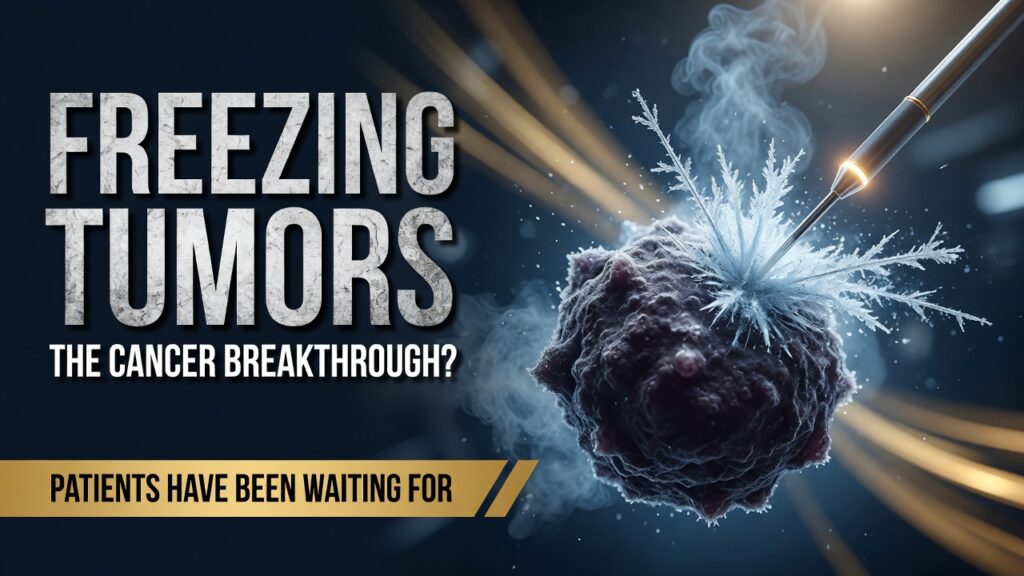
The procedure is precisely what it sounds like. A thin, gas-powered probe — no wider than a biopsy needle — is inserted through a small skin puncture directly into a tumor. Compressed argon gas is released at the needle tip, causing a rapid temperature drop that freezes surrounding tissue in what specialists call an “ice ball.” The freezing ruptures cancer cells, collapses blood vessels feeding the tumor, and triggers cell death. The entire process unfolds inside an MRI scanner, giving physicians a live, high-resolution view of exactly where the ice ball is forming and whether it is reaching every edge of the lesion while sparing adjacent healthy tissue.
Liverpool Hospital’s system goes further than most. Its newly commissioned IR-MACS suite — Interventional Radiology, Magnetic Resonance Imaging, Angiography and Computed Tomography — combines three imaging modalities in a single room, meaning patients move from diagnosis to treatment without being transferred between departments. NSW Health has confirmed it is the first such configuration in New South Wales, and the first to pair cryoablation with full MRI guidance in any Australian public hospital. The lead physicians, Dr. Glen Schlaphoff and Dr. Hao Xiang of Spectrum Interventional Radiology, have been performing cryoablation for over a decade, with hundreds of kidney and liver cases between them. The MRI-guided component represents the most advanced iteration of that work.
The Numbers Are Impossible to Ignore
32%. That is how much cheaper cryoablation is compared to robotic-assisted surgery for kidney cancer, according to a study published in Cardiovascular and Interventional Radiology — and patients in the cryoablation group spent an average of 1.13 days in the hospital versus 1.90 days for surgery, with many discharged the same day.
If every eligible kidney cancer patient in a national system received cryoablation instead of surgery, the downstream savings — in hospital bed days, nursing time, anesthesia costs, and post-operative care — would run into the hundreds of millions. Health systems worldwide are straining under surgical backlogs and aging populations. A treatment that costs less, takes less time, and produces equivalent outcomes should not require a decade to become standard practice. The question is why it has.

If a treatment costs 32% less and sends patients home in half the time, why is it still not the default for eligible cancer patients?
Who Actually Benefits From This Technology?
The patient pool is broader than most people assume. Cryoablation is already a standard treatment for kidney and liver tumors in many clinical settings. Liverpool Hospital is now applying MRI guidance to extend its reach into spinal tumors, soft tissue lesions, vascular malformations, and chronic pain conditions caused by abnormal nerve tissue. Specialists note it is particularly valuable for patients who are elderly, medically fragile, or whose tumors sit in anatomically difficult positions — near the spinal cord, adjacent to major blood vessels, or surrounded by structures that would be damaged by conventional surgery.
Josephine Cordina’s case illustrates the profile precisely. Traditional surgery for her spinal tumor would have required screws, stabilization hardware, and weeks of recovery. She declined it. Under MRI-guided cryoablation, she was pain-free within 24 hours. Her case is not presented as a cure — the procedure targets and destroys defined lesions, not systemic disease — but for patients facing unresectable tumors or inoperable sites, the option is transformative.
“A treatment that costs 32% less, sends patients home in half the time, and produces equivalent outcomes should not need a decade to become the standard of care.”
What Do Supporters of the Current Surgical Model Actually Believe?
Proponents of traditional surgery argue, reasonably, that not all tumors are candidates for ablation. Large, complex, or metastatic cancers frequently require surgical resection to ensure clean margins and complete removal. They also point out that cryoablation’s long-term recurrence data, while promising, is still maturing for several tumor types — the technology’s track record in breast cancer, for example, received FDA approval for a dedicated system only in November 2024, and definitive five-year survival trials are still underway. Critics within the medical establishment raise a legitimate concern: precision matters enormously when the ice ball’s edge is millimeters from a major nerve or blood vessel, and the technology demands a level of specialist training that is not yet uniformly distributed.
These are fair objections. They are also, in most cases, arguments for faster training and investment — not for preserving the status quo. The peer-reviewed evidence consistently shows cryoablation is as effective as surgery in its indicated cases, with fewer complications and lower costs. The counterargument increasingly rests not on efficacy but on institutional inertia.
Support Independent Local Journalism
TheTownHall.News is a non-profit reader-supported journalism. Just $5 helps us hire local reporters, investigate important issues, and hold public officials accountable across Alameda County. If you believe our community deserves strong, independent journalism, please consider donating $5 today to support our work.Is the Rest of the World Moving Fast Enough?
Australia’s Liverpool Hospital has earned global attention for its IR-MACS suite, but it is not alone in the cryoablation space. Institutions across the UK, Germany, Singapore, and Canada are running pilot programs with similar technology. Monash Health in Australia has begun investing in its own cryoablation capacity. In the United States, the FROST clinical trial recently published six-year outcomes data on cryoablation as an alternative to lumpectomy for early-stage breast cancer — with results comparable to surgery and 100% patient-reported cosmetic satisfaction at five years. A Phase 2 trial published in Nature Cancer in 2026 reported a 75% objective response rate in advanced liver cancer patients treated with cryoablation combined with immunotherapy, with median overall survival exceeding two years.
The science is not waiting for the health bureaucracies to catch up — and neither are patients.
Meanwhile, researchers are exploring how to combine cryoablation with nanoparticle technology — engineering tiny particles that can enhance imaging, improve ice-ball precision around irregular tumor shapes, and even stimulate the immune system to attack residual cancer cells after the procedure. The implication is striking: cryoablation may not merely destroy a tumor in place, but help train the body to fight cancer elsewhere.
What Happens When Patients Are Left Behind?
The gap between proven technology and standard access is where patients suffer. For every Josephine Cordina who reaches a specialist center in time, there are patients who don’t know the option exists, whose physicians haven’t trained on the equipment, or whose insurers classify the procedure as experimental despite years of peer-reviewed evidence. In public health systems, this gap is often widest for patients in regional and rural areas, older patients with complex presentations, and those whose tumors are dismissed as too difficult to treat surgically.
$830 million. That is what NSW Health invested in Liverpool Hospital’s redevelopment — the infrastructure that made MRI-guided cryoablation possible. The question worth asking: how many hospitals could replicate this, and how long are we willing to wait?
The Liverpool model demonstrates something the broader health system needs to internalize. When you build a hybrid imaging suite, train specialist teams, and commit to minimally invasive intervention as a priority, outcomes improve and costs fall. That is not a radical claim. It is what the data shows — consistently, across countries, across tumor types, and across economic models.
Will Freezing Tumors Become the Standard — or Stay a Specialty?
The most important decision in the near-term future of cryoablation will not be made in a laboratory. It will be made by hospital administrators deciding whether to fund hybrid imaging suites, by medical boards determining which procedures qualify for routine reimbursement, and by patients who know enough to ask their oncologist whether they are a candidate for minimally invasive ablation.
The technology exists. The evidence supports it. The economics favor it. The only remaining question is whether the institutions responsible for cancer care will move at the pace patients deserve.
What do you think — is the health system moving fast enough to get this technology to the people who need it? Share this article and let us know.
Key Questions
- Why are MRI-guided cryoablation suites still rare in public hospitals, given the cost and recovery advantages over traditional surgery?
- At what point does peer-reviewed evidence become sufficient for cryoablation to be the default standard of care for eligible tumor types?
- Who is responsible when patients in regional and underserved areas cannot access a minimally invasive option that exists in major centers?
Still have questions? Stay informed — subscribe for daily coverage of the medical and policy stories shaping your health.
Think others need to hear this? Share the article and start the conversation.
Want to make your voice count? Contact your federal or state health representative and ask what your region’s cancer care investment plan looks like for the next five years.