Moderna mRNA Flu Vaccine FDA Approval: Side Effects, Efficacy & What You Need to Know
The FDA’s vaccine panel just voted 9-0 to recommend Moderna’s mRNA flu shot — but the trial data raises questions every American deserves to have answered before fall.
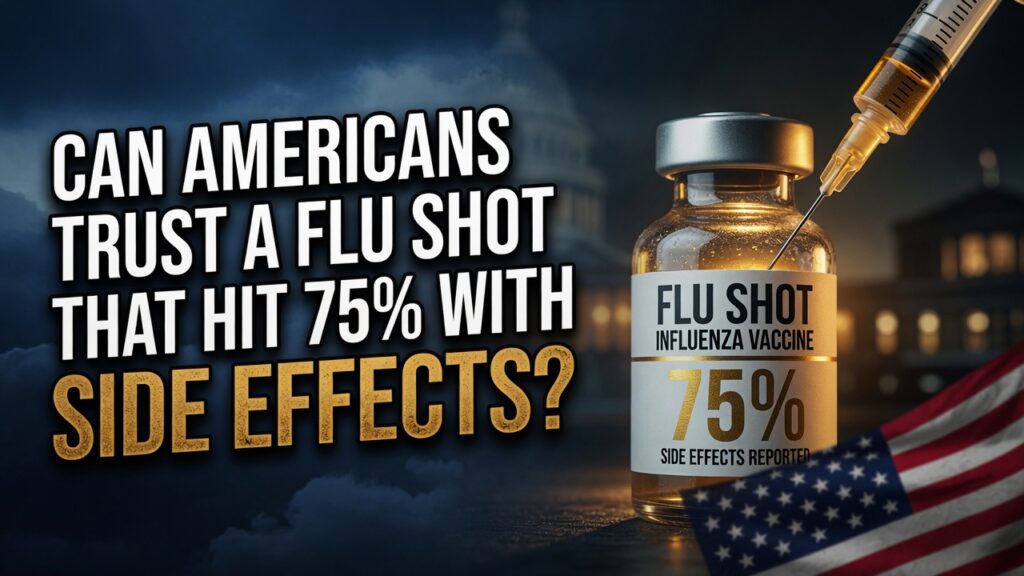
Three out of four people who received Moderna’s new mRNA flu shot reported adverse reactions. That number isn’t from a skeptic’s blog — it comes from the clinical trial data presented to federal regulators. On June 18, 2026, the FDA’s top vaccine advisory panel, VRBPAC, voted unanimously to recommend approval of mFlusiva for adults 50 and older. The agency’s formal decision is expected by August 5. Before that deadline arrives, Americans deserve a clear-eyed look at what the science actually shows — and what questions regulators have left unanswered.
What Did the Trial Data Actually Find?
The Phase 3 clinical trial enrolled more than 40,000 adults across 11 countries during the 2024–2025 flu season. It compared mFlusiva against a standard-dose traditional flu shot — not a placebo. That distinction matters enormously, because the adverse reaction rates reported in trial data reflect responses above and beyond those already caused by an existing flu vaccine.
Support Independent Local Journalism
TheTownHall.News is a non-profit reader-supported journalism. Just $5 helps us hire local reporters, investigate important issues, and hold public officials accountable across Alameda County. If you believe our community deserves strong, independent journalism, please consider donating $5 today to support our work.Against that baseline, solicited adverse reactions were substantially more frequent among recipients of the mRNA vaccine: injection-site pain was reported by 65.8% of participants, fatigue by 45.1%, and headache by 37.8%. When these figures are aggregated, the share of trial participants reporting at least one adverse reaction clears 75%. The agency and Moderna both characterized these reactions as predominantly mild-to-moderate and self-resolving. But characterizing a reaction as “mild” does not make it trivial — and the word “solicited” is doing more work than most headlines acknowledge. These are reactions researchers specifically asked about. Unsolicited reactions go into a separate, less prominent category. Pharmacy Times
Are Severe Reactions Being Downplayed?
This is where the data becomes harder to dismiss. According to the FDA’s own staff report, grade 3 systemic reactions — the category covering severe symptoms that interfere with daily activity — occurred in 5.5% of mFlusiva recipients, compared to just 0.9% in the standard-dose comparator group. That is a more than sixfold difference in severe systemic reactions between the mRNA vaccine and a traditional flu shot. Panelists compared this profile to Shingrix, a shingles vaccine known for its reactogenicity — a comparison that, for many patients, is cold comfort. FirstWord
Severe systemic reactions in the mFlusiva trial were more than six times more common than in the traditional flu shot group. Is that an acceptable tradeoff — and who gets to decide?
The FDA also flagged the relatively short safety dataset — just six months of follow-up — which may not reveal rare adverse events like myocarditis or neurologic events that have been associated with earlier mRNA products. People who received Moderna’s shot also showed higher rates of anemia and urinary tract infections than those in the control group. No serious imbalances in deaths were recorded between arms, and no cases of myocarditis or pericarditis were reported — points the agency and Moderna emphasized repeatedly. But six months of follow-up is a narrow window for a vaccine intended for annual use across an aging population. BioSpace

“A six-month safety window on a vaccine designed for annual administration in adults over 50 is not a data gap — it’s a question the public is being asked to answer with their bodies.”
What Do the Efficacy Numbers Actually Tell Us?
The efficacy case for mFlusiva is real, and it deserves honest reporting. Against the standard-dose comparator, mFlusiva demonstrated a relative vaccine efficacy of 26.6% against RT-PCR-confirmed influenza-like illness. Against higher-stakes outcomes — emergency room visits, urgent care, and hospitalizations — efficacy rose to 47.9%. Tech Times
Those are meaningful numbers, particularly for older adults at elevated risk of flu complications. During the 2025–2026 flu season, the U.S. recorded at least 32 million flu cases, 390,000 hospitalizations, and 24,000 deaths. In that context, a vaccine that cuts hospitalizations by nearly half relative to existing options is not a trivial advance. NPR
47.9% — the relative reduction in flu-related ER visits, urgent care visits, and hospitalizations seen in the mFlusiva trial. If that number holds in the real world, who should be the one deciding whether Americans take that tradeoff?
But the 26.6% relative efficacy figure applies specifically to confirmed flu-like illness and is measured against another flu vaccine, not a placebo. The absolute benefit — how much better a person is protected compared to receiving no vaccine at all — is not what’s being reported in most headlines. Readers deserve to know that distinction.
What Happens If the FDA Approves It But You Can’t Get Coverage?
FDA approval by August 5 would not automatically mean the shot lands in your doctor’s office this fall. A second, equally consequential step remains: a recommendation from the CDC’s Advisory Committee on Immunization Practices, known as ACIP. Without it, insurers are not required to cover the vaccine under federal law.
Support Independent Local Journalism
TheTownHall.News is a non-profit reader-supported journalism. Just $5 helps us hire local reporters, investigate important issues, and hold public officials accountable across Alameda County. If you believe our community deserves strong, independent journalism, please consider donating $5 today to support our work.A federal court ruling handed down on March 16, 2026, blocked HHS Secretary Robert F. Kennedy Jr.’s 13 appointees to ACIP and invalidated votes the reconstituted panel had previously taken. Kennedy took to social media on June 12 to announce the filing of a motion asking the First Circuit Court of Appeals to expedite an appeal of the district court’s order, contending that the ruling left ACIP without a quorum and unable to act. AJMCKFF Health News
Without a recommendation from ACIP, insurers may not be required to cover the vaccine, and clinical guidance for providers will remain in limbo. The result is a situation in which a federally recommended vaccine may exist on paper while millions of Americans — particularly older adults on fixed incomes — cannot access it without paying out of pocket. That is not a hypothetical outcome. It is the trajectory currently in motion. Pharmacy Times
What Do Supporters of This Vaccine Actually Believe?
Supporters make a substantive case, and it should be heard. The mRNA platform offers genuine advantages over traditional egg-based flu vaccine manufacturing. mRNA manufacturing could shorten strain-to-shot timelines from approximately six months to two or three months, with immunogenicity data suggesting broader strain recognition and potentially longer durability than traditional platforms. In a year when vaccine strain mismatch reduces protection, that speed advantage could save lives. Pharmacy Times
Panelists at the June 18 meeting pointed to a committed post-market confirmatory trial involving up to 800,000 participants across two flu seasons as a meaningful safeguard. One panelist called that study “very well planned and large” and said it would “address important questions.” Supporters also note that the vaccine is being recommended only for adults 50 and older — a population for whom flu poses elevated mortality risk and for whom a more reactogenic but more effective shot may represent a reasonable tradeoff. BioPharma Dive
These are fair points. The problem is not that mFlusiva lacks a case — it’s that the case is being made in a regulatory and political environment that has repeatedly demonstrated it is not optimized for transparency. The trial lacked a placebo control. The safety window was six months. The ACIP is paralyzed. None of that inspires the institutional confidence that informed consent requires.
Is Anyone Actually Asking the Right Questions?
If your doctor told you a new medication caused side effects in 75% of patients and severe reactions at six times the rate of the alternative — would you demand more information before saying yes?
That is not an anti-vaccine question. It is a patient rights question. It is a question grounded in the same principle of informed consent that governs every other medical decision Americans make. The FDA’s advisory committee is not a rubber stamp — its members are credentialed scientists who reviewed thousands of pages of data and voted unanimously on the merits. But unanimous votes in the absence of placebo controls, long-term safety data, and a functional downstream advisory committee are not the same as settled science.
Key Questions This Story Raises
- Why was there no placebo arm in the mFlusiva Phase 3 trial — and what does the absence of one mean for understanding the vaccine’s true absolute risk and benefit?
- With ACIP paralyzed by litigation, who will determine whether mFlusiva gets insurance coverage in time for the 2026–2027 flu season — and what happens to the 50-and-older Americans caught in the gap?
- Six months of post-vaccination follow-up is the safety baseline for a product intended for annual use across an aging population. Is that enough — and what is the plan if rare events emerge after approval?
The real accountability question here is not whether Moderna’s scientists did their jobs. The data suggests they did. The question is whether a regulatory system that fast-tracks decisions on truncated timelines, skips placebo comparisons, and routes approval through politically paralyzed advisory bodies is doing its job. Americans over 50 will be the ones making that call — with their arms, this fall.
What do you think — are the questions about this vaccine being asked loudly enough? Share this article and weigh in.
Still have questions? Subscribe for daily coverage of the health and policy stories that affect your life.
Think your representatives need to hear from constituents on vaccine transparency and informed consent? Find your member of Congress at house.gov and make your voice count.