West Bank Grenade Video: What the Qalandiya Raid Footage Shows
A security camera in a West Bank refugee camp caught something no press release can spin. As the footage spreads worldwide, one question keeps surfacing: who is actually being held accountable when it’s on tape?
The video is nine seconds long, and it has already been viewed millions of times.
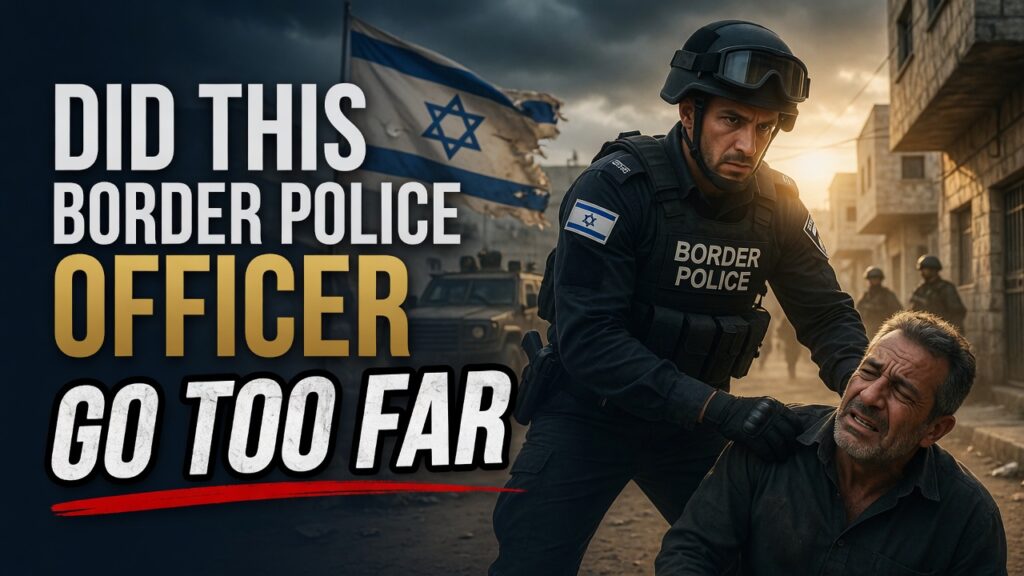
Security camera footage from July 6 shows a Border Police officer approaching a car parked in the Qalandiya refugee camp, shouting at the young men inside, then throwing a stun grenade into the vehicle and appearing to force the door shut as it detonates. During the same raid, a 16-year-old boy was killed by gunfire and two 14-year-old boys were wounded, according to the Palestinian health ministry. The footage was independently reported by Al Jazeera, Middle East Eye, and the Israeli outlet Haaretz — not a single activist account, but three separate newsrooms working from the same tape.
Support Independent Local Journalism
TheTownHall.News is a non-profit reader-supported journalism. Just $5 helps us hire local reporters, investigate important issues, and hold public officials accountable across Alameda County. If you believe our community deserves strong, independent journalism, please consider donating $5 today to support our work.What Does the Footage Actually Show?
Watch it once and the sequence is simple. An officer walks up to a car full of young Palestinian men. Words are exchanged. He raises a stun grenade, throws it into the vehicle, and appears to hold the door closed as the device goes off inside a confined space with people still in it.
Haaretz reported that the same officer was recorded shouting at the driver during the encounter, telling him to “shut your mouth.” The clip has circulated on social media in multiple cuts and angles, but the core sequence — grenade thrown, door held shut, detonation inside the car — is consistent across every version that has surfaced so far.
Who Was Hurt in the Qalandiya Raid?

The human cost of the raid goes beyond the grenade itself. A 16-year-old boy was killed by gunshot wounds during the operation, the Palestinian health ministry said, and two 14-year-old boys were injured by gunfire to their lower limbs. Haaretz identified the deceased teenager as a resident of the camp where the raid took place.
These are minors. A 16-year-old is dead and two 14-year-olds were shot. If this happened on any American street, would anyone accept “it was a raid” as the full explanation?
That is the question at the center of this story, and it is not a rhetorical one. Raids happen. Security operations happen. But the presence of an operational justification does not automatically answer questions about the specific tactics used once boots are on the ground.
Why Are Stun Grenades Even Controversial?
Stun grenades, sometimes called flashbangs, are designed to disorient through a blinding flash and a deafening bang rather than through fragmentation. They are classified by many police and military forces as “less-lethal” tools, intended to be used in open space so anyone nearby can move away from the blast.
Support Independent Local Journalism
TheTownHall.News is a non-profit reader-supported journalism. Just $5 helps us hire local reporters, investigate important issues, and hold public officials accountable across Alameda County. If you believe our community deserves strong, independent journalism, please consider donating $5 today to support our work.That is precisely why this footage drew scrutiny beyond the usual conflict coverage. A stun grenade thrown into a closed car, with the door reportedly held shut, does not match the standard use case for a less-lethal device. Less-lethal tools are only less lethal when they’re used the way they were designed to be used.
A grenade is supposed to disorient people who can run from it. What happens when the door won’t open?
How Did Three Separate Newsrooms Confirm This?
Skepticism is healthy, especially with conflict footage that spreads fast and gets re-edited along the way. But this incident cleared a bar that a lot of viral clips never reach: independent confirmation from multiple credible outlets working the story separately.
Al Jazeera and Middle East Eye both reported the security camera footage and the casualty details from the Palestinian health ministry. Haaretz, an Israeli outlet not aligned with Palestinian advocacy groups, separately confirmed the officer’s conduct and added the detail about him shouting at the driver. When outlets with different editorial perspectives converge on the same set of facts, that convergence itself is a form of verification.
16. That’s the age of the boy who died in the same raid where this footage was recorded. The question that raid should force into the open: what oversight exists the moment an operation like this goes wrong?
What Do Supporters of Aggressive Security Tactics Actually Believe?
Defenders of hardline security operations in the West Bank argue that raids in refugee camps like Qalandiya target real threats — people linked to rock-throwing, weapons smuggling, or attacks on Israeli civilians and soldiers — and that officers operate in genuinely dangerous, fast-moving environments where split-second decisions carry real risk either way. They point out that a nine-second clip cannot capture everything that led up to that moment, including what threat the officer may have perceived from the vehicle’s occupants.
That argument is worth taking seriously. Context shapes how force gets used, and officers working in hostile environments do not have the luxury of hindsight. But context explains the decision to conduct a raid. It does not, by itself, explain the specific choice to hold a car door shut while a stun grenade detonates inside it. Those are two different questions, and only one of them has been answered so far.
Is Anyone Reviewing What Happened?
As of this writing, Israeli authorities have not issued a detailed public accounting of the specific tactics used in the Qalandiya raid. That silence is its own kind of answer, at least for now. Accountability requires more than viral outrage — it requires an actual review process, on the record, that either justifies the tactic or acknowledges it went wrong.
This is not a uniquely foreign problem. Every domestic debate over police body cameras, use-of-force reviews, and independent oversight boards exists for exactly this reason: footage alone does not deliver accountability. A process does. Without a formal review — internal affairs, a civilian oversight body, or a judicial inquiry — a viral video becomes a moment of outrage that fades within a news cycle instead of a documented case that changes policy. That is true whether the raid happens in Qalandiya or in any American city.
Key Questions This Story Raises
- Does holding a car door shut during a stun grenade detonation fall within any published use-of-force policy, or does it fall outside one?
- Will there be an independent review of the raid that killed a 16-year-old and wounded two 14-year-olds, and who conducts it?
- What happens to public trust in security operations when footage like this goes unaddressed by official channels?
Does Silence From Officials Make This Worse?
Silence rarely helps in cases like this. When footage this clear circulates without an official response, it doesn’t make the underlying questions disappear — it just means the public fills in the answer on its own, usually with the least generous interpretation available.
That’s not a reason to assume the worst without evidence. It’s a reason to demand a real answer instead of letting a nine-second clip become the entire record. A minor died in this raid. Two more were shot. The public deserves to know whether the tactics used that day were within policy, and if they weren’t, what changes.
The real question isn’t whether this video is disturbing. It’s whether anyone in a position of authority is going to answer for what it shows.
Still have questions about how this story develops? Stay informed — subscribe for daily coverage as new details emerge. Think others need to see this footage and the facts around it? Share this article. Want your voice to count on oversight of foreign security assistance? Contact your congressional representative and ask what accountability mechanisms exist for recipients of U.S. military aid.