Hayward Flock Cameras: Is Anyone Really Watching the Watchers?
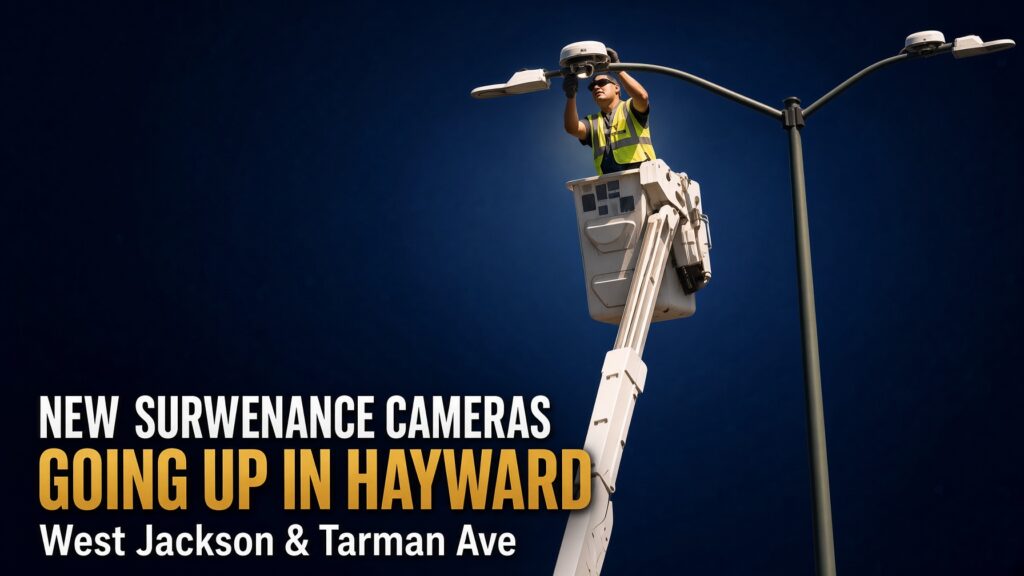
As new license plate readers appear on light poles across Hayward, residents are asking a simple question city hall hasn’t answered: who approved this, and why weren’t we told?
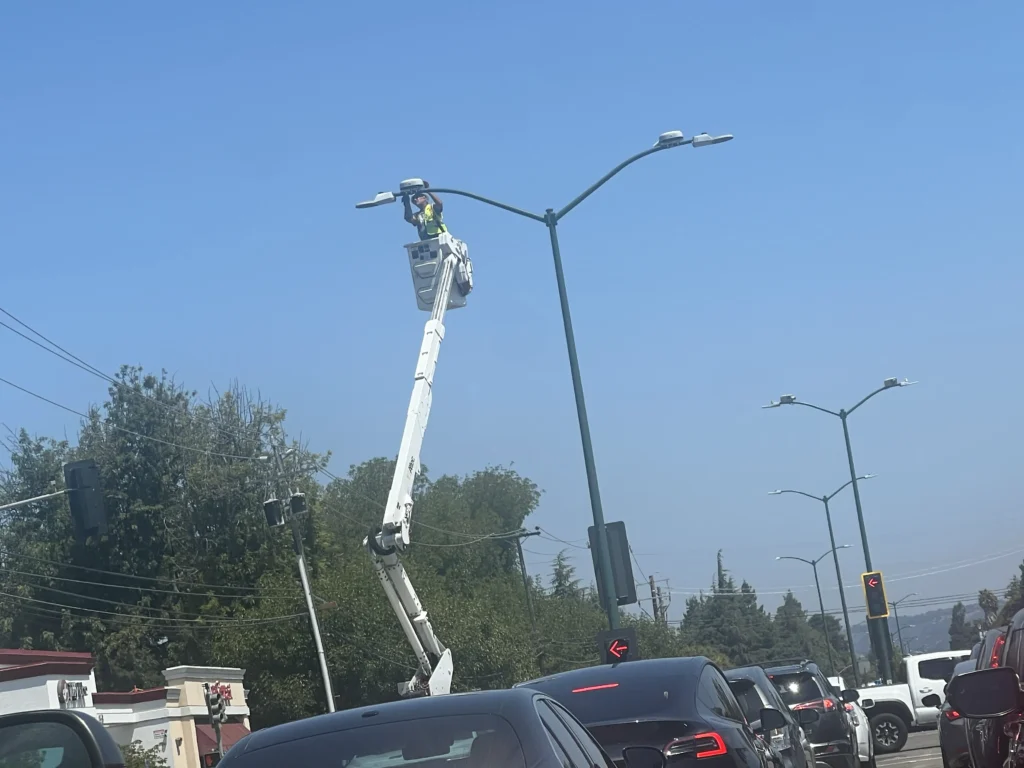
New surveillance cameras just went up on a Hayward street corner. Did anyone ask residents first?
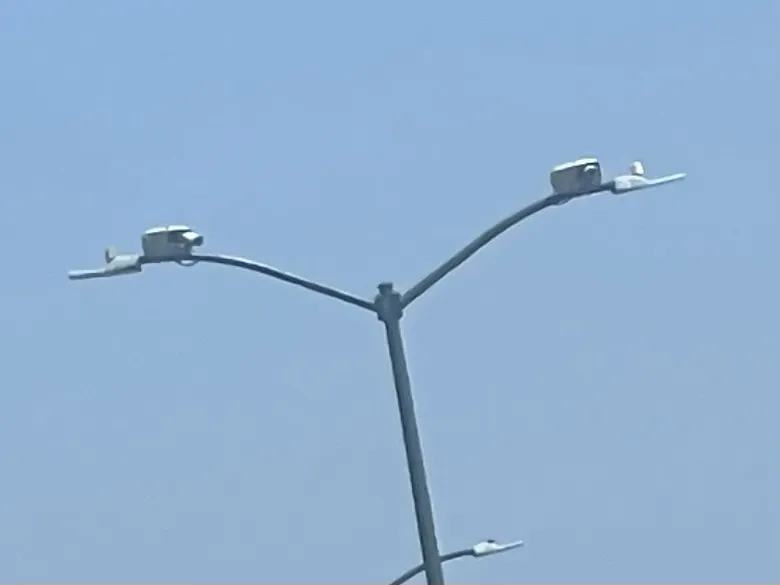
Photos taken this week show Flock Safety camera equipment being installed on light poles at West Jackson Street and Tarman Avenue, a busy commercial corridor near the Hayward Hall of Justice. The installation fits a pattern local officials have quietly expanded for months, and it raises a question every Hayward taxpayer deserves answered: who decided this, and why weren’t residents told first?
Support Independent Local Journalism
TheTownHall.News is a non-profit reader-supported journalism. Just $5 helps us hire local reporters, investigate important issues, and hold public officials accountable across Alameda County. If you believe our community deserves strong, independent journalism, please consider donating $5 today to support our work.The cameras appear to be part of a much larger rollout. Hayward Police Department has pursued a state grant covering 70 Flock Safety devices citywide — 54 automated license plate readers and 16 “situational” video cameras — according to a state grant application filed with the Board of State and Community Corrections [government grant filing, BSCC]. A separate filing with the state’s environmental clearinghouse, signed by Hayward Police Chief Bryan Matthews, confirms the department has been mounting ALPR cameras and solar panels on existing traffic signal and streetlight poles across the city since at least March 2026 [government filing, CEQAnet]. West Jackson and Tarman appears to be one more node in that expanding network.
Why Does This Matter Right Now?
License plate readers aren’t ordinary traffic cameras. They photograph every vehicle that passes, log the plate, time, and location, and store that data — often for 30 days or longer — in a searchable database shared across law enforcement agencies. Hayward’s own contractor markets the technology as a tool against organized retail theft and stolen vehicles. Fair enough. But a tool this powerful demands a level of transparency that residents say they simply have not received.
Who Approved These Cameras — And When?
The state paperwork trail shows Hayward’s Flock program moving forward through routine administrative channels rather than a highly publicized public process. The city’s CEQA filing claims a categorical exemption under Section 15301(b), the provision covering “minor alterations” to existing infrastructure like signal poles [government filing, CEQAnet]. That classification lets the expansion proceed with minimal environmental review and, critically, without the kind of public hearing that might accompany a more visible infrastructure project.
That is not necessarily improper. Categorical exemptions exist for a reason, and attaching a camera to an existing pole is a modest physical project by any measure. But there’s a real difference between “legally sufficient” and “the public actually knew this was happening.” Residents driving past West Jackson and Tarman this week are seeing new equipment go up with no obvious signage explaining what it is or who to contact with questions.

If a government camera can log your car every time you drive to the pharmacy, shouldn’t you at least know it’s there?
Is Anyone Tracking What These Cameras Actually Cost?
$150 to $1,000. That’s the range Hayward budgeted per camera for installation alone, depending on whether the pole already had power infrastructure [government grant filing, BSCC]. Add a full-city service agreement for 70 devices, and taxpayers are funding a permanent surveillance backbone — not a one-time purchase. The question city council rarely gets asked directly: what is the total multi-year cost, and was it weighed against other public safety investments?
That figure matters because Flock’s business model is subscription-based. Cities don’t just buy the hardware once — they pay recurring fees to keep the network operational, and those costs compound as the camera count grows. A 70-camera commitment today can mean a much larger line item in next year’s budget hearing.
Fiscal accountability shouldn’t stop at the point of installation — taxpayers deserve to know what a citywide surveillance grid costs every single year.
What Do the Numbers Say About Effectiveness?
Hayward’s own grant narrative promises an evaluation built around “frequency of calls for service” in targeted areas and coordination with the department’s crime analyst [government grant filing, BSCC]. That’s a reasonable metric, but it’s also one the department controls and reports on itself. Independent, third-party verification of whether ALPR expansion actually reduces crime — rather than simply generating more license plate data — has been thin in cities that have deployed similar systems.
Support Independent Local Journalism
TheTownHall.News is a non-profit reader-supported journalism. Just $5 helps us hire local reporters, investigate important issues, and hold public officials accountable across Alameda County. If you believe our community deserves strong, independent journalism, please consider donating $5 today to support our work.Nationally, more than 100,000 Flock and comparable license plate readers now operate across the country, and dozens of cities have rejected or canceled Flock contracts after resident pushback over data retention, cross-jurisdictional sharing, and mission creep [aggregated news reporting]. Hayward isn’t an outlier in adopting the technology — but it isn’t immune to the same accountability questions other cities have had to answer publicly, either.
Are Hayward Residents Being Left Out of the Conversation?
Public records show installation authority resting with the police chief through standard administrative filings — not a dedicated council vote specific to each camera location. For a technology that captures data on every driver, every day, that process deserves scrutiny. Residents near West Jackson and Tarman have a right to ask their city council members directly: was this specific intersection publicly discussed, and if not, why not?
Should a government surveillance camera ever go up on a public street without a public vote on that specific location?
That single question sits at the center of the growing national debate over ALPR expansion, and Hayward now finds itself squarely inside it.
Key Questions This Story Raises
- Who specifically approved the West Jackson and Tarman Avenue camera location, and was that decision made public before installation began?
- What is the full multi-year cost to Hayward taxpayers for all 70 planned Flock cameras, including recurring service fees?
- What independent, third-party evidence exists that ALPR expansion reduces crime rather than just expanding the volume of driver data collected?
What Do Supporters of This Policy Actually Believe?
Supporters of Flock’s expansion make a straightforward public-safety case: the cameras have helped police departments locate stolen vehicles, identify suspects in hit-and-runs, and respond faster to crime reports. Hayward’s own grant application ties the cameras directly to fighting organized retail theft and vehicle-related crime — a genuine concern for local business owners along corridors like West Jackson Street.
That argument has merit. Property crime imposes real costs on small businesses and residents, and law enforcement tools that help solve cases quickly serve a legitimate public interest. The fair response isn’t to dismiss the public-safety case — it’s to insist that the same seriousness applied to funding the cameras be applied to funding the oversight: clear data retention limits, audit trails for who accesses the footage, and public reporting showing whether the investment produces measurable results. Public safety and public accountability aren’t competing values. They should move together.
Where Does Hayward Go From Here?
The cameras at West Jackson and Tarman Avenue are almost certainly not the last ones Hayward will install. With a 70-camera state-funded program underway, more intersections across the city should expect similar equipment in the coming months. That makes this the moment for residents to engage — not after the network is fully built out.
118,000. That’s the estimated number of automated license plate readers now operating across the United States, according to privacy researchers tracking the technology [DeFlock, crowd-sourced tracking]. The question every Hayward resident should be asking: how many are already watching your daily commute, and how many more are coming?
So Who’s Really Watching Hayward?
The cameras going up on West Jackson and Tarman Avenue are a small, physical sign of a much bigger shift already underway in how Hayward polices its streets. The technology may prove valuable for solving crimes. But value doesn’t erase the obligation to inform the people paying for it and living under it.
The real question isn’t whether Flock cameras can help catch criminals — it’s whether Hayward residents will get a real say before the next pole goes up.
Still have questions about surveillance spending in your city? Stay informed — subscribe for daily Hayward and Alameda County accountability coverage. Think your neighbors need to see this? Share the article. Want your voice to count? Attend the next Hayward City Council meeting or contact your council member directly to ask where the full list of planned camera locations is published.