Iran Girls’ School Strike: What the US Investigation Found
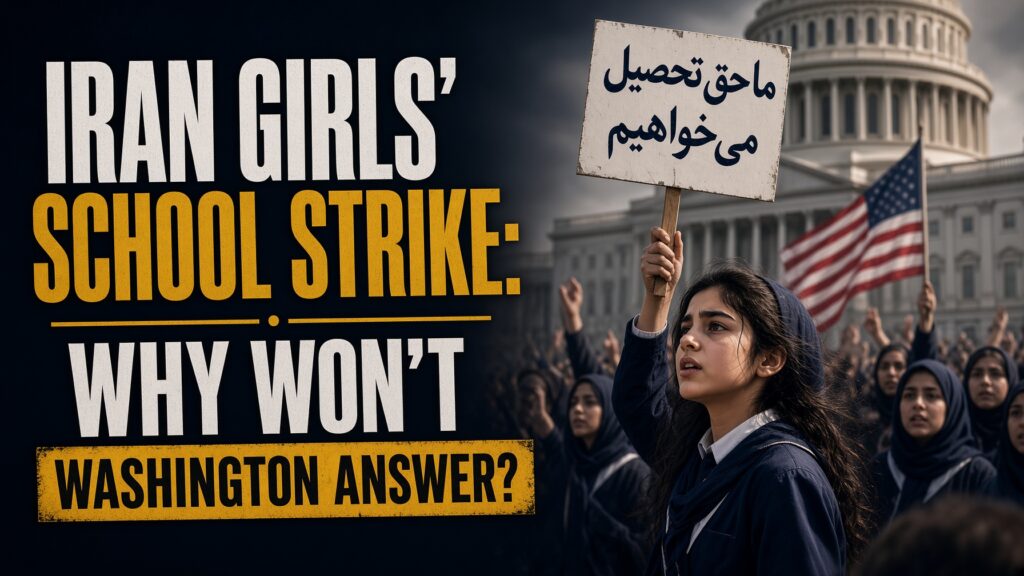
As U.S. and international investigators close in on a conclusion, millions of Americans are asking a simple question: who is actually responsible for the deadliest strike of the Iran war — and why hasn’t Washington said so?
Did outdated American intelligence lead to the deadliest single strike of the Iran war — and why is Washington still stalling on an answer?
On February 28, 2026, a missile tore through a girls’ elementary school in southern Iran, killing more than 150 children and staff in less than a minute. Five months later, the U.S. government has still not formally acknowledged responsibility.
Support Independent Local Journalism
TheTownHall.News is a non-profit reader-supported journalism. Just $5 helps us hire local reporters, investigate important issues, and hold public officials accountable across Alameda County. If you believe our community deserves strong, independent journalism, please consider donating $5 today to support our work.That delay matters. The strike on Shajareh Tayyebeh Elementary School in Minab happened on the opening day of the joint U.S.-Israeli military campaign against Iran. Multiple independent investigations — from CNN, The New York Times, NPR, and the open-source research group Bellingcat — now point to a U.S. Tomahawk missile as the likely cause. If Americans are going to fund and support military action abroad, they deserve a government willing to tell them the truth when that action goes catastrophically wrong.
What Actually Happened in Minab?
The strike hit at approximately 10:45 a.m. local time, during peak classroom hours. The building’s roof collapsed on students and teachers inside. Iranian officials put the death toll at roughly 165, most of them girls between the ages of 7 and 12, with dozens more wounded [Iranian state media, cited by UN human rights office]. Independent journalists have not had unrestricted access to Minab to verify the toll directly, and Amnesty International has said it cannot independently confirm the exact number of dead given Iran’s internet blackout and restricted access [Amnesty International].
What is not in dispute is the scale. This is the single deadliest incident reported so far in the U.S.-Israeli campaign against Iran, and it happened to children in a classroom.
Who Is Really Responsible — And How Do We Know?
In the hours after the strike, conflicting claims filled the information vacuum. President Trump initially suggested Iran itself might be responsible, even though Iran does not possess Tomahawk missiles [reporting via The New York Times]. Secretary of State Marco Rubio said the United States “would not deliberately target a school.”

The physical evidence tells a more specific story. CNN reported that two sources briefed on a preliminary U.S. military investigation said the strike was likely accidental, the result of outdated intelligence about a neighboring Islamic Revolutionary Guard Corps naval base [CNN]. Separately, Bellingcat’s video analysis and outside munitions experts identified the weapon in strike footage as consistent with a U.S.-made Tomahawk cruise missile [Bellingcat].
A weapon marketed as one of the most precise in the American arsenal reportedly struck a building full of second and third graders. How does that happen without someone being held accountable?
Why Did U.S. Targeting Data Fail?
This is the part of the story that deserves far more scrutiny than it has received. According to CNN’s sourcing, U.S. Central Command built its target coordinates using outdated information supplied by the Defense Intelligence Agency [CNN]. Satellite imagery reviewed by NPR shows the school was physically separated from the adjacent IRGC naval base by a wall sometime between 2013 and 2016 — nearly a decade before the strike [NPR].
That raises an uncomfortable question for an administration that promised precision warfare: if the wall had been up for the better part of a decade, why was it missing from the targeting picture used to plan a strike inside a densely populated town?
What Do the Numbers Actually Tell Us?
More than 850 Tomahawk missiles fired in the opening weeks of the campaign, each costing between $2 million and $3.6 million [Pentagon budget reporting]. The question no one in Washington wants to answer plainly: how many of those strikes relied on the same outdated intelligence pipeline that produced Minab?
Support Independent Local Journalism
TheTownHall.News is a non-profit reader-supported journalism. Just $5 helps us hire local reporters, investigate important issues, and hold public officials accountable across Alameda County. If you believe our community deserves strong, independent journalism, please consider donating $5 today to support our work.Congress has a direct oversight role here, and it has started to use it. Six Senate Democrats who serve as ranking members on national security committees issued a joint statement calling the bombing “appalling and unacceptable under any circumstance” and demanding the Pentagon “provide clear answers” [reported by Al Jazeera].
“There is no excuse for killing girls in a classroom.”
That line comes from a joint statement issued by United Nations human rights experts days after the strike [UN OHCHR]. It is blunt, it is bipartisan in spirit, and it is the standard against which any credible U.S. accounting of this incident must be measured.
What Do Supporters of the Iran Campaign Actually Believe?
Supporters of the broader campaign against Iran make a serious argument, and it deserves a fair hearing rather than a dismissal. Iran’s nuclear program, its ballistic missile arsenal, and its funding of proxy militias across the region represented a genuine and escalating threat, they argue — one that years of sanctions and diplomacy had failed to contain. In war, even a military with the most advanced targeting technology on earth will make mistakes, and an accidental strike is categorically different from a deliberate massacre.
That argument has real merit when applied to the decision to confront Iran’s weapons programs. It has far less force when applied to accountability after the fact. A defensible decision to go to war does not excuse an indefensible failure to promptly investigate, explain, and take responsibility for a strike that killed more children than any other single incident in the conflict. Precision weapons and layered intelligence reviews exist precisely to prevent outcomes like Minab — and when they fail this badly, the public is owed a fuller and faster explanation than “the investigation is ongoing.”
Is Congress Getting the Answers Americans Deserve?
Not yet, based on the public record. The Pentagon and U.S. Central Command have repeatedly declined to comment beyond confirming that an internal investigation remains open.
If a foreign government’s outdated intelligence had killed 165 American schoolchildren, how many months would it take before the public got a straight answer?
Oversight is not optional in a constitutional republic. When American forces are responsible for the deaths of civilian children abroad, elected representatives — not just internal Pentagon reviewers — owe the public a transparent, timely accounting. Anything less erodes the trust that a volunteer military and its civilian leadership depend on to sustain public support for future operations.
What Happens Next?
The Pentagon’s investigation remains officially unresolved. No U.S. official has issued a formal, on-the-record acknowledgment of responsibility, even as multiple independent outlets have converged on the same conclusion using separate evidence.
Five months, one open investigation, and still no formal accountability — is that the standard we’re willing to accept?
Accountability is not about relitigating the decision to confront Iran’s weapons programs. It is about whether the government that made that decision is willing to own the consequences when its own systems fail. That is not a partisan question. It is a basic test of limited, transparent government — the same test Americans should apply regardless of which party occupies the White House.
Key Questions
- Why did U.S. targeting data fail to reflect a wall that had separated the school from the military base for nearly a decade?
- Why has the Pentagon not issued a formal, on-the-record determination of responsibility five months after the strike?
- What congressional oversight mechanism will ensure a strike like this cannot recur elsewhere in the campaign?
The real question isn’t whether the United States eventually admits what the evidence already shows. It’s whether Washington will demand accountability before the next targeting failure costs more children their lives.
What do you think — should Congress force a public, on-the-record accounting of the Minab strike? Share this article and let us know.
Still have questions about how this war is being conducted? Stay informed — subscribe for daily coverage.
Think others need to see the accountability gap here? Share the article.
Want to make your voice count? Contact your member of Congress and ask whether they support a formal, public hearing on the Minab school strike investigation.